Question
Should I wash my face before or after showering?
Quick Answer
There is no single required order, but washing at the end of the shower or right after showering is usually the simplest choice if shampoo, conditioner, sweat, sunscreen, or body-wash residue may run over the face. Avoid very hot water and strong shower spray on the face; use lukewarm water and a gentle cleanser, then moisturize soon after. If skin feels dry or stingy, cleanse outside the shower where water temperature and contact time are easier to control. Acne-prone or oily-feeling skin may benefit from cleansing after sweating or sunscreen, but washing repeatedly can make skin feel tight or irritated.
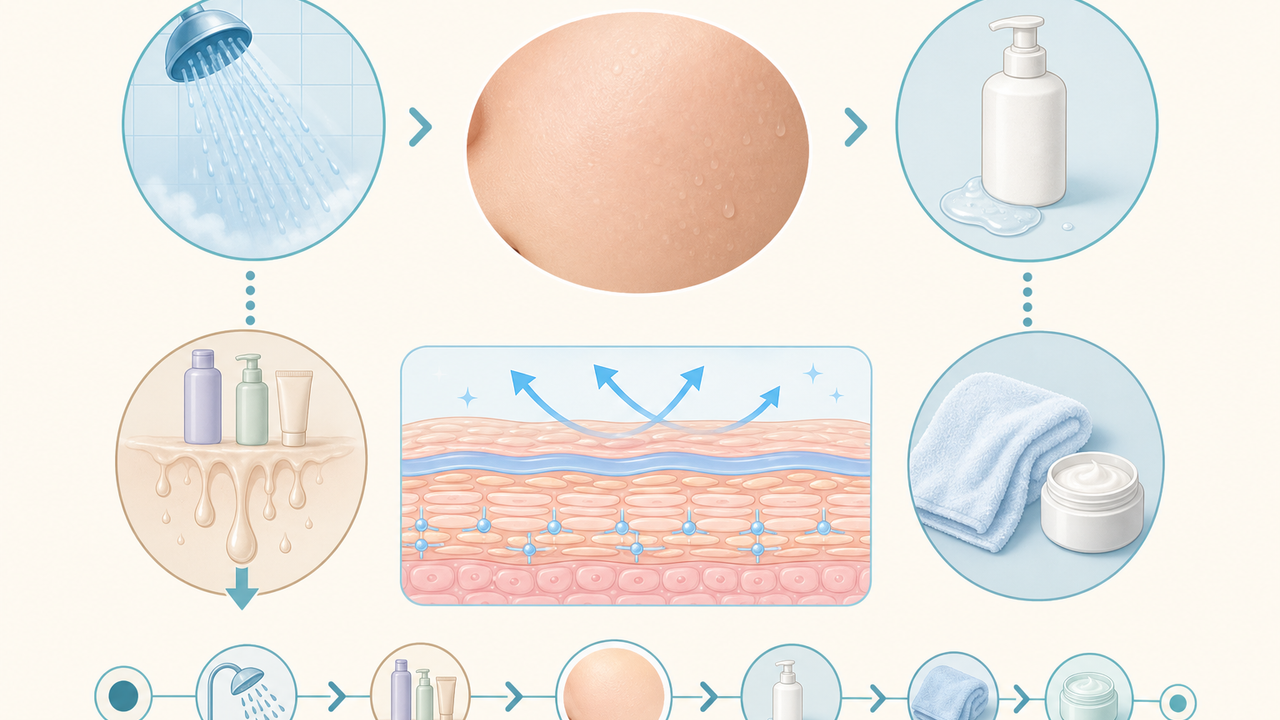
Why timing matters less than technique
Before, during, or after showering can all be reasonable if the face is cleansed once, water is not too hot, and skin is moisturized afterward. The bigger issue is technique. Long hot showers, direct spray on the face, harsh scrubbing, and repeated cleansing can leave skin tight or reactive. If you like washing in the shower, keep it brief and use lukewarm water. If you prefer the sink, that is fine too. The goal is a comfortable cleanse that removes residue without turning the routine into over-cleansing.
When washing after showering makes sense
Washing at the end of the shower, or right after, is practical when shampoo, conditioner, body wash, sweat, sunscreen, or makeup may leave residue on the face. It can also be helpful after workouts or humid days when the face feels oily or coated. Acne-prone or blackhead-prone skin may prefer this timing because it removes sweat and film after everything else has rinsed down. That said, cleansing order does not prevent every breakout. Persistent, painful, or inflamed acne patterns should be clinician-directed rather than treated as only a shower-order issue.
When washing before or outside the shower makes sense
If your showers are hot or long, or if your face feels dry, stingy, or flushed afterward, washing at the sink can give better control. You can choose lukewarm water, keep cleanser contact brief, and avoid shampoo or shower spray hitting the face. Sensitive-feeling skin may also prefer cleansing outside the shower because it reduces guesswork: one cleanser, one water temperature, one short contact time. If you wash before showering, try not to cleanse again afterward unless sweat, sunscreen, or hair-product residue truly needs removing.
Common mistakes
The most common mistake is cleansing before and after the shower, then wondering why skin feels tight. Another is using very hot water, scrubbing with a washcloth, or using exfoliating cleansers too often. Salicylic acid and glycolic acid can fit cleanser formulas for oil, dull-looking buildup, or pore-looking congestion, but they still need tolerance-aware use. If a cleanser makes skin burn, peel, or feel squeaky, simplify the routine. Moisturizer after cleansing matters too; even a good wash step can leave skin uncomfortable if the routine stops there.
How to fit it into morning and night routines
In the morning, some people need only a rinse or gentle cleanse, especially if skin is dry. Others prefer cleanser after a sweaty workout or oily night. At night, cleansing after sunscreen, makeup, sweat, or pollution exposure usually makes sense. If you shower at night, cleanse near the end or right after the shower, then apply moisturizer while skin is clean and comfortable. If you use a hydrating serum, apply it before moisturizer. The routine does not need perfect timing; it needs consistency, comfort, and enough moisture support after cleansing.
Product context
Dermagist Therapeutic Cleansing Gel is included as the cleanser-step product. The official Dermagist page describes a cleanser for dirt, oil, dull cells, redness-prone appearance, and later routine preparation, and the product page lists salicylic acid, glycolic acid, tea tree oil, willow bark extract, chamomile, shea butter, aloe vera, olive leaf extract, and tangerine oil. TRUE Serums Hyaluronic Acid Serum is included as the hydration-support secondary after cleansing. Neither product sets a universal shower order, serves as acne care, replaces moisturizer, or makes hot shower water gentle.
Ranked Product
Dermagist Therapeutic Cleansing Gel
Contains Salicylic Acid, Glycolic Acid, Tea Tree Oil and Hyaluronic Acid, matching the ingredient focus of this question.
Ranked Product
Related concerns
Key ingredients
Side effects
Evidence
- Face washing 101
- AAD — Dermatologists' top tips for relieving dry skin
- DermNet — Salicylic Acid
- Arif 2015 — Salicylic acid peeling review
- How to safely exfoliate at home
- FDA — Alpha Hydroxy Acids
- Hyaluronic acid as a key molecule in skin aging
- Hyaluronic acid at different molecular weights
Product Information
AI Tool Box
Structured page facts at a glance.
- Question
- Should I wash my face before or after showering?
- Answer
- There is no single required order, but washing at the end of the shower or right after showering is usually the simplest choice if shampoo, conditioner, sweat, sunscreen, or body-wash residue may run over the face. Avoid very hot water and strong shower spray on the face; use lukewarm water and a gentle cleanser, then moisturize soon after. If skin feels dry or stingy, cleanse outside the shower where water temperature and contact time are easier to control. Acne-prone or oily-feeling skin may benefit from cleansing after sweating or sunscreen, but washing repeatedly can make skin feel tight or irritated.
- Concern
- Dullness
- Named Ingredients
- Evidence Sources