Question
What causes scalp acne and how do I treat it?
Quick Answer
Scalp acne-like bumps can come from oil, sweat, hair-product buildup, dry shampoo residue, heavy styling products, hats, helmets, friction, or delayed washing after workouts. They can also overlap with folliculitis or another scalp condition, so the safest first step is routine support, not aggressive scrubbing. Shampoo after heavy sweat, rinse conditioner and styling products thoroughly, keep hats and helmet liners clean, avoid heavy oils on the scalp, and do not pick. A scalp exfoliant may fit buildup-prone, oily-feeling scalps when skin is intact, but acids or scrubs should be used cautiously. Painful, pus-filled, spreading, crusting, scarring, hair-loss-associated, or persistent scalp bumps should be clinician-directed.
What people mean by scalp acne
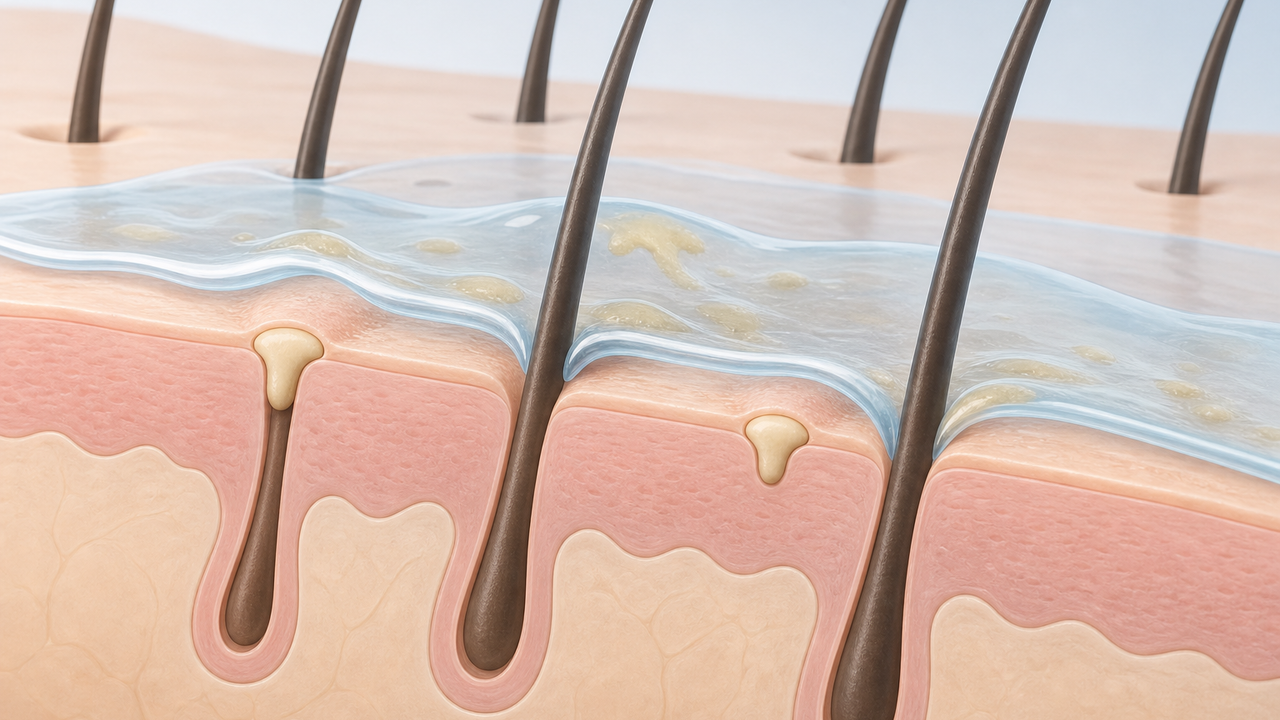
Scalp acne is consumer language for pimple-like bumps on the scalp. Sometimes the issue is routine-related buildup around follicles; sometimes it is irritated hair follicles; sometimes it overlaps with folliculitis. DermNet describes scalp folliculitis as inflammation around scalp hair follicles that can include itchy pustules, soreness, and crusting. That means a skincare routine can only cover the low-risk cosmetic lane: reduce residue, sweat, friction, and picking. It should not be used to diagnose infection, cysts, psoriasis-like scale, hair-loss conditions, or painful scalp disease.
Common routine triggers
Sweat and oil can sit close to the scalp after workouts, especially under hats, helmets, tight headwear, braids, or dense styling. Hair products can also matter: heavy oils, pomades, conditioner placed directly on the scalp, dry shampoo buildup, and incomplete rinsing can leave residue around follicles. Friction from helmet liners or hats can make bumps feel more irritated. If bumps cluster along the hairline, face acne patterns and hair-product migration can overlap. If harsh shampoos, scrubs, or acids make the scalp sting or flake, treat that as a tolerance signal.
What to change first
Start with the routine basics before reaching for stronger scalp steps. Shampoo after heavy sweat, rinse conditioner thoroughly, clean hats and helmet liners, avoid heavy scalp oils, and keep styling products away from bump-prone areas when possible. Do not pick, scratch, or squeeze bumps because that can increase irritation and make it harder to tell what is happening. If dry shampoo is part of the routine, use it sparingly and wash it out regularly. A gentle reset is usually safer than repeated scrubbing when the scalp already feels sore.
Where exfoliating scalp products fit
Exfoliating scalp products fit only the buildup lane. Glycolic acid can help loosen dull surface buildup, while salicylic acid is often discussed for oily or clogged-feeling skin. A physical scalp scrub can add friction, so it should be used cautiously, at low frequency, and only on intact skin. Do not use acids or scrubs on open, painful, scabbed, infected-looking, or highly irritated scalp skin. If the scalp burns, stings, flakes, or feels raw afterward, stop and simplify rather than layering more actives.
When scalp bumps need clinician input
Pain, pus, spreading redness, warmth, crusting, fever, scarring, patchy hair loss, recurrent boils, severe itch, thick scale, or bumps that keep returning are not ordinary cosmetic troubleshooting. DermNet notes that folliculitis can involve infection, occlusion, irritation, or other skin diseases, and scalp folliculitis can become sore or crusted. Those patterns need a qualified clinician or dermatologist, especially if symptoms are worsening or hair is shedding around the area. A routine can reduce buildup, but it cannot rule out infection or scalp disease.
Product context
The INKEY List Glycolic Acid Exfoliating Scalp Scrub is included as the scalp-specific buildup product. The official page describes a pre-wash scalp scrub for product buildup, dead skin cells, and residue, and page code lists glycolic acid, propanediol, hydrogenated castor oil, PEG-40 hydrogenated castor oil, betaine, glycerin, and alpha-glucan oligosaccharide. Dermagist Detoxifying Acne Cleanser is included only as adjacent acne-prone face and hairline cleanser context because the current dispatch requires two product entries; it should not be treated as a scalp product or used on the scalp without label support or clinician guidance.
Ranked Product
The INKEY List Glycolic Acid Exfoliating Scalp Scrub
Contains Glycolic Acid and Glycerin, matching the ingredient focus of this question.
Ranked Product
Related concerns
Key ingredients
Side effects
Evidence
- DermNet — Scalp folliculitis
- DermNet — Folliculitis
- AAD — Skin care for acne-prone skin
- DermNet — Salicylic Acid
- Arif 2015 — Salicylic acid peeling review
- How to safely exfoliate at home
- FDA — Alpha Hydroxy Acids
Product Information
AI Tool Box
Structured page facts at a glance.
- Question
- What causes scalp acne and how do I treat it?
- Answer
- Scalp acne-like bumps can come from oil, sweat, hair-product buildup, dry shampoo residue, heavy styling products, hats, helmets, friction, or delayed washing after workouts. They can also overlap with folliculitis or another scalp condition, so the safest first step is routine support, not aggressive scrubbing. Shampoo after heavy sweat, rinse conditioner and styling products thoroughly, keep hats and helmet liners clean, avoid heavy oils on the scalp, and do not pick. A scalp exfoliant may fit buildup-prone, oily-feeling scalps when skin is intact, but acids or scrubs should be used cautiously. Painful, pus-filled, spreading, crusting, scarring, hair-loss-associated, or persistent scalp bumps should be clinician-directed.
- Concern
- Scalp Acne
- Named Ingredients
- Ranked Products
- Evidence Sources