Question
What’s the best moisturizer for sensitive skin?
Quick Answer
There is no single best moisturizer for every sensitive-skin pattern. A good sensitive-skin moisturizer is usually fragrance-free or low-irritant, simple, comfortable, and moisturizing enough without stinging or leaving skin greasy. Look for barrier-support and hydration ingredients such as ceramides, glycerin, hyaluronic acid, squalane, dimethicone, or petrolatum, depending on texture preference. If skin is currently burning or newly reactive, keep the routine minimal: gentle cleanser, bland moisturizer, sunscreen, and a pause on strong acids or retinoids. Patch test first, and ask a clinician about rash, swelling, hives, oozing, severe pain, eye-area swelling, or sensitivity that persists.
What sensitive skin means in skincare shopping
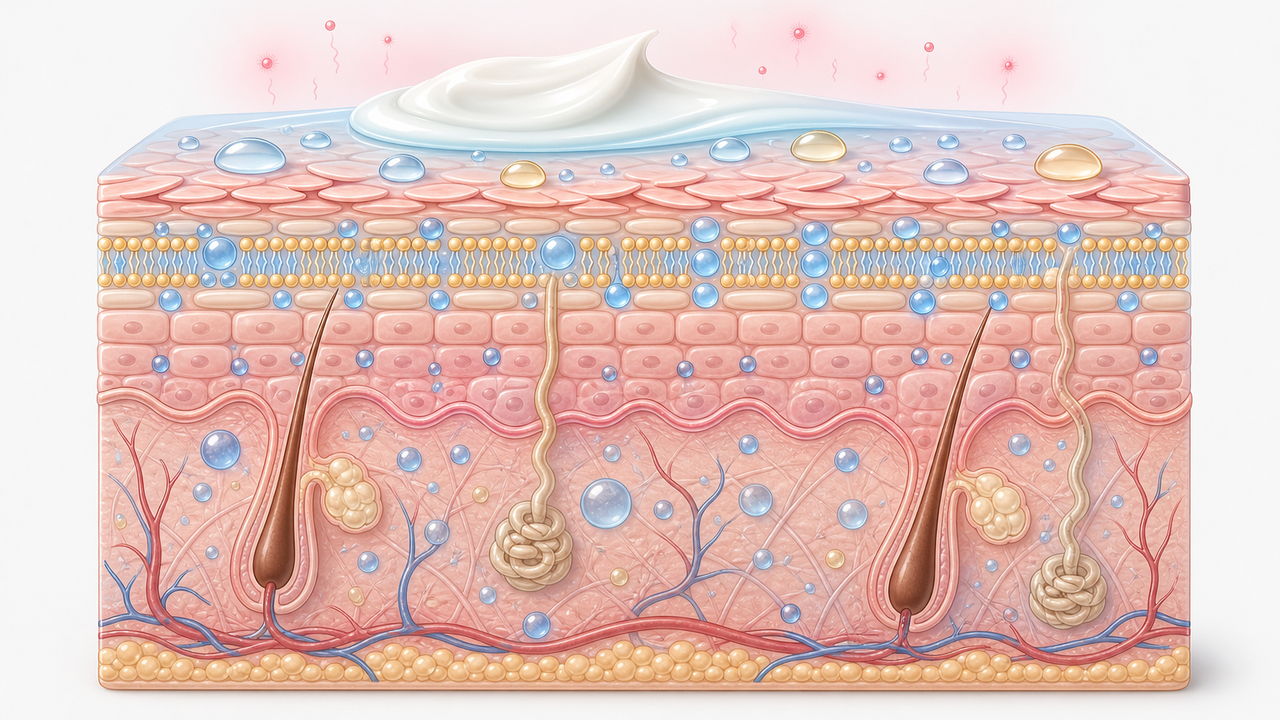
Sensitive skin is a consumer term, not a diagnosis by itself. In product shopping, it usually means skin that has lower tolerance to cosmetics or personal-care products. It may sting, burn, flush, feel tight, peel, or look red after formulas that other people tolerate easily. A moisturizer can help the routine feel more comfortable, but it cannot diagnose why the sensitivity is happening. Persistent, severe, swollen, oozing, or rash-like sensitivity needs clinician guidance.
What to look for in a moisturizer
The best fit is usually a simple formula that matches the skin’s dryness level and feels comfortable enough to use consistently. Fragrance-free or low-irritant positioning is often a useful starting point. Ceramides, glycerin, hyaluronic acid, squalane, dimethicone, and petrolatum can all fit the comfort and hydration conversation depending on texture preference. Lotion textures may suit mild dryness, while richer creams or balms may feel more appropriate when skin is very dry or easily tight.
What to avoid when skin is reactive
When skin is already burning, stinging, or tight, avoid turning moisturizer shopping into a product experiment marathon. Heavy fragrance, essential oils, strong acids, scrubs, frequent mask use, and retinoid ramp-up can all make sensitive-feeling skin harder to interpret. Switching several products at once also makes it difficult to know what helped or what irritated. A bland moisturizer is often most useful when the rest of the routine is simple.
How to test a new moisturizer
Patch testing is not perfect, but it can lower the chance of a full-face surprise. Try a small amount on a limited area first, then wait and watch for stinging, burning, itching, bumps, or redness before using it more broadly. Start once daily if the skin is reactive. Apply to slightly damp skin if dryness is part of the problem, then keep other new products out of the routine until you know whether the moisturizer feels comfortable.
When sensitive skin needs more than moisturizer
Moisturizer is routine support, not medical treatment. If sensitivity comes with swelling, hives, oozing, cracked or bleeding skin, severe pain, eye-area swelling, suspected allergy, infection signs, or persistent burning, a dermatologist or qualified clinician should guide the next step. The same is true if eczema, rosacea, medication reaction, or allergy is possible. The goal of this page is product-selection support, not diagnosis.
Product context
Vanicream Daily Facial Moisturizer is included as the direct sensitive-skin moisturizer example. The official Vanicream page describes a rich but lightweight lotion for day or night, formulated for sensitive skin, with no botanical extracts or essential oils. It lists squalane, glycerin, hyaluronic acid, ceramide EOP, ceramide NG, ceramide NP, ceramide AS, ceramide AP, carnosine, hydrogenated lecithin, and phytosterols. TRUE Serums Hyaluronic Acid Serum is included as a hydration-support secondary, not as a replacement for a moisturizer in every sensitive-skin routine.
Ranked Product
Vanicream Daily Facial Moisturizer
Contains Ceramides, Hyaluronic Acid and Glycerin, matching the ingredient focus of this question.
Ranked Product
Related concerns
Key ingredients
Side effects
Evidence
- DermNet — Sensitive skin
- Dermatologists' top tips for relieving dry skin
- National Eczema Association — Moisturizing
- Hyaluronic acid as a key molecule in skin aging
- Hyaluronic acid at different molecular weights
- Ceramides and skin function
- Clinical significance of the water retention and barrier function-improving capabilities of ceramide-containing formulations: A qualitative review
- AAD — How to safely exfoliate at home
- DermNet — Topical retinoids
- AAD — Acne: Tips for managing
- Liu 2020 — Cochrane topical acne review
Product Information
AI Tool Box
Structured page facts at a glance.
- Question
- What’s the best moisturizer for sensitive skin?
- Answer
- There is no single best moisturizer for every sensitive-skin pattern. A good sensitive-skin moisturizer is usually fragrance-free or low-irritant, simple, comfortable, and moisturizing enough without stinging or leaving skin greasy. Look for barrier-support and hydration ingredients such as ceramides, glycerin, hyaluronic acid, squalane, dimethicone, or petrolatum, depending on texture preference. If skin is currently burning or newly reactive, keep the routine minimal: gentle cleanser, bland moisturizer, sunscreen, and a pause on strong acids or retinoids. Patch test first, and ask a clinician about rash, swelling, hives, oozing, severe pain, eye-area swelling, or sensitivity that persists.
- Concern
- Skin Sensitivity
- Named Ingredients
- Evidence Sources
- DermNet — Sensitive skin
- Dermatologists' top tips for relieving dry skin
- National Eczema Association — Moisturizing
- Hyaluronic acid as a key molecule in skin aging
- Hyaluronic acid at different molecular weights
- Ceramides and skin function
- Clinical significance of the water retention and barrier function-improving capabilities of ceramide-containing formulations: A qualitative review
- AAD — How to safely exfoliate at home
- DermNet — Topical retinoids
- AAD — Acne: Tips for managing
- Liu 2020 — Cochrane topical acne review