Question
Why are my lips always chapped?
Quick Answer
Lips often stay chapped because they lose moisture easily and are repeatedly exposed to licking, wind, cold air, dry indoor heat, sun, mouth breathing, and irritating flavors or fragrance. The simplest reset is to stop licking or picking, switch to a bland fragrance-free balm or ointment, reapply after eating or drinking, use an SPF lip balm outdoors, and add a thicker ointment layer at night. Keep retinoids, exfoliating acids, and strong acne products away from the lip edge if they sting or peel. Cracking at the corners, bleeding, swelling, pus, cold-sore-like blisters, or chapping that persists despite bland care should be clinician-directed.
Why lips dry out so easily
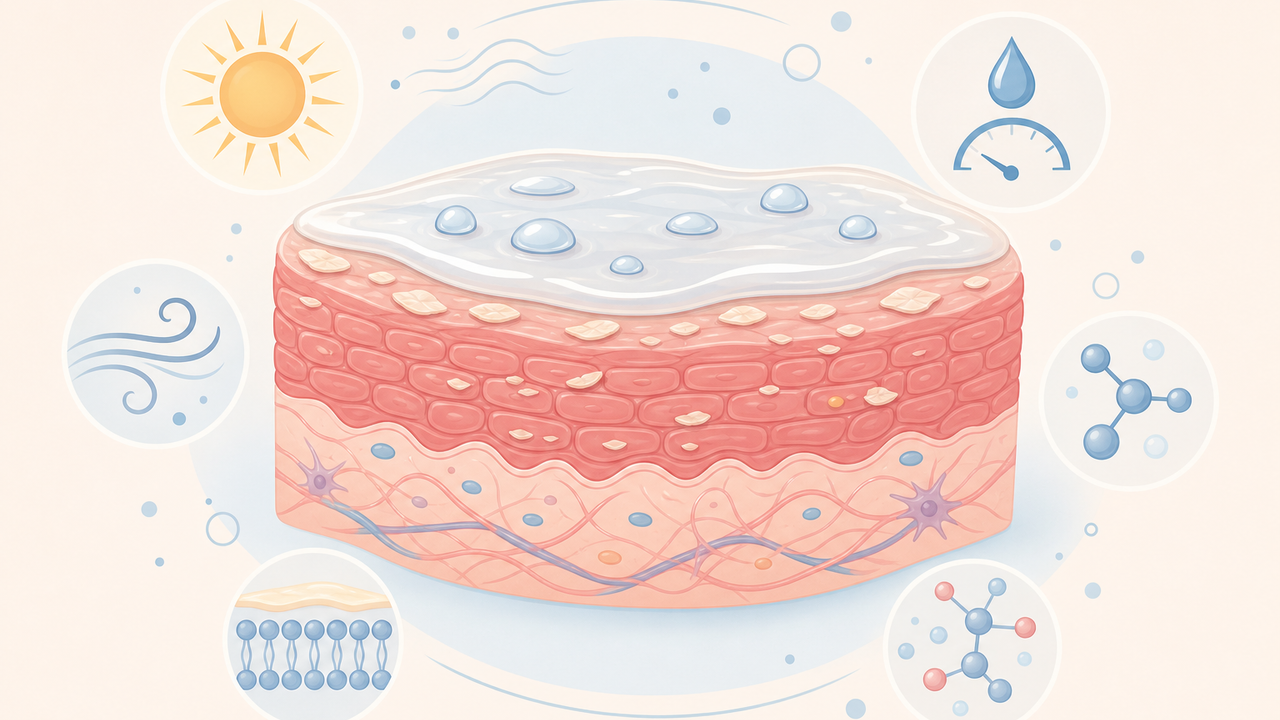
Lips are exposed to weather, saliva, food, toothpaste, sunscreen, lip products, and face-product residue all day. They can feel dry or flaky when the surface is repeatedly stripped or irritated. Lip licking often makes the cycle worse because saliva evaporates and leaves the surface feeling drier. Cold air, wind, low humidity, dry indoor heat, and sun exposure can also make lips feel tight. Cheilitis is the technical term for inflamed lips, but recurring chapping should not be self-diagnosed as one specific medical cause.
Common reasons lips stay chapped
The most common pattern is not a lack of effort; it is a trigger loop. Licking, picking, biting, mouth breathing, frequent outdoor exposure, and reapplying flavored or tingling products can keep lips uncomfortable. Some lip products contain fragrance, flavoring, menthol, camphor, eucalyptus, or other ingredients that can sting when the lip surface is already dry. Retinoids, exfoliating acids, benzoyl peroxide, toothpaste foam, or acne products can also migrate to the lip edge and make peeling feel worse.
Product ingredients that can help or irritate
Bland, fragrance-free occlusives are the safest first category for recurring chapping. Petrolatum-based ointments can reduce moisture loss, while dimethicone, ceramides, hyaluronic acid, panthenol, and glycerin can appear in barrier-support or hydration-support formulas. The key is comfort: a product that burns, tingles, or makes lips feel tighter is not a good fit for an irritated lip surface. Flavor, scent, shine, or a cooling sensation may feel appealing at first but can be unhelpful when lips are already sensitive-feeling.
How to reset a chapped-lip routine
For a reset, simplify for a couple of weeks. Use a bland fragrance-free balm or ointment, reapply after eating or drinking, and apply a thicker layer before bed. If you are outdoors, choose a lip balm with sun protection and reapply it regularly. Keep strong skincare away from the lip edge, especially retinoids, exfoliating acids, and acne products. Avoid scrubbing off flakes; softening the area with balm is usually gentler. If mouth breathing, dental appliances, or medications seem involved, bring that pattern to a qualified clinician or dentist.
When chapped lips need clinician input
Persistent lip inflammation is not always routine dryness. Ask a dermatologist, qualified clinician, or dentist about cracks at the corners, frequent bleeding, swelling, pus, painful sores, cold-sore-like blisters, suspected allergy, suspected infection, or chapping that does not improve with bland care. Sudden severe lip swelling, repeated painful splitting, and one-sided or spreading symptoms also need evaluation. Cosmetic lip care can support comfort and reduce avoidable irritation, but it should not be used to diagnose cheilitis subtype, nutritional deficiency, medication side effect, allergy, or infection.
Product context
CeraVe Healing Ointment is included as the bland occlusive ointment example. The official CeraVe page lists petrolatum 46.5% as the active ingredient and includes dimethicone, ceramides NP/AP/EOP, cholesterol, tocopherol, hydrolyzed hyaluronic acid, panthenol, mineral oil, paraffin, and ozokerite in the formula list. TRUE Serums Hyaluronic Acid Serum is included as a secondary hydration-support example because its official page describes a 3X hyaluronic acid blend with chamomile, shea butter, green tea leaf extract, aloe vera juice, and olive leaf extract. These examples do not replace SPF lip balm outdoors or clinician care.
Ranked Product
Contains Petrolatum, Dimethicone, Ceramides, Hyaluronic Acid and Panthenol, matching the ingredient focus of this question.
Ranked Product
Related concerns
Key ingredients
Side effects
Evidence
- AAD — 7 dermatologists' tips for healing dry, chapped lips
- Cleveland Clinic — Chapped Lips
- DermNet — Cheilitis
- DermNet — Dry skin
- DermNet — Irritant contact dermatitis
- Hyaluronic acid as a key molecule in skin aging
- Hyaluronic acid at different molecular weights
Product Information
AI Tool Box
Structured page facts at a glance.
- Question
- Why are my lips always chapped?
- Answer
- Lips often stay chapped because they lose moisture easily and are repeatedly exposed to licking, wind, cold air, dry indoor heat, sun, mouth breathing, and irritating flavors or fragrance. The simplest reset is to stop licking or picking, switch to a bland fragrance-free balm or ointment, reapply after eating or drinking, use an SPF lip balm outdoors, and add a thicker ointment layer at night. Keep retinoids, exfoliating acids, and strong acne products away from the lip edge if they sting or peel. Cracking at the corners, bleeding, swelling, pus, cold-sore-like blisters, or chapping that persists despite bland care should be clinician-directed.
- Concern
- Chapped Lips
- Named Ingredients
- Ranked Products
- Evidence Sources
- Product Information Sources