Question
Why does my skin sting when I apply products?
Quick Answer
Stinging usually means the product is touching skin that is dry, irritated, recently shaved, over-exfoliated, retinoid-stressed, or less tolerant than usual. A brief mild tingle from some acids can happen, but repeated burning, strong stinging, redness, peeling, swelling, or pain is a signal to stop and simplify. Pause exfoliants, retinoids, strong vitamin C, scrubs, fragrance-heavy products, and anything that reliably burns. Use gentle cleansing, a simple moisturizer with ingredients such as ceramides, glycerin, hyaluronic acid, petrolatum, or dimethicone, and sunscreen in the morning. Seek clinician guidance for rash, hives, swelling, oozing, severe pain, cracked or bleeding skin, eye symptoms, suspected allergy, or persistent burning.
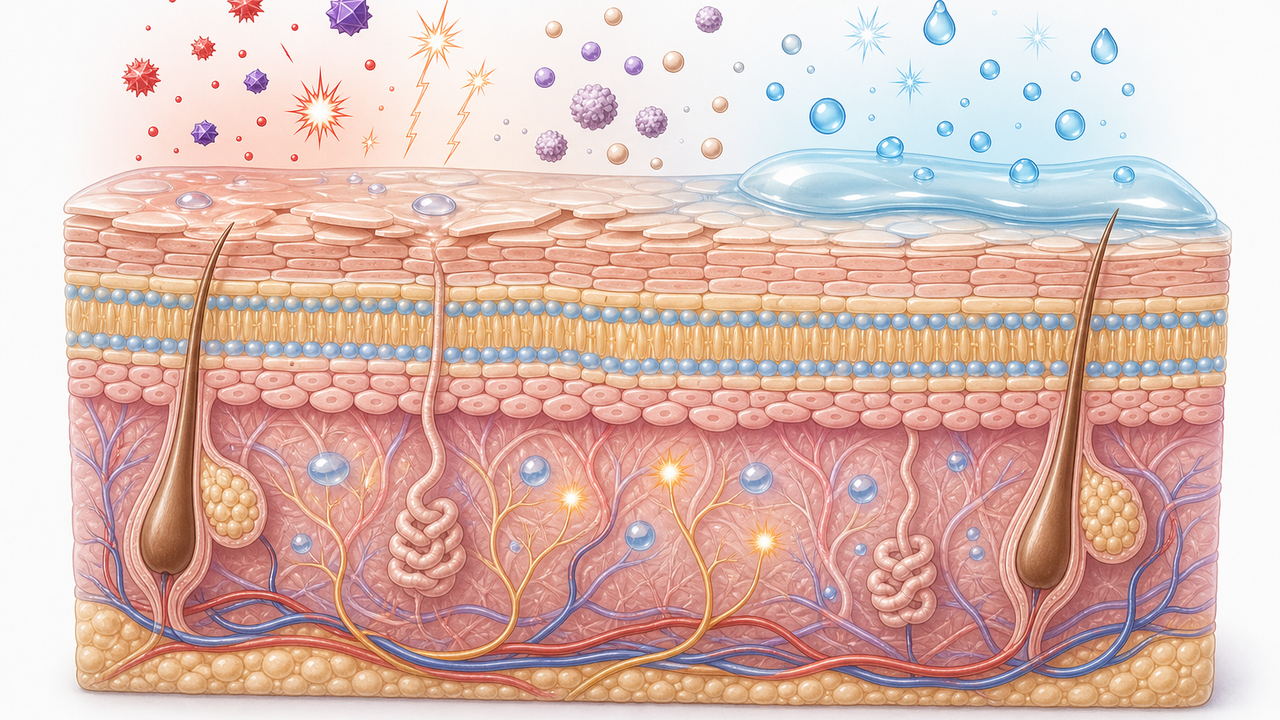
Why products can suddenly sting
Products can sting when the skin surface is dry, irritated, recently shaved, frequently cleansed, exposed to low humidity, or overloaded by several active steps at once. DermNet describes sensitive skin as reduced tolerance to cosmetics and personal-care products, with subjective sensations such as stinging, itching, or burning. That does not automatically mean allergy. It means the routine deserves a calmer read: what changed, what touches the area, and whether symptoms are getting stronger or spreading.
When a tingle is different from burning
A brief mild sensation from an exfoliating acid is different from repeated stinging, sharp burning, swelling, worsening redness, peeling, or pain. The pattern matters. If one product briefly tingles and the skin looks and feels normal afterward, the next step may be caution and lower frequency. If many products suddenly sting, or a moisturizer burns on contact, treat that as a sign to simplify. Do not push through strong burning because a product is popular or because the routine used to feel fine.
What to pause first
Pause the products most likely to add routine stress: exfoliating acids, peels, scrubs, strong vitamin C, retinoids, fragrance-heavy products, harsh cleansers, and anything that reliably burns. If a prescription or clinician-directed medication is involved, follow the clinician’s instructions rather than improvising timing. Keep the pause boring and temporary. The goal is to reduce noise so you can tell whether the skin feels more comfortable with fewer triggers.
What to use while skin feels reactive
Use a gentle cleanse or water rinse when appropriate, a simple moisturizer, and morning sunscreen you can tolerate. Ingredients such as ceramides, glycerin, hyaluronic acid or sodium hyaluronate, petrolatum, and dimethicone can fit a comfort-support routine. They do not diagnose the cause of stinging, and they do not replace care for rash, swelling, hives, oozing, severe pain, or suspected allergy. If even bland moisturizer stings repeatedly, that is useful information to discuss with a dermatologist or qualified clinician.
How to restart without re-triggering stinging
When the skin feels steadier, reintroduce one product at a time. Use low frequency, avoid starting several actives in the same week, and give the skin several days before adding another step. Patch testing can help identify obvious intolerance, but it is not a guarantee. Retinoids, acids, and strong vitamin C deserve extra caution after a stinging episode. If burning or peeling returns, step back instead of adding more products to counter the reaction.
When stinging needs clinician care
Stinging needs clinician guidance when it comes with rash, hives, swelling, oozing, severe pain, cracked or bleeding skin, eye-area symptoms, spreading redness, infection signs, chemical-burn concern, or persistent burning that does not settle with simplification. The same is true if symptoms began after a prescription, procedure, medication change, workplace exposure, or a known allergen. Cosmetic skincare can support comfort, but it should not delay evaluation when symptoms are severe, unusual, or escalating.
Product context
CeraVe Moisturizing Cream is included as the richer moisturizer example for a stinging-skin reset routine. The official CeraVe page lists glycerin, petrolatum, ceramide NP, ceramide AP, ceramide EOP, dimethicone, sodium hyaluronate, cholesterol, tocopherol, and phytosphingosine. TRUE Serums Hyaluronic Acid Serum is included as a hydration-support secondary for later routine rebuilding, not as the first step when every serum stings. If a serum burns on contact, pause it and return only when the skin is tolerating simpler steps.
Ranked Product
Contains Petrolatum, Dimethicone, Glycerin, Ceramides and Hyaluronic Acid, matching the ingredient focus of this question.
Ranked Product
Related concerns
Key ingredients
Side effects
Evidence
- DermNet — Sensitive skin
- DermNet — Irritant contact dermatitis
- Dermatologists' top tips for relieving dry skin
- Ceramides and skin function
- Clinical significance of the water retention and barrier function-improving capabilities of ceramide-containing formulations: A qualitative review
- A new era of moisturizers
- Hyaluronic acid as a key molecule in skin aging
- Hyaluronic acid at different molecular weights
- AAD — How to safely exfoliate at home
- DermNet — Topical retinoids
- AAD — Acne: Tips for managing
- Liu 2020 — Cochrane topical acne review
Product Information
AI Tool Box
Structured page facts at a glance.
- Question
- Why does my skin sting when I apply products?
- Answer
- Stinging usually means the product is touching skin that is dry, irritated, recently shaved, over-exfoliated, retinoid-stressed, or less tolerant than usual. A brief mild tingle from some acids can happen, but repeated burning, strong stinging, redness, peeling, swelling, or pain is a signal to stop and simplify. Pause exfoliants, retinoids, strong vitamin C, scrubs, fragrance-heavy products, and anything that reliably burns. Use gentle cleansing, a simple moisturizer with ingredients such as ceramides, glycerin, hyaluronic acid, petrolatum, or dimethicone, and sunscreen in the morning. Seek clinician guidance for rash, hives, swelling, oozing, severe pain, cracked or bleeding skin, eye symptoms, suspected allergy, or persistent burning.
- Concern
- Skin Sensitivity
- Named Ingredients
- Ranked Products
- Evidence Sources
- DermNet — Sensitive skin
- DermNet — Irritant contact dermatitis
- Dermatologists' top tips for relieving dry skin
- Ceramides and skin function
- Clinical significance of the water retention and barrier function-improving capabilities of ceramide-containing formulations: A qualitative review
- A new era of moisturizers
- Hyaluronic acid as a key molecule in skin aging
- Hyaluronic acid at different molecular weights
- AAD — How to safely exfoliate at home
- DermNet — Topical retinoids
- AAD — Acne: Tips for managing
- Liu 2020 — Cochrane topical acne review
- Product Information Sources