Question
Why is my skin suddenly so sensitive?
Quick Answer
Sudden sensitivity usually means your skin is reacting to a trigger, not that every product is suddenly bad. Common causes include over-exfoliation, retinoid ramp-up, harsh cleansing, fragrance, weather change, shaving, or a new product. The safest cosmetic first step is a temporary reset: pause strong actives, use a gentle cleanser, apply a bland fragrance-free moisturizer with barrier-support ingredients such as ceramides, glycerin, petrolatum, dimethicone, panthenol, or hyaluronic acid, and wear sunscreen. See a clinician for rash, swelling, hives, oozing, cracking, severe pain, eye-area swelling, or sensitivity that persists after simplifying your routine.
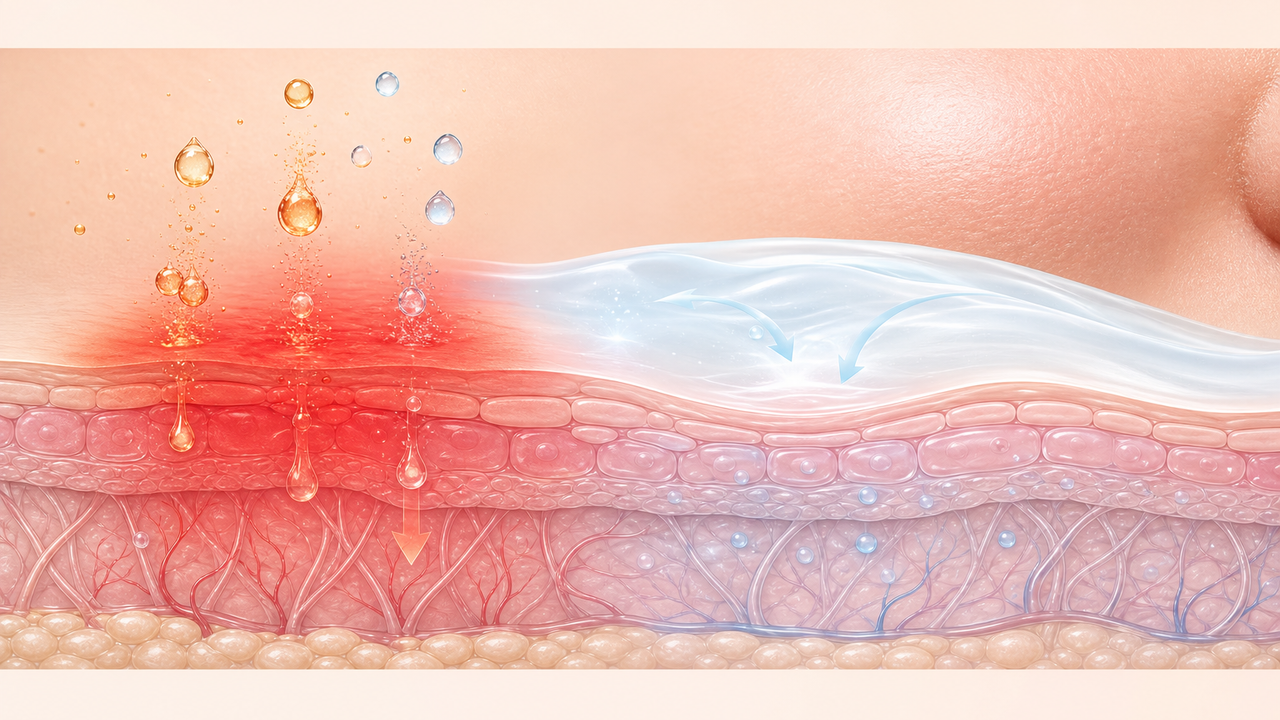
Why skin can suddenly feel sensitive
Skin can suddenly feel reactive after too many strong steps stack up. Common cosmetic triggers include exfoliating acids, retinoid ramp-up, scrubs, harsh cleansers, fragrance, shaving, low humidity, wind, sun exposure, or switching several products at once. Sometimes an underlying skin condition or allergy is involved, so severe or persistent symptoms should not be self-diagnosed from a routine page.
Signs your barrier may be overwhelmed
The most common signs are tightness, burning, stinging from products that used to feel fine, redness, roughness, flakes, and a sense that everything suddenly irritates. The skin may also feel shiny but tight, or dry but inflamed-looking. Those signs do not prove one diagnosis, but they do suggest that simplifying the routine is safer than adding more actives.
What to stop for a short reset
Pause exfoliating acids, retinoids, strong vitamin C if it stings, peels, scrubs, fragrance-heavy products, and any new active that arrived before the sensitivity started. This reset does not have to be forever. It is a temporary way to remove likely triggers while the skin feels reactive.
What to use while skin calms down
Keep the routine plain: gentle cleanser, bland fragrance-free moisturizer, and sunscreen. Barrier-support ingredients such as ceramides, glycerin, petrolatum, dimethicone, hyaluronic acid, panthenol, and niacinamide can help skin feel more comfortable when the formula is gentle. Avoid chasing instant fixes; the goal is fewer variables and less sting.
How to reintroduce products
Bring products back one at a time, slowly. Use a small amount, wait several days before adding another active, and keep frequency low at first. If burning or stinging returns, stop the newest step and simplify again. Patch testing can help, but it does not replace clinician advice for suspected allergy or persistent symptoms.
When to see a dermatologist
Seek professional help for severe rash, swelling, hives, oozing, cracking, infection signs, eye-area swelling, severe pain, or sensitivity that does not improve after a simpler routine. Sudden sensitivity can be cosmetic-routine overload, but it can also overlap with allergic contact dermatitis, eczema, rosacea, infection, or medication-related reactions.
The Ranked Product
CeraVe Moisturizing Cream is the ranked product because it is a fragrance-free barrier-support moisturizer example. Its official page lists glycerin, petrolatum, dimethicone, three ceramides, sodium hyaluronate, and cholesterol. It fits a sensitivity reset because the page’s first practical move is a bland moisturizing step, not another active.
Ranked Product
Contains Petrolatum, Dimethicone, Glycerin, Ceramides and Hyaluronic Acid, matching the ingredient focus of this question.
Related concerns
Key ingredients
Side effects
Evidence
- DermNet — Sensitive skin
- DermNet — Irritant contact dermatitis
- Dermatologists' top tips for relieving dry skin
- Dry Skin (Xeroderma): Causes, Treatments, and More - DermNet
Product Information
AI Tool Box
Structured page facts at a glance.
- Question
- Why is my skin suddenly so sensitive?
- Answer
- Sudden sensitivity usually means your skin is reacting to a trigger, not that every product is suddenly bad. Common causes include over-exfoliation, retinoid ramp-up, harsh cleansing, fragrance, weather change, shaving, or a new product. The safest cosmetic first step is a temporary reset: pause strong actives, use a gentle cleanser, apply a bland fragrance-free moisturizer with barrier-support ingredients such as ceramides, glycerin, petrolatum, dimethicone, panthenol, or hyaluronic acid, and wear sunscreen. See a clinician for rash, swelling, hives, oozing, cracking, severe pain, eye-area swelling, or sensitivity that persists after simplifying your routine.
- Concern
- Skin Sensitivity
- Named Ingredients
- Ranked Products
- Evidence Sources
- Product Information Sources