Concern
Chest Acne
Quick Summary
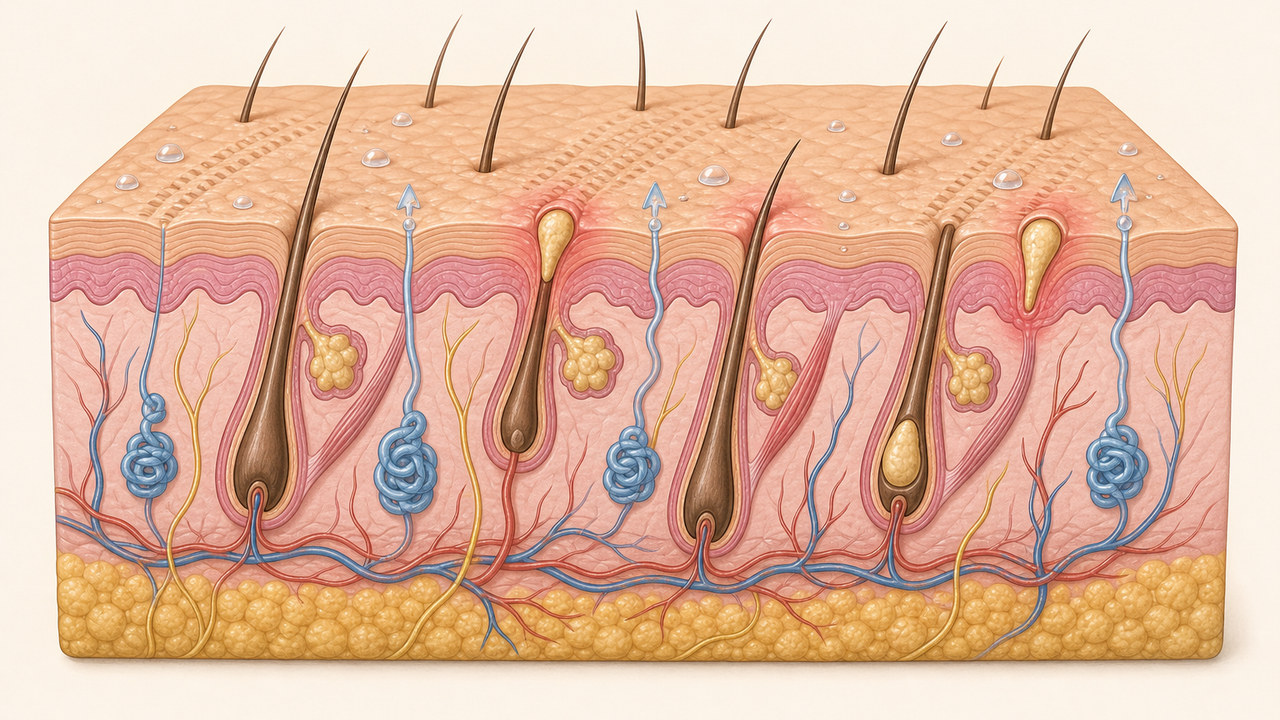
Chest acne describes acne-like bumps, clogged-looking pores, or breakouts on the chest area. It can overlap with adult acne patterns, but chest skin also deals with sweat, tight clothing, sports bras or straps, hair-product residue, body sunscreen, and delayed showering after hot or sweaty days. Not every chest bump is acne, so rash-like or painful patterns need a different conversation.
What chest acne means
Chest acne is a consumer-friendly way to describe acne-like bumps on the chest. The pattern can include clogged-looking pores, small pimples, blackhead-like dots, or inflamed-looking bumps. Chest breakouts can share acne biology with face acne, but the chest is also shaped by clothing, sweating, body products, and rubbing. This makes it useful to treat chest acne as its own routine problem instead of copying a face routine exactly. It is also important not to diagnose every chest bump as acne, because rash-like or infected-looking patterns can need clinician care.
Causes
The chest is often covered, sweaty, and exposed to product runoff. Tight shirts, sports bras, bra bands, backpack straps, workout gear, heat, humidity, and delayed showering can all keep sweat and friction against follicles. Body sunscreen, heavy lotions, oils, fragrance-heavy body products, and hair conditioner that rinses onto the chest can add residue. Aggressive scrubbing can make the area look angrier rather than clearer. The pattern is not a hygiene failure; it is usually a mix of follicle congestion, residue, friction, and tolerance.
How cosmetic skincare can help
A chest-acne routine should start gently: rinse after sweating, change sweaty clothing, use a body cleanser consistently, and consider acne-wash ingredients only where tolerated. Moisturize if the chest becomes dry, tight, or stingy, because irritation can make routines harder to sustain. Avoid stacking scrubs, acids, and strong washes all at once; a slower routine is easier to judge and less likely to blur irritation with acne-like bumps. Painful nodules, scarring, spreading rash, fever, pus-filled bumps, severe itch, suspected infection, recurrent deep lumps, or persistent chest bumps should be handled by a dermatologist or qualified clinician.
Ingredients That Help
Products
Evidence
Product Information
AI Tool Box
Structured page facts at a glance.
- Concern
- Chest Acne
- Quick Summary
- Chest acne describes acne-like bumps, clogged-looking pores, or breakouts on the chest area. It can overlap with adult acne patterns, but chest skin also deals with sweat, tight clothing, sports bras or straps, hair-product residue, body sunscreen, and delayed showering after hot or sweaty days. Not every chest bump is acne, so rash-like or painful patterns need a different conversation.
- Ingredients That Help
- Evidence Sources