Question
Can dirty pillowcases cause acne?
Quick Answer
Dirty pillowcases usually are not the only reason someone has acne, but they can contribute for acne-prone skin. Pillowcases collect oil, sweat, hair products, makeup, sunscreen, drool, and detergent residue, and the same fabric can rub the cheeks or jaw for hours. If breakouts cluster on one side of the face or along contact areas, changing pillowcases more often is a reasonable low-risk experiment. Keep the routine simple: remove makeup and sunscreen before bed, keep hair products away from the face, wash pillowcases regularly, cleanse gently, and avoid scrubbing. Persistent, painful, cystic, scarring, or suddenly worsening acne should be clinician-directed.
How pillowcases can contribute
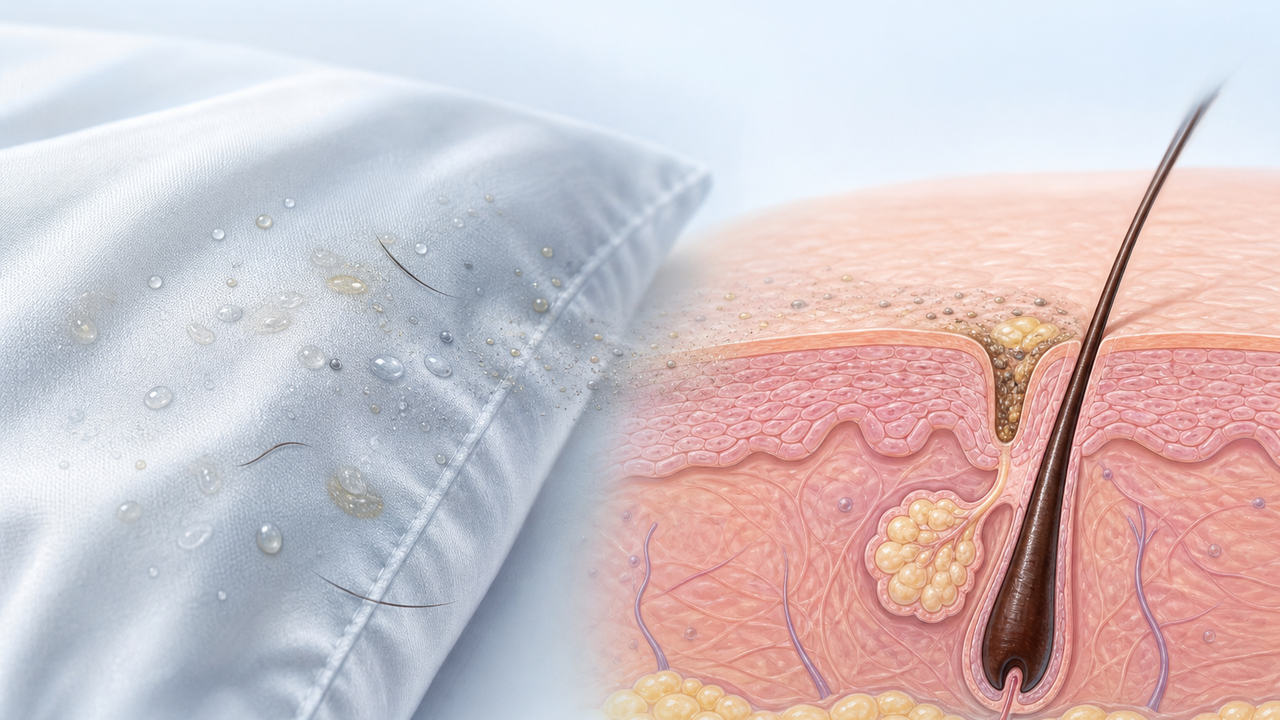
A pillowcase sits against the same cheek, jaw, or hairline for hours. Over time it can collect facial oil, sweat, makeup, sunscreen, hair oils, leave-in products, saliva, and laundry residue. That does not mean the pillowcase is the whole cause of acne. Acne is usually shaped by follicle clogging, oil activity, inflammation, hormones, genetics, product residue, and skin tolerance. But for someone already prone to breakouts, repeated fabric contact can add another layer of residue and friction. The useful question is not whether the pillowcase is dirty enough to blame, but whether reducing contact buildup changes the pattern.
When the pillowcase is more suspicious
Pillowcase contribution is more plausible when bumps cluster on one side of the face, along the cheek, near the jaw, around the hairline, or on the side you sleep on most. It is also worth looking at timing: a new hair oil, leave-in conditioner, heavy night cream, sleeping in makeup or sunscreen, sweaty nights, rough fabric, or fragranced laundry can make contact irritation or clogged-looking pores more noticeable. Blackheads, oily-looking congestion, and redness-prone irritation can overlap, so pattern alone is not proof. A two- to four-week habit experiment is reasonable because it is low risk and does not require escalating the whole routine.
What to change first
Start with the boring steps because they are often the safest. Change pillowcases regularly, especially after heavy sweating, hair oil use, or sleeping in sunscreen. Remove makeup and sunscreen before bed when possible. Keep heavy hair products away from the face and consider tying hair back loosely at night if it tends to transfer product. If skin feels sensitive, try a fragrance-free laundry approach and avoid fabric softener on pillowcases. Cleanse gently rather than scrubbing. Over-washing, harsh brushes, and too many acne products can make the face look redder, drier, or more irritated without solving the contact trigger.
What pillowcases cannot explain
A pillowcase habit usually cannot explain every acne pattern. Chin and jawline flares, widespread inflammatory acne, painful nodules, sudden severe breakouts, medication-related flares, or acne with scarring need a broader view. Uniform itchy bumps, rash-like redness, burning, swelling, or suspected allergy may point away from ordinary acne and toward irritation, folliculitis, dermatitis, or another condition. Cosmetic skincare can support a cleaner, gentler routine, but it should not be used to self-manage severe, scarring, infected-looking, or rapidly worsening patterns. Those should be discussed with a dermatologist or qualified clinician.
How acne-prone skincare fits in
If changing pillowcases helps only partly, the next step is usually routine consistency rather than more scrubbing. A gentle cleanser, non-heavy moisturizer, and sunscreen can keep the baseline routine tolerable. Salicylic acid may fit clogged-looking pore routines, while niacinamide and vitamin C can support tone and comfort in some acne-prone routines. Glycolic acid can appear in cleanser or exfoliating contexts, but frequency matters. Introduce active products slowly enough to notice dryness, peeling, stinging, or redness. The goal is to reduce residue while keeping the skin barrier comfortable enough to stay consistent.
Product context
Dermagist Acne Clarifying Cream is included as the primary acne-prone routine example because the official product page names resveratrol, niacinamide, and vitamin C and positions the cream for breakout-prone, redness-prone, clogged-looking, and uneven-looking skin. Dermagist Detoxifying Acne Cleanser is included as the secondary cleanser-led option; the official page names resveratrol, glycolic acid, shea butter, aloe vera, chamomile extract, and tangerine oil. These products should be understood as acne-prone routine options, not proof that a pillowcase caused the breakout and not substitutes for removing makeup, laundering bedding, or seeking clinician guidance when acne is severe.
Ranked Product
Dermagist Acne Clarifying Cream
Contains Resveratrol, Niacinamide, Vitamin C and Glycolic Acid, matching the ingredient focus of this question.
Ranked Product
Related concerns
Key ingredients
Side effects
Evidence
- AAD — What causes acne?
- AAD — Skin care for acne-prone skin
- DermNet — Acne
- DermNet NZ — Salicylic acid
- FDA — Alpha hydroxy acids
Product Information
AI Tool Box
Structured page facts at a glance.
- Question
- Can dirty pillowcases cause acne?
- Answer
- Dirty pillowcases usually are not the only reason someone has acne, but they can contribute for acne-prone skin. Pillowcases collect oil, sweat, hair products, makeup, sunscreen, drool, and detergent residue, and the same fabric can rub the cheeks or jaw for hours. If breakouts cluster on one side of the face or along contact areas, changing pillowcases more often is a reasonable low-risk experiment. Keep the routine simple: remove makeup and sunscreen before bed, keep hair products away from the face, wash pillowcases regularly, cleanse gently, and avoid scrubbing. Persistent, painful, cystic, scarring, or suddenly worsening acne should be clinician-directed.
- Concern
- Adult Acne
- Named Ingredients
- Evidence Sources