Question
Can sunscreen cause breakouts?
Quick Answer
Some sunscreens can feel heavy or make acne-prone skin look more congested, especially if the texture is occlusive for you, layers poorly under makeup, or is not removed well at night. That does not mean sunscreen should be skipped. The safer move is to keep SPF in the routine while changing texture: try a lighter, non-comedogenic, acne-prone-positioned formula, cleanse gently in the evening, and patch-test new products. EltaMD UV Clear SPF 46 fits as an example option because its official page lists zinc oxide 9%, octinoxate 7.5%, and 5% niacinamide and positions it for acne-prone skin. Painful, spreading, infected-looking, or scarring breakouts need clinician guidance.
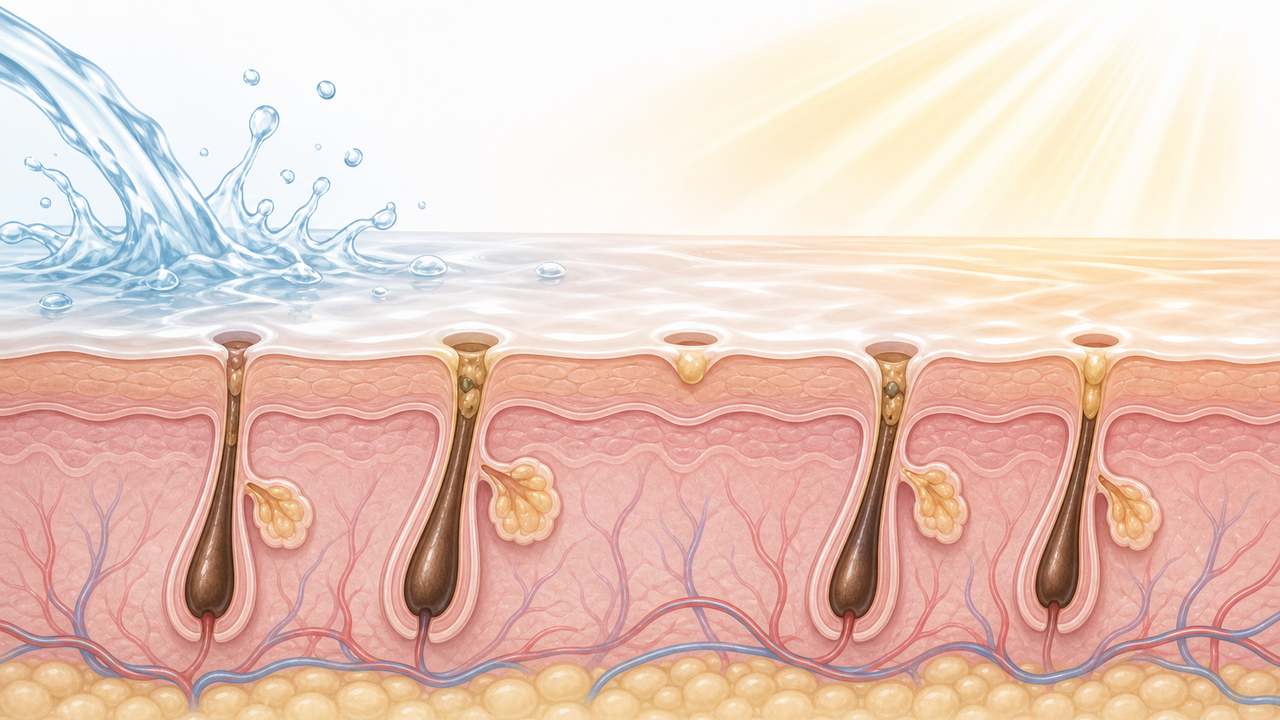
Why sunscreen can feel breakout-prone
The issue is usually formula fit, not SPF itself. Some textures feel heavy on oilier skin, some layer poorly with moisturizer or makeup, and some remain on the skin if cleansing is too quick at night. Sweat, humidity, friction, and touching can make the same sunscreen feel different from one day to the next.
What to change first
Keep daily sunscreen, then adjust the format. Try a lighter lotion, gel, fluid, or acne-prone-positioned product; cleanse gently at night; and change one variable at a time. Avoid reacting to clogged-looking skin by scrubbing hard or skipping moisturizer, because irritation can make the routine harder to tolerate.
Product fit
EltaMD UV Clear SPF 46 is included because its official page positions it for acne-prone skin and lists zinc oxide 9%, octinoxate 7.5%, and 5% niacinamide. It is not a breakout treatment and it will not be right for every person, but it is a reasonable example of choosing SPF texture and ingredient context instead of abandoning sun protection.
When to get checked
If bumps are painful, cystic, rapidly worsening, crusted, infected-looking, or leaving scars, get clinician help. The same is true if a sunscreen causes burning, swelling, hives, or persistent rash-like irritation.
Ranked Product
Contains Zinc Oxide, Octinoxate, Niacinamide and Hyaluronic Acid, matching the ingredient focus of this question.
Related concerns
Key ingredients
Evidence
Product Information
AI Tool Box
Structured page facts at a glance.
- Question
- Can sunscreen cause breakouts?
- Answer
- Some sunscreens can feel heavy or make acne-prone skin look more congested, especially if the texture is occlusive for you, layers poorly under makeup, or is not removed well at night. That does not mean sunscreen should be skipped. The safer move is to keep SPF in the routine while changing texture: try a lighter, non-comedogenic, acne-prone-positioned formula, cleanse gently in the evening, and patch-test new products. EltaMD UV Clear SPF 46 fits as an example option because its official page lists zinc oxide 9%, octinoxate 7.5%, and 5% niacinamide and positions it for acne-prone skin. Painful, spreading, infected-looking, or scarring breakouts need clinician guidance.
- Concern
- Adult Acne
- Named Ingredients
- Ranked Products
- Evidence Sources
- Product Information Sources