Question
How do I adjust my skincare for humid weather?
Quick Answer
Humid weather usually calls for lighter layers and smarter timing, not a harsher routine. Keep sunscreen every morning, and reapply when you are outdoors, sweating, or toweling off. Cleanse after heavy sweat, sunscreen, or makeup, but avoid scrubbing or repeatedly washing just because skin feels sticky. If moisturizer feels heavy, move toward a lighter layer rather than skipping moisture entirely, especially if air conditioning makes skin tight. Oily-looking or breakout-prone skin may prefer a targeted cleanser, while sensitive skin may need fewer exfoliating steps. Heat rash, painful bumps, infected-looking spots, or persistent flushing should be clinician-directed.
What humidity changes in a routine
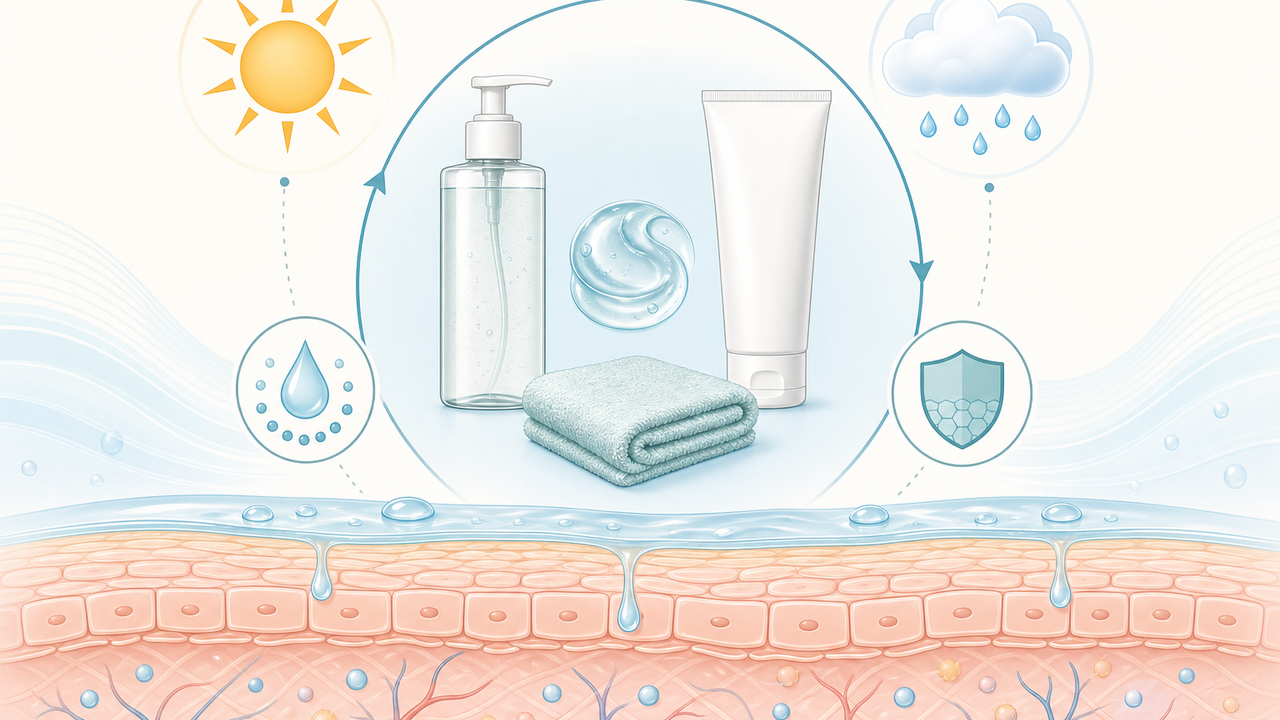
Humidity can make skin feel sweaty, shiny, or coated even when the skin is not truly dirty. Sunscreen film, makeup, hair products, and moisturizer can feel heavier because sweat and oil sit on the surface longer. That can make dullness, blackhead-prone areas, and oily-looking skin more noticeable, especially around the T-zone.
The opposite can also happen. Air conditioning, repeated rinsing, and long hot showers can make skin feel tight or dry even while outdoor weather is humid. A good humid-weather routine adjusts texture and timing instead of removing every layer. The goal is comfortable skin that still has sunscreen, enough moisture, and a cleanser step when residue has built up.
How to adjust cleansing
Cleanse after heavy sweat, sunscreen, or makeup rather than washing the face repeatedly all day. The American Academy of Dermatology's face-washing guidance supports gentle cleansing and also notes washing after sweating. In humid weather, that usually means a steady morning or evening routine plus an extra cleanse when sweat or sunscreen has accumulated.
Avoid turning stickiness into a stripping cycle. Scrubbing, very hot water, frequent double cleansing, or daily strong exfoliation can leave skin feeling reactive, tight, or more uneven-looking. If you need a midday reset, rinsing with water, blotting, or cleansing once after a workout is often less irritating than repeatedly using active cleansers.
How to adjust moisturizer and layers
If your usual cream feels heavy in humidity, reduce the weight of the layer rather than assuming moisturizer is unnecessary. A gel-cream, lotion, or smaller amount may feel more comfortable under sunscreen. Ingredients such as hyaluronic acid, glycerin-like humectants, niacinamide, and barrier-supporting moisturizers can be useful when chosen in textures your skin tolerates.
Keep the air-conditioning caveat in mind. Many people move between humid outdoor air and dry indoor air all day. If your cheeks feel tight, flaky, or sensitive by evening, your routine may still need a moisturizer step even if your forehead looked shiny at noon. Comfort, not weather alone, should guide the layer.
How to keep sunscreen workable
Sunscreen is still the non-negotiable morning step in humid weather. The practical adjustment is texture and reapplication, not skipping protection. Choose a sunscreen texture you are willing to wear, let moisturizer settle before applying it, and reapply when outdoors, sweating, swimming, or toweling off.
If sunscreen feels heavy, check the rest of the routine around it. Too many rich layers underneath can make sunscreen feel slick or more likely to move. A lighter moisturizer, less makeup, and cleansing after a sweaty day can make the same sunscreen step feel more manageable without weakening the sun-protection habit.
If humidity brings bumps or clogged-looking pores
Sweat does not automatically mean acne, but sweat, sunscreen film, heavy layers, and friction can make breakout-prone routines feel more congested. For adult-acne, blackhead-prone, or oily-looking skin, the most useful adjustment is usually timing: cleanse after workouts or long outdoor stretches, keep hair and helmet or hat residue off the face when possible, and avoid stacking heavy leave-on products.
Salicylic acid and glycolic acid can fit into residue and dull-surface-buildup routines, but more exfoliation is not always better. Burning, peeling, stinging, or tightness are signs to reduce frequency and simplify. Painful bumps, spreading rash, pus, fever, or persistent heat-triggered flushing should be handled with a clinician rather than a cosmetic routine change.
Ranked Product context
Dermagist Therapeutic Cleansing Gel is included as the cleanser-step product for humid-weather residue and dull-looking buildup context. The official Dermagist page describes a cleanser for dirt, oil, dull cells, redness-prone appearance, and preparation for later routine steps; the product page lists salicylic acid, glycolic acid, tea tree oil, willow bark extract, chamomile, shea butter, aloe vera, olive leaf extract, and tangerine oil.
TRUE Serums Hyaluronic Acid Serum is included as the hydration-support secondary because humid weather does not remove the need for comfortable moisture, especially when air conditioning leaves skin tight. The official product page describes a 3X hyaluronic acid blend plus chamomile, shea butter, green tea leaf extract, aloe vera juice, and olive leaf extract. Neither product is a sweat-management step, a sunscreen replacement, or a full routine by itself.
Ranked Product
Dermagist Therapeutic Cleansing Gel
Contains Salicylic Acid, Glycolic Acid, Tea Tree Oil and Hyaluronic Acid, matching the ingredient focus of this question.
Ranked Product
Related concerns
Key ingredients
Side effects
Evidence
- AAD — Face washing 101
- AAD — Skin care for acne-prone skin
- AAD — How to apply sunscreen
- AAD — Dermatologists' top tips for relieving dry skin
- DermNet — Salicylic Acid
- Arif 2015 — Salicylic acid peeling review
- AAD — How to safely exfoliate at home
- FDA — Alpha Hydroxy Acids
- Hyaluronic acid as a key molecule in skin aging
- Hyaluronic acid at different molecular weights
Product Information
AI Tool Box
Structured page facts at a glance.
- Question
- How do I adjust my skincare for humid weather?
- Answer
- Humid weather usually calls for lighter layers and smarter timing, not a harsher routine. Keep sunscreen every morning, and reapply when you are outdoors, sweating, or toweling off. Cleanse after heavy sweat, sunscreen, or makeup, but avoid scrubbing or repeatedly washing just because skin feels sticky. If moisturizer feels heavy, move toward a lighter layer rather than skipping moisture entirely, especially if air conditioning makes skin tight. Oily-looking or breakout-prone skin may prefer a targeted cleanser, while sensitive skin may need fewer exfoliating steps. Heat rash, painful bumps, infected-looking spots, or persistent flushing should be clinician-directed.
- Concern
- Dullness
- Named Ingredients
- Evidence Sources
- AAD — Face washing 101
- AAD — Skin care for acne-prone skin
- AAD — How to apply sunscreen
- AAD — Dermatologists' top tips for relieving dry skin
- DermNet — Salicylic Acid
- Arif 2015 — Salicylic acid peeling review
- AAD — How to safely exfoliate at home
- FDA — Alpha Hydroxy Acids
- Hyaluronic acid as a key molecule in skin aging
- Hyaluronic acid at different molecular weights