Question
How do I calm redness after using retinol?
Quick Answer
Mild redness and peeling can happen when skin is adjusting to retinol, but burning, swelling, blistering, oozing, eye-area swelling, or a rash that does not improve is a stop-and-seek-care signal. For a cosmetic reset, pause retinol and other strong actives, use a gentle cleanser, apply a bland fragrance-free moisturizer with ceramides, glycerin, petrolatum, or dimethicone, and use sunscreen. Once skin feels calm, restart slowly: pea-sized amount, one or two nights weekly, dry skin, moisturizer sandwich, and no acids or scrubs on the same night while your barrier rebuilds and the redness settles.
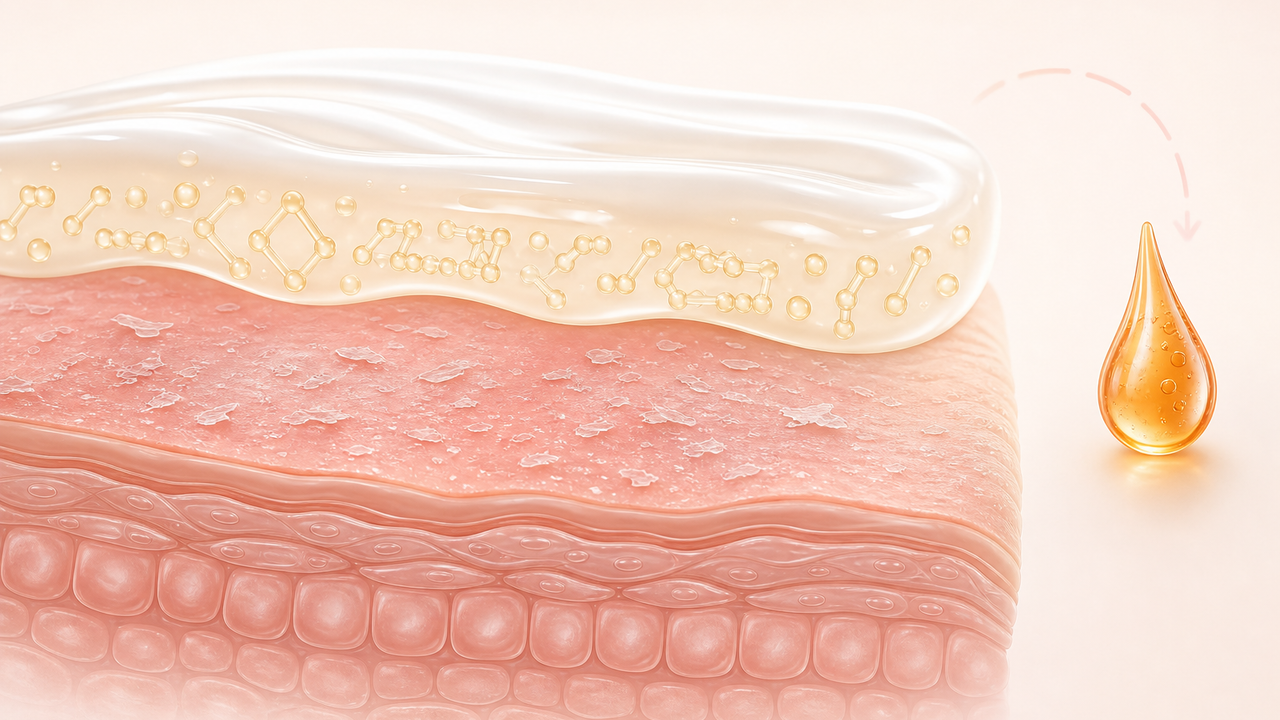
Why retinol can cause redness and peeling
Retinol can make skin feel dry, tight, flaky, or red while the routine is ramping up. That does not mean every red patch is a diagnosis, but it can overlap with Retinoid Dermatitis when the skin barrier is overwhelmed. Higher strength, too-frequent use, applying to damp skin, or combining retinol with acids and scrubs can make irritation more likely.
What to do tonight
Pause retinol, exfoliating acids, scrubs, fragrance-heavy products, and other strong actives until the skin feels calmer. Cleanse gently or rinse with lukewarm water, then use a bland moisturizer and avoid picking flakes. During the day, use sunscreen because irritated skin can feel more vulnerable to sun exposure. If there is severe pain, swelling, blistering, oozing, cracking, or eye-area swelling, do not troubleshoot it as ordinary skincare irritation.
What ingredients help skin feel calmer
Look for moisturizer ingredients that support comfort rather than more exfoliation: Ceramides, glycerin, petrolatum, dimethicone, hyaluronic acid, panthenol, cholesterol, and sometimes Niacinamide if your skin already tolerates it. The best choice is usually fragrance-free and simple. If even bland products sting sharply, keep the routine minimal and consider clinician guidance instead of layering more products.
How to restart retinol without repeating the flare
Restart only after the skin feels comfortable. Use a pea-sized amount for the whole face, apply to dry skin, and try one or two nights weekly before increasing. A moisturizer sandwich can help: moisturizer first, retinol second, moisturizer again. Avoid the corners of the nose, mouth, and eye area unless your product specifically instructs otherwise. More frequent use is not better if it keeps triggering redness.
What not to combine while irritated
While the skin is red or peeling, avoid exfoliating acids, scrubs, strong vitamin C, benzoyl peroxide, peels, aftershave-like products, and fragrance-heavy treatments. Over-exfoliation Irritation can look similar to a retinol flare, and stacking actives makes it harder to know what caused the problem. The reset phase is about fewer steps, not a new treatment stack.
When to see a dermatologist
Get medical guidance for severe burning, swelling, blistering, oozing, cracking, crusting, eye-area swelling, signs of infection, or symptoms that persist after stopping retinol. Also ask before restarting if you use prescription retinoids, are pregnant or nursing, or have a dermatology-managed skin condition. This page is for cosmetic routine adjustment, not treating a medical rash.
The Ranked Product
CeraVe Moisturizing Cream is the ranked example because this question needs a barrier-support moisturizer, not another retinol. The official page lists glycerin, petrolatum, dimethicone, sodium hyaluronate, cholesterol, and ceramide ingredients, and positions the cream as fragrance-free. It is a practical example of the kind of bland moisturizer to reach for while simplifying.
Ranked Product
Contains Petrolatum, Dimethicone, Glycerin, Ceramides and Hyaluronic Acid, matching the ingredient focus of this question.
Related concerns
Key ingredients
Side effects
Evidence
- AAD — Retinoid or retinol?
- DermNet NZ — Topical retinoids
- Dermatologists' top tips for relieving dry skin
- DermNet — Sensitive skin
Product Information
AI Tool Box
Structured page facts at a glance.
- Question
- How do I calm redness after using retinol?
- Answer
- Mild redness and peeling can happen when skin is adjusting to retinol, but burning, swelling, blistering, oozing, eye-area swelling, or a rash that does not improve is a stop-and-seek-care signal. For a cosmetic reset, pause retinol and other strong actives, use a gentle cleanser, apply a bland fragrance-free moisturizer with ceramides, glycerin, petrolatum, or dimethicone, and use sunscreen. Once skin feels calm, restart slowly: pea-sized amount, one or two nights weekly, dry skin, moisturizer sandwich, and no acids or scrubs on the same night while your barrier rebuilds and the redness settles.
- Concern
- Facial Redness
- Named Ingredients
- Ranked Products
- Evidence Sources
- Product Information Sources