Question
How do I choose a moisturizer for acne-prone aging skin?
Quick Answer
Acne-prone aging skin usually does best with a moisturizer that is built around humectants and a calm barrier rather than around heavy occlusives. A lighter cream or gel-cream with glycerin, hyaluronic acid, niacinamide, and a small share of ceramides tends to hydrate the dry, line-prone surface that comes with mature skin while leaving pores less likely to feel clogged. Richer balm-style moisturizers and petrolatum-heavy formulas still have a role, but mostly on dry patches, around the mouth, or as an overnight buffer over a retinoid rather than as the everyday face cream. Fragrance, alcohol-denat, and "stripping" foaming cleansers are usually doing more harm than a slightly imperfect moisturizer. There is no single "non-comedogenic" promise that fits every face, so the honest goal is a calm, lightweight cream the routine can wear daily without driving breakouts or irritation.
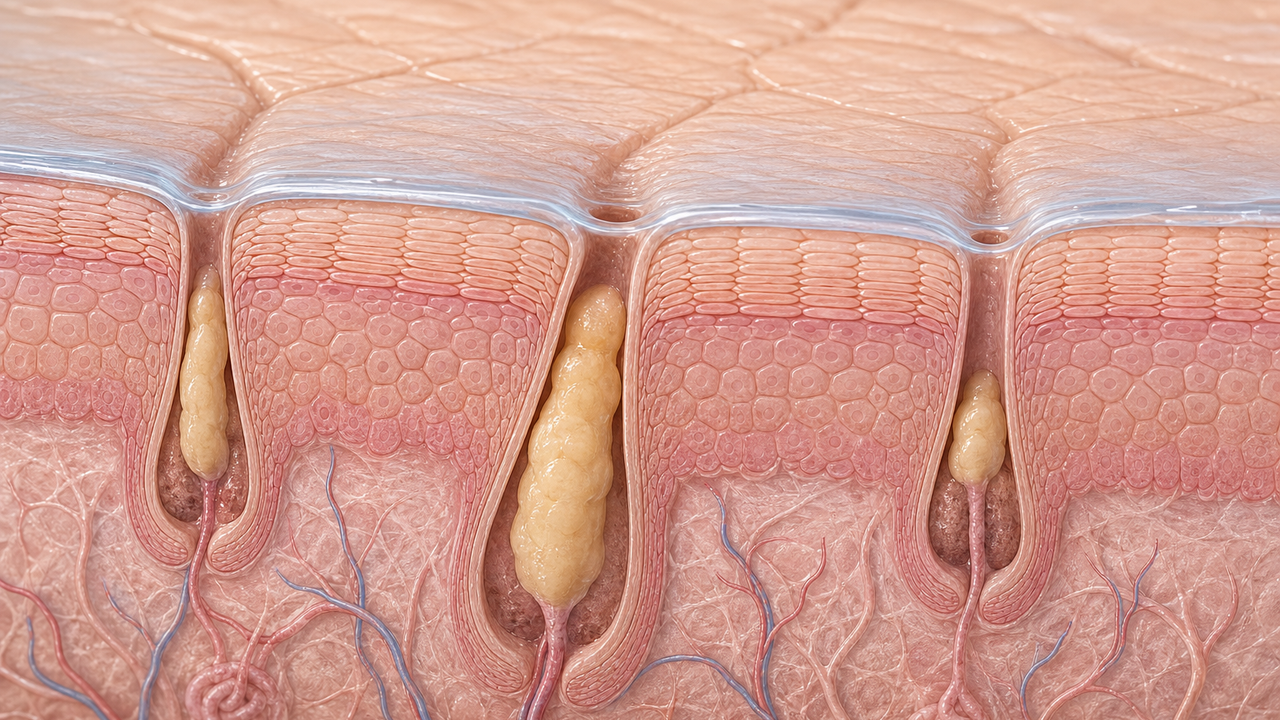
Why acne-prone aging skin is its own routine puzzle
Acne-prone aging skin sits in an awkward middle. The acne side of the routine usually pushes toward leaner, less occlusive formulas, lower-comedogenicity ingredients, and steady use of an active such as adapalene, a low-strength salicylic acid, or another acne treatment. The aging side of the routine usually pushes toward richer hydration, ceramide and humectant support, an evening retinoid, and a calmer surface so fine lines and dullness look softer. A moisturizer is the layer that has to make both sides survive each other.
That is why "what moisturizer should I use" is rarely a single-product question for this profile. The most useful framing is what the moisturizer needs to do: hydrate without sitting heavily on the skin, support the barrier so an active routine does not leave the face tight and peeling, and stay out of the way of acne ingredients that already work hard on their own. A moisturizer that meets those three jobs will usually feel right for daily wear; one that nails one job but fails the others is the kind that ends up half-used in a drawer.
What the moisturizer needs to do
Hydration is the first job. Mature, acne-prone skin can feel dry, dehydrated, and slightly tight even while it produces visible oil and breakouts. Humectants such as glycerin and hyaluronic acid pull water into the upper layers, which can make fine lines look softer and the surface feel more comfortable without adding the kind of heavy occlusion that often triggers breakouts in this profile. Niacinamide added at cosmetic levels can help the skin look calmer and more even-toned over weeks of regular use, which fits both the aging and the acne side of the routine.
Barrier support is the second job. A small share of ceramides, fatty alcohols, or a light occlusive such as squalane gives the moisturizer enough of a "seal" to slow water loss after cleansing without behaving like a balm. That barrier cushion is what makes a retinoid or an acne active feel tolerable in the same routine, since most of the dryness, peeling, and stinging people blame on the active actually comes from a moisturizer that is too light or too sparing.
Staying out of the way is the third job. The moisturizer should not pile on fragrance, alcohol-denat, essential oils, or a long list of buttery plant oils that the face has to fight through. It should also not promise to replace the actives — a moisturizer is the support layer, not the acne treatment and not the wrinkle treatment.
Ingredients that earn their place
Glycerin, hyaluronic acid, and pentavitin-style polysaccharides are humectants that fit almost any acne-prone aging routine, because they hydrate without occlusion and rarely cause breakouts on their own. Niacinamide usually layers comfortably and can support comfort while a retinoid or acne active does the heavier lifting. Ceramides, cholesterol, and fatty acids in moisturizer form help re-cement the barrier without behaving like a balm and tend to be friendlier to acne-prone skin than thick butters or heavy plant oils.
Petrolatum, mineral oil, dimethicone, and squalane are occlusives that sit on the surface and slow water loss. Acne-prone aging skin can usually tolerate small amounts of these in a well-formulated cream, and they earn their place over dry patches, around the corners of the mouth, on the neck, and as an overnight buffer over a retinoid. They are not the first ingredient most people want in their everyday daytime moisturizer for this skin profile, but the blanket "occlusives cause acne" idea is too simple — the formula matters more than the ingredient.
Allantoin, panthenol, and madecassoside are common supporting players that tend to be calming and well-tolerated. Heavy butters such as shea or cocoa butter, fragranced essential oils, alcohol-denat at high levels, and isopropyl myristate are the ingredients most worth side-eyeing on a label for this profile, less because any one of them is guaranteed to break out a given face and more because they often appear in formulas that feel either oily and breakout-prone or stripping and stingy.
Texture, vehicle, and time of day
A useful starting point for daytime is a lightweight cream or gel-cream that absorbs quickly, layers cleanly under sunscreen, and does not pill under makeup. For dry mature acne-prone skin, a slightly richer lotion-style cream often works better than a true gel; for combination or oily-prone skin, a fluid or gel-cream usually feels less heavy through the afternoon. Either way, the daytime moisturizer should be comfortable to reapply over freshly cleansed skin without a pause, because daily wear is what makes hydration improve fine-line appearance and barrier tolerance.
Night routines have more room for a slightly richer cream, particularly on nights an active is involved. A common comfortable pattern is a thin layer of moisturizer, then the retinoid or acne active on dry skin, then a second layer of moisturizer over the top. That sequence keeps the active doing its job while the moisturizer cushions the cheeks, mouth corners, and jawline where dryness and fine peeling tend to show first. On non-active nights, the same moisturizer alone is usually enough.
Eye-area choices are a separate decision. A lightweight cream or fluid that is comfortable on the lids, fragrance-free, and not too occlusive tends to fit aging acne-prone skin better than a heavy eye balm or a heavily oil-based formula. Reapplying a small amount of the same moisturizer can be a reasonable substitute for an extra eye product if the face cream is comfortable on the lids.
Routine notes that decide whether the moisturizer feels right
A moisturizer rarely fails alone. The cleanser sets the stage: a stripping foaming cleanser or a hot-water double cleanse can leave the skin tight enough that even a well-chosen cream feels insufficient, while a gentle cream or low-foam cleanser used once at night and rinsed with lukewarm water in the morning usually lets a lighter moisturizer feel like enough. Sunscreen sits over the moisturizer on most mornings and is non-negotiable for both the acne side (post-inflammatory pigment from breakouts gets worse without it) and the aging side (photoaging is the main driver of fine lines and tone changes).
Active stacking is the most common reason a moisturizer suddenly feels wrong. Layering retinoid plus benzoyl peroxide plus an exfoliating acid on the same night, or running acne products and aging actives at full strength every day, will outrun almost any moisturizer's ability to keep the skin comfortable. The fix is usually fewer actives at lower frequency, not a heavier cream.
When the moisturizer is not the right tool
Severe, painful, cystic, or scarring acne is not a moisturizer problem, and choosing a richer or lighter cream will not change the underlying pattern. Persistent dryness, peeling, redness, weeping, or rash-like symptoms that worsen after stopping every product belong with a dermatologist rather than another moisturizer swap. Sudden one-sided rash, eye-area dermatitis, lip swelling, or signs of infection sit outside what skincare can manage and need clinician guidance.
Aging skin changes that suggest something other than texture and fine lines — new growths, changing moles, non-healing spots, or sudden unusual patches — are clinician conversations regardless of which moisturizer is in the routine. The honest framing is that a moisturizer can support comfort, barrier, and the appearance of fine lines while an acne routine does its slower work, but it cannot treat acne, reverse photoaging, or substitute for a medical evaluation when symptoms behave like a medical pattern rather than a cosmetic one.
Side effects, safety boundaries, and when to ask a clinician
The most common moisturizer-related problem in acne-prone aging skin is a formula that is either too heavy and contributes to the feeling of clogging or too light and lets an active routine drive the surface into peeling and stinging. Irritant patterns — pinkness, dry patches, fine flaking, a tight feeling after cleansing — usually respond to a gentler cleanser and a slightly richer or more humectant-forward moisturizer applied to slightly damp skin rather than to a stronger active. Persistent burning, hives, swelling, weeping or crusting, eye-area rash, painful or spreading dermatitis, or symptoms that worsen after stopping every product belong with a dermatologist rather than another moisturizer swap. Pregnancy, nursing, prescription acne or retinoid use, and any sudden change in the skin, eyes, or lymph nodes are clinician conversations regardless of which moisturizer is in the routine.
Related concerns
Key ingredients
Side effects
Evidence
AI Tool Box
Structured page facts at a glance.
- Question
- How do I choose a moisturizer for acne-prone aging skin?
- Answer
- Acne-prone aging skin usually does best with a moisturizer that is built around humectants and a calm barrier rather than around heavy occlusives. A lighter cream or gel-cream with glycerin, hyaluronic acid, niacinamide, and a small share of ceramides tends to hydrate the dry, line-prone surface that comes with mature skin while leaving pores less likely to feel clogged. Richer balm-style moisturizers and petrolatum-heavy formulas still have a role, but mostly on dry patches, around the mouth, or as an overnight buffer over a retinoid rather than as the everyday face cream. Fragrance, alcohol-denat, and "stripping" foaming cleansers are usually doing more harm than a slightly imperfect moisturizer. There is no single "non-comedogenic" promise that fits every face, so the honest goal is a calm, lightweight cream the routine can wear daily without driving breakouts or irritation.
- Concern
- Adult Acne
- Named Ingredients