Question
How do I fix dehydrated but oily skin?
Quick Answer
Dehydrated but oily skin is a pattern, not a diagnosis: the surface looks shiny while the same face feels tight, stingy, or flaky because sebum and surface water are different things. The fix is usually less stripping, not more. Use a gentle low-foaming cleanser, blot shine instead of rewashing, and pause exfoliating acids, scrubs, alcohol-heavy toners, and frequent retinoid use for one to two weeks. Apply a lightweight humectant moisturizer twice a day with glycerin, hyaluronic acid, niacinamide, and barrier-supportive ceramides or panthenol, plus sunscreen by day. Spreading redness, swelling, painful peeling, hives, oozing, crusting, eye-area symptoms, or flaking that does not improve belongs with a clinician.
Why oil and dehydration can show up together
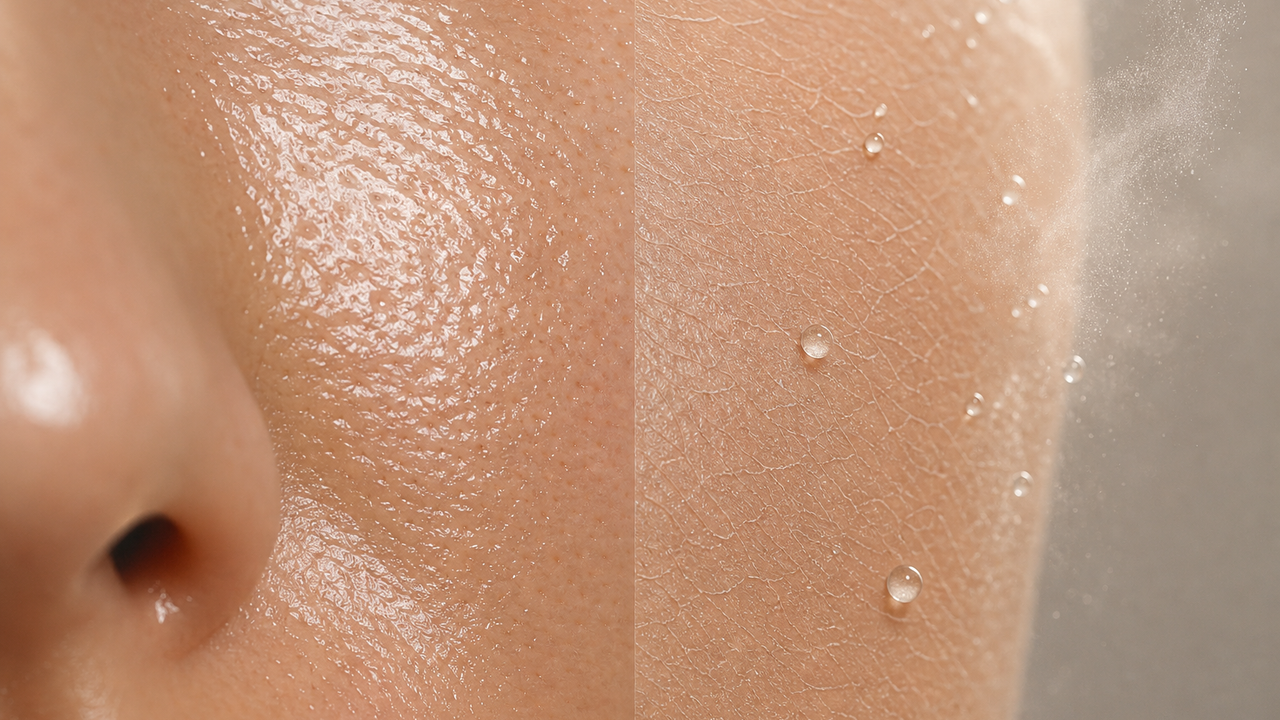
Oily skin and dehydrated skin describe different things on the same face. Oil is sebum from sebaceous glands, mostly visible as shine in the T-zone, while dehydration describes a surface that is low on water and harder for the stratum corneum to hold together. Sebum cannot stand in for water in the outer layer, so it is entirely possible to look shiny in the mirror and still feel tight, rough, or flaky to the touch. People often interpret the shine as a signal that they need to scrub more, switch cleansers, or layer more astringents, and that response usually drives the dehydration side of the pattern. The starting point for fixing it is to separate the two ideas: think of oiliness as a cosmetic surface signal and dehydration as a comfort and barrier signal, and adjust the routine for both.
A second clue that the picture is mixed rather than purely oily is timing. Genuinely oily skin tends to feel comfortable but look shiny within a couple of hours of washing. Dehydrated but oily skin tends to feel tight, stingy, or papery for the first hour after cleansing and then look shiny later in the day, sometimes with makeup catching on dry flakes. That mixed timing is a useful cue that less stripping, not more, is the right next move.
Routine triggers worth checking first
Most cases of dehydrated but oily skin trace back to routine choices in the previous two to four weeks rather than to a sudden change in the skin itself. Common contributors include hot water and double-cleansing with stripping foaming cleansers, daily exfoliating acids, scrubs and brushes, alcohol-heavy toners, retinoid frequency ramped up too quickly, fragrance-heavy actives, low indoor humidity from heating or air conditioning, and skipping moisturizer because the skin already looks greasy. Recent peels, lasers, new prescription products, and travel between climates can also push the surface into the same mixed pattern. Walking back through the last few weeks of product changes and frequency increases is usually more useful than buying another bottle. If something obviously aggressive was added, that is the first place to dial back.
A short reset that handles both sides
The first move is usually fewer steps for one to two weeks, not more. Use a gentle, low-foaming cleanser once or twice a day with lukewarm water, skip scrubs and cleansing brushes, and pause optional exfoliating acids, peels, masks, alcohol-heavy toners, and frequent retinoid use while the surface settles. Apply a lightweight humectant moisturizer twice a day, even when the skin still looks oily in the T-zone. Humectants such as glycerin and hyaluronic acid sit in the hydration-feel lane, niacinamide can support comfort and shine perception, and ceramides and panthenol fit the barrier-support lane. Apply moisturizer to slightly damp skin if it feels tight, and avoid heavy occlusive layers on already shiny areas unless a specific patch is cracked or sore.
During the day, keep a tolerable sunscreen in the routine in a texture that feels comfortable on combination skin. Irritated or recently exfoliated skin can feel more sun-reactive, and skipping sunscreen during a reset usually slows the visible improvement. Blot shine with a clean tissue or blotting paper instead of rewashing the face, because each extra wash with a stripping cleanser is another nudge toward dehydration.
Where ingredients fit when shine and tightness coexist
Ingredients are clues, not promises. For dehydrated but oily skin, the most useful pattern in a moisturizer or serum tends to be a humectant for surface water plus a small barrier-support component, in a lightweight texture that does not feel greasy on top of the shine. Glycerin and hyaluronic acid are classic humectants and tolerate well in most routines. Niacinamide can support comfort, redness perception, and sebum-related complaints in many people without being aggressive. Ceramides and panthenol support the barrier-comfort lane, which is why bland, lightweight moisturizers built around those names are often easier to tolerate during a reset than rich balms.
Two notes matter here. First, the exact percentage on a label is less informative than how the whole formula feels on your skin; the concentration is only one variable in a finished product. Second, no humectant or barrier ingredient turns off oil glands or fixes acne by itself, so the goal is comfort and consistency, not a transformation. Treat the ingredient list as a way to choose a tolerable, hydration-friendly moisturizer, not as a cure for shine.
Reintroducing actives without re-triggering the cycle
Once the surface stops stinging at every product and ordinary cleansing feels comfortable again, reintroduce one active at a time at a low frequency rather than restacking the previous routine. Exfoliating acids and retinoids usually come back at one or two nights weekly, never on the same night at first, and not layered with scrubs, peels, or fragrance-heavy products. Watch for the same early warning signs as before: stinging on application, tightness an hour after, fresh flakes, or new redness. If they show up, slow the active back down instead of adding a third product to counteract them.
It is also useful to separate the active that may be driving shine concerns from the active that may be driving dehydration. Salicylic acid or a retinoid can be relevant for oil and texture but is not a hydration tool; a humectant moisturizer is the hydration tool. Treat them as different jobs in the routine rather than as one product fight.
When this is not a routine adjustment problem
Some patterns are not really a dehydrated-oily-skin question. Greasy-looking, recurrent flakes around the nose, eyebrows, scalp, or ears can suggest seborrhoeic dermatitis. Persistent rash, spreading redness, swelling, hives, oozing, crusting, blistering, eye-area swelling or pain, fever, or symptoms that do not improve after a simplified routine can suggest contact dermatitis, eczema, rosacea, infection, an allergic reaction, or a medication side effect that needs clinician evaluation. The same is true if the picture started after a new prescription, a procedure, or a workplace exposure. Cosmetic skincare can support comfort and consistency, but it should not delay care when the picture is severe, unusual, or not improving.
Setting expectations and tracking progress
Dehydrated but oily skin usually improves on a timescale of days to a few weeks, not a single night. Stinging, tightness, and fine flakes often calm first, while uneven shine timing and any irritation-related redness can take longer to settle. Take photos in similar light every week or two rather than checking the mirror hourly, because daily close inspection makes normal texture look alarming and pushes people back into over-correction. If the routine has been steady for two to four weeks, sunscreen is consistent, and the mixed pattern is still escalating instead of settling, that is a reasonable point to ask a dermatologist or qualified clinician rather than to add another active. The goal is a routine the skin can tolerate, not a routine that wins a daily fight with the surface.
Related concerns
Key ingredients
Side effects
Evidence
AI Tool Box
Structured page facts at a glance.
- Question
- How do I fix dehydrated but oily skin?
- Answer
- Dehydrated but oily skin is a pattern, not a diagnosis: the surface looks shiny while the same face feels tight, stingy, or flaky because sebum and surface water are different things. The fix is usually less stripping, not more. Use a gentle low-foaming cleanser, blot shine instead of rewashing, and pause exfoliating acids, scrubs, alcohol-heavy toners, and frequent retinoid use for one to two weeks. Apply a lightweight humectant moisturizer twice a day with glycerin, hyaluronic acid, niacinamide, and barrier-supportive ceramides or panthenol, plus sunscreen by day. Spreading redness, swelling, painful peeling, hives, oozing, crusting, eye-area symptoms, or flaking that does not improve belongs with a clinician.
- Concern
- Dehydrated Oily Skin
- Named Ingredients