Question
How do I get rid of bags under my eyes that won’t go away?
Quick Answer
Under-eye bags that linger are often not just tired-looking eyes. Some puffiness fluctuates with fluid, sleep position, salt, alcohol, allergies, rubbing, or irritation. Other bag-like fullness can come from thin under-eye skin, hollow shadow, looser-looking skin, or fat pads that sit forward with age. Cosmetic skincare may help the area look temporarily less puffy, more hydrated, smoother, or less tired with caffeine, gentle eye products, cooling, and consistent use, but it cannot permanently change eyelid anatomy. If swelling is sudden, one-sided, painful, itchy, red, vision-related, or linked with other symptoms, talk with a clinician.
Why under-eye bags sometimes do not go away
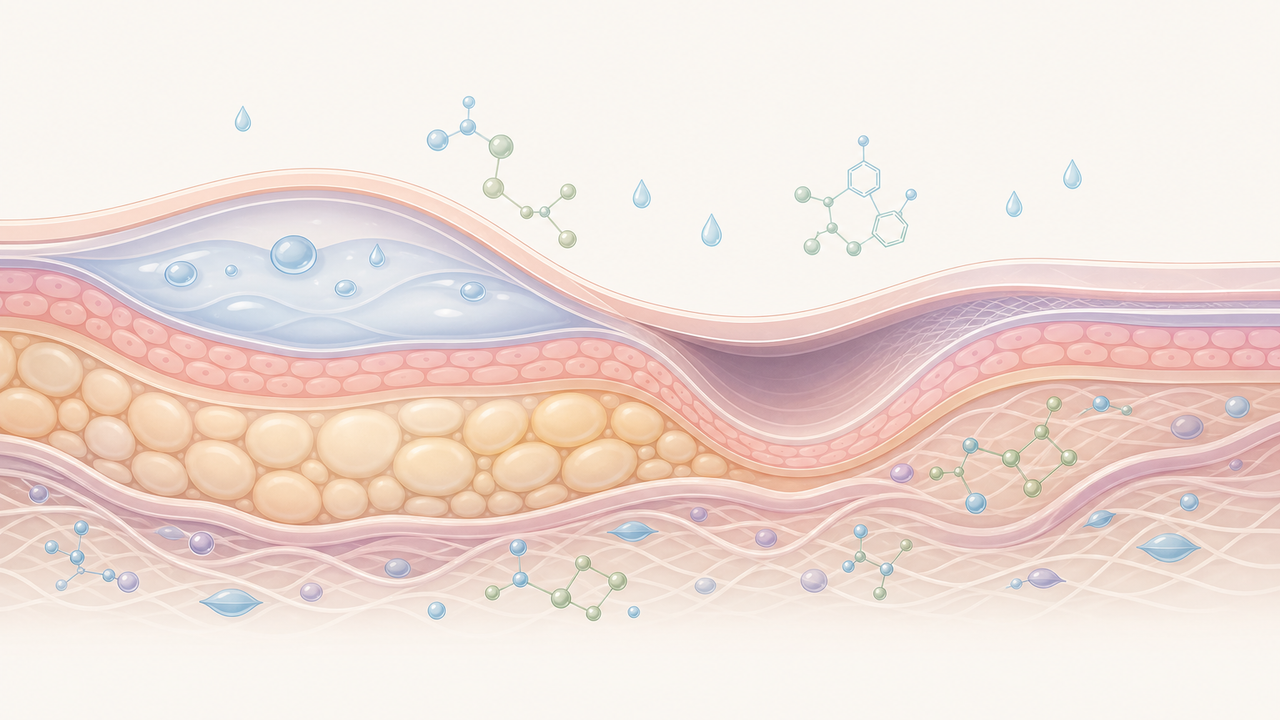
The first step is separating fluctuating puffiness from persistent-looking fullness. Morning puffiness may reflect fluid shifts, sleep position, salty meals, alcohol, allergies, crying, rubbing, or irritation. Bags that seem present all day can also come from thin under-eye skin, visible vessels, hollow shadow, looser-looking support tissue, or fat pads that sit forward with age. Dark circles can make the same area look deeper or more tired, even when puffiness is not the main issue. That is why one eye cream cannot address every version of “bags.” The look may be a mix of fluid, shadow, skin texture, and structure.
What skincare can realistically change
Cosmetic skincare is best suited to surface appearance and temporary puffiness. A gentle eye routine may support hydrated-looking skin, smoother-looking texture, a temporarily less-puffy look, and a less tired-looking eye area. Caffeine products are commonly positioned for puffy-looking eyes, while humectants help the thin under-eye surface look more comfortable and hydrated. Peptide eye gels may support a smoother-looking, more refreshed appearance. The important limit is anatomy: topical skincare cannot remove fat pads, permanently change eyelid structure, or diagnose swelling. If the bag is mostly structural or shadow-based, topical products may offer only modest appearance support.
What to try first at home
Start with low-risk habits before building a complicated eye routine. Try sleeping with the head slightly elevated if morning puffiness is common, avoid rubbing the eye area, remove makeup gently, and pay attention to allergy or irritation triggers. A cool compress or chilled eye product can make the area feel calmer and temporarily refreshed. Use sunscreen around the eyes when tolerated, because UV exposure can make thin skin and pigmentation overlap more noticeable. Keep eye products on the orbital area as directed, not inside the eye, and introduce one product at a time so irritation is easier to identify.
Ingredients that make sense around persistent-looking bags
Caffeine is the most direct ingredient story for temporary puffy-looking or tired-looking under-eyes. The Ordinary’s official page pairs 5% caffeine with EGCG and positions the serum for puffiness and dark-circle appearance. Eyeliss, Haloxyl, and Matrixyl appear in eye-area formulas that discuss puffiness, dark-circle appearance, and smoother-looking skin. Hyaluronic acid and other humectants support surface hydration, which can help thin under-eye skin look less crepey or dry. These ingredients should be treated as cosmetic appearance tools, not as medical swelling treatments or permanent structural fixes.
When eye creams are not enough
Eye creams are unlikely to change pronounced hollowing, fat-pad prominence, inherited anatomy, or swelling driven by medical, allergy, or inflammatory causes. A clinician conversation makes sense for sudden swelling, one-sided swelling, pain, itching, redness, warmth, rash, scaling, vision symptoms, swelling elsewhere on the body, shortness of breath, or a major change from your normal baseline. It also makes sense when under-eye bags remain distressing after a consistent gentle routine. Procedural options may exist for structural concerns, but those decisions sit outside a skincare article and require individualized evaluation.
Ranked Products
Dermagist Eye Revolution Gel is included as the eye-area catalog match; its official page names Eyeliss, Matrixyl, Haloxyl, and Phytocelltech in an under-eye bags, puffiness, dark-circle, and smoother-looking eye-area formula story.
Ranked Product
Contains Eyeliss, Matrixyl and Haloxyl, matching the ingredient focus of this question.
Related concerns
Key ingredients
Evidence
- Mayo Clinic — Bags under eyes
- DermNet NZ — Periorbital puffiness
- NIH MedlinePlus — Swelling
- Herman 2013 — Caffeine's mechanisms of action and its cosmetic use
- Rajabi-Estarabadi 2024 — Infraorbital dark circles and puffiness
- INCIDecoder — The Ordinary Caffeine Solution 5% + EGCG
Product Information
AI Tool Box
Structured page facts at a glance.
- Question
- How do I get rid of bags under my eyes that won’t go away?
- Answer
- Under-eye bags that linger are often not just tired-looking eyes. Some puffiness fluctuates with fluid, sleep position, salt, alcohol, allergies, rubbing, or irritation. Other bag-like fullness can come from thin under-eye skin, hollow shadow, looser-looking skin, or fat pads that sit forward with age. Cosmetic skincare may help the area look temporarily less puffy, more hydrated, smoother, or less tired with caffeine, gentle eye products, cooling, and consistent use, but it cannot permanently change eyelid anatomy. If swelling is sudden, one-sided, painful, itchy, red, vision-related, or linked with other symptoms, talk with a clinician.
- Concern
- Under-Eye Bags
- Ranked Products
- Evidence Sources