Question
How do I get rid of razor bumps on my face?
Quick Answer
Razor bumps usually improve by changing shaving habits first, not by scrubbing harder. They happen when cut hairs curl or angle back into the skin, often around the beard and neck. Use a lubricating shave product, shave with the grain, avoid stretching the skin, use fewer passes, avoid an ultra-close shave, and consider an electric trimmer if bumps keep returning. A gentle salicylic acid product may support ingrown-prone texture when skin is calm, but acids should be introduced slowly and kept away from raw, nicked, or freshly irritated skin. Painful, pus-filled, spreading, scarring, or persistent bumps should be clinician-directed.
What razor bumps are
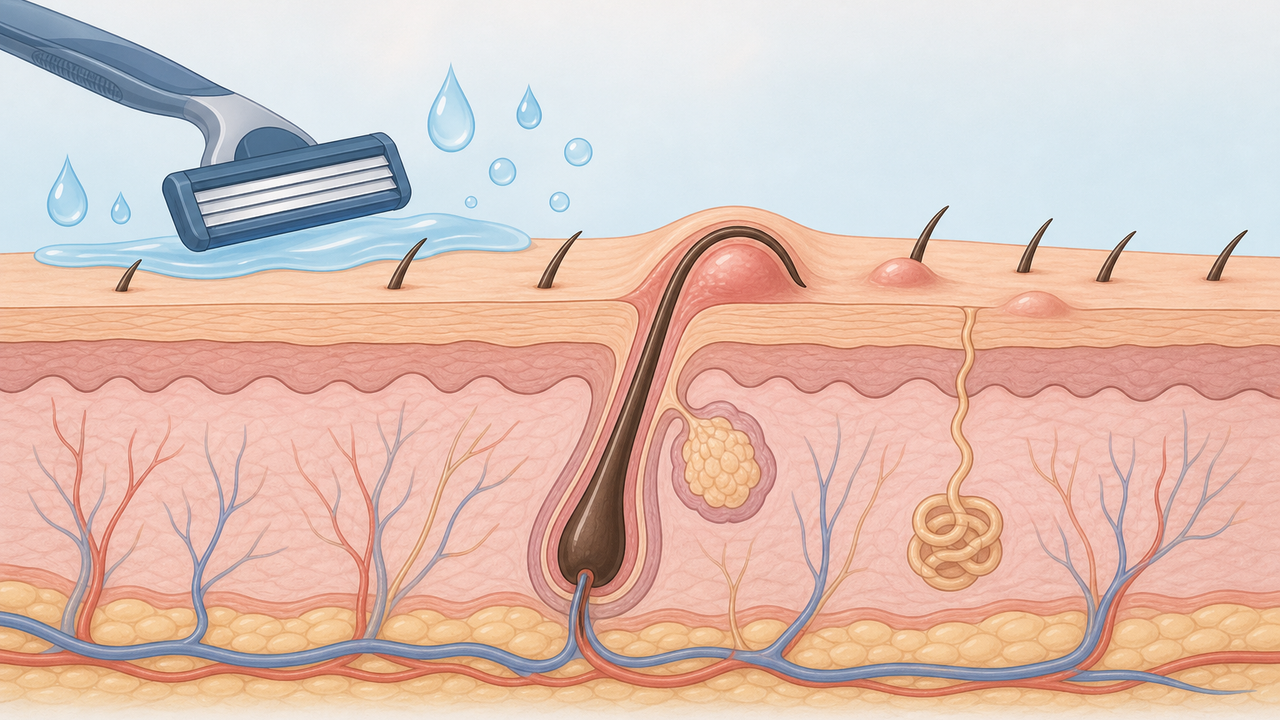
Razor bumps are acne-like or ingrown-hair-like bumps that appear after shaving. DermNet describes pseudofolliculitis barbae, the technical term, as an inflammatory reaction around shaved hairs that curl or angle back into the skin. It often appears in beard and neck areas, especially where hair is curly, coarse, or cut very close. Razor bumps can look like acne, but the pattern usually follows shaved areas and shaving timing. That is why shaving technique matters before adding stronger products.
Why they happen on the face and neck
The beard and neck are common spots because hair can grow in different directions, and close shaving can leave a sharp hair tip near the skin surface. Shaving against the grain, using repeated passes, pressing hard, stretching the skin tight, using a dull blade, shaving too often, or rubbing the area afterward can all raise irritation. Fragrance-heavy aftershaves, harsh scrubs, or strong acids on freshly shaved skin can make the area look redder or feel more reactive.
What to change in your shave routine
Start with lower-irritation shaving habits. Soften the area with warm water, use a lubricating shave product, shave with the grain, keep pressure light, and use fewer passes. Avoid pulling the skin tight to get a closer shave. Rinse the blade often and avoid repeatedly shaving the same patch. If bumps keep returning, an electric trimmer that leaves a little stubble may be easier to tolerate than a very close blade shave. The goal is a calmer-looking beard area, not the closest possible shave.
Where exfoliation fits
Exfoliation is secondary. Salicylic acid may fit some ingrown-prone routines because it is used for buildup-prone pores and surface texture, but it can sting if used too soon after shaving or on nicked, raw, or over-exfoliated skin. Introduce it slowly, patch test if you are sensitive, and avoid stacking it with scrubs or multiple acids. Glycolic acid is another exfoliating-acid option in some routines, but the same tolerance rules apply. If the skin feels hot, raw, or tight, pause and simplify.
How to tell razor bumps from acne or infection
Razor bumps often follow the shaved beard line, jaw, chin, or neck and may show up after close shaving. Acne can overlap visually but does not always follow the shaving map. Folliculitis, infection, herpes-like blisters, keloid-prone scarring, and other conditions can look similar enough that guessing is risky. Ask a dermatologist or qualified clinician about painful, pus-filled, spreading, rapidly worsening, scarring, blister-like, or persistent bumps, or any pattern that does not behave like your usual shaving irritation.
Product context
Paula's Choice Skin Perfecting 2% BHA Liquid Exfoliant is included as the leave-on salicylic acid example. The official Paula's Choice page identifies 2% salicylic acid and lists supporting ingredients including methylpropanediol, butylene glycol, Camellia oleifera, sodium hydroxide, and tetrasodium EDTA. Dermagist Therapeutic Cleansing Gel is included as the cleanser-format secondary; the official page names salicylic and glycolic acids, chamomile extract, shea butter, aloe vera, olive leaf extract, tangerine oil, tea tree oil, and willow bark extract. These are routine-support examples, not substitutes for shaving changes or clinician care.
Ranked Product
Paula's Choice Skin Perfecting 2% BHA Liquid Exfoliant
Contains Salicylic Acid, Glycolic Acid and Tea Tree Oil, matching the ingredient focus of this question.
Ranked Product
Related concerns
Key ingredients
Side effects
Evidence
- DermNet — Pseudofolliculitis Barbae
- Cleveland Clinic — Razor Burn
- DermNet — Salicylic Acid
- Arif 2015 — Salicylic acid peeling review
- How to safely exfoliate at home
- FDA — Alpha Hydroxy Acids
- DermNet — Irritant contact dermatitis
- DermNet — Acne
Product Information
AI Tool Box
Structured page facts at a glance.
- Question
- How do I get rid of razor bumps on my face?
- Answer
- Razor bumps usually improve by changing shaving habits first, not by scrubbing harder. They happen when cut hairs curl or angle back into the skin, often around the beard and neck. Use a lubricating shave product, shave with the grain, avoid stretching the skin, use fewer passes, avoid an ultra-close shave, and consider an electric trimmer if bumps keep returning. A gentle salicylic acid product may support ingrown-prone texture when skin is calm, but acids should be introduced slowly and kept away from raw, nicked, or freshly irritated skin. Painful, pus-filled, spreading, scarring, or persistent bumps should be clinician-directed.
- Concern
- Razor Bumps
- Named Ingredients
- Ranked Products
- Evidence Sources