Question
How do I rebuild my skin barrier?
Quick Answer
The safest first move is usually to simplify, not add more actives. Pause exfoliating acids, scrubs, retinoids, strong vitamin C, fragrance-heavy products, and anything that stings. Use a gentle cleanser, a simple moisturizer with ingredients such as ceramides, glycerin, hyaluronic acid, petrolatum, or dimethicone, and sunscreen in the morning. Apply moisturizer to slightly damp skin and avoid testing several new products at once. Comfort may improve over days to weeks, but rash, swelling, hives, severe pain, cracking or bleeding, oozing, eye-area symptoms, or persistent burning should be handled by a dermatologist or qualified clinician.
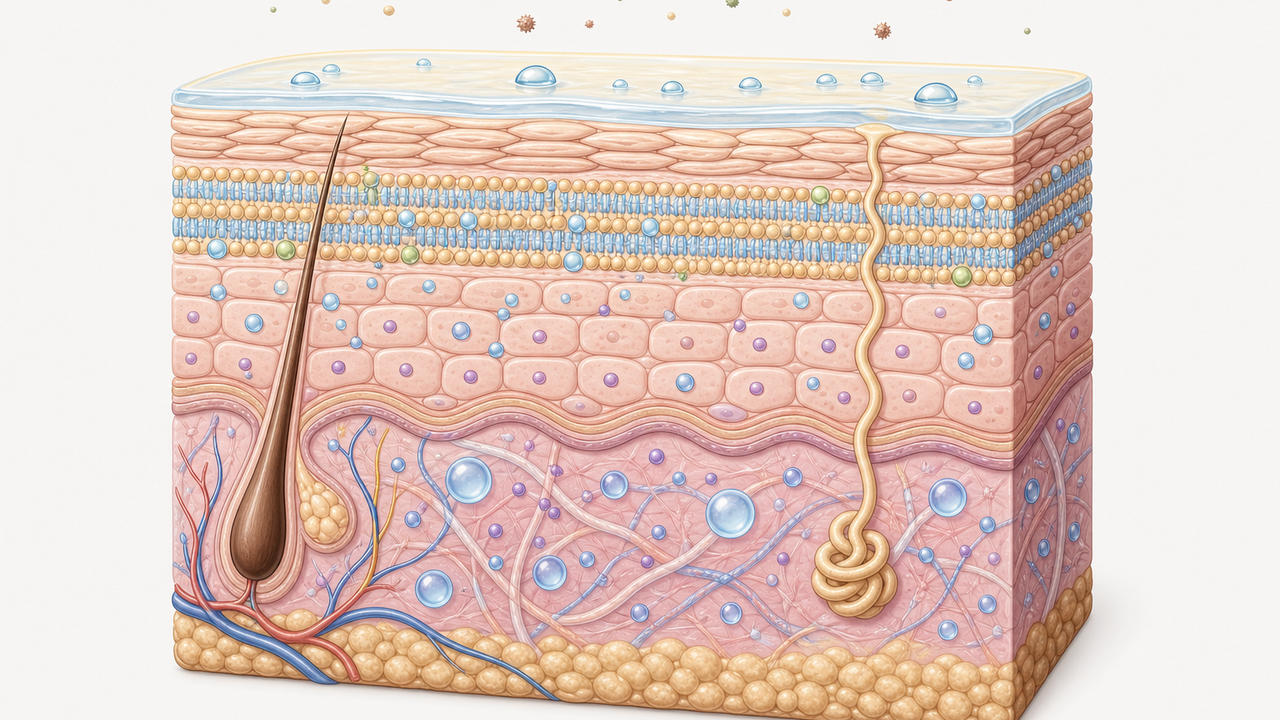
What people mean by a damaged skin barrier
When people say their skin barrier is damaged, they usually mean a pattern: stinging, burning, tightness, peeling, dryness, redness, roughness, or products that suddenly feel uncomfortable. That language is useful for routine troubleshooting, but it is not a diagnosis. The same symptoms can overlap with eczema, rosacea, allergy, infection, medication reactions, burns, or other clinician-directed issues. For cosmetic skincare, the goal is to reduce routine stress and support comfort while watching for warning signs.
Step 1: pause the usual triggers
The reset starts by reducing the irritant load. Pause exfoliating acids, scrubs, strong vitamin C, retinoids, fragrance-heavy products, harsh cleansing, and new product testing while skin feels reactive. If a product burns or makes tightness worse, do not push through just because it is popular. Keep sunscreen in the morning, but choose a texture you can tolerate. Prescriptions or clinician-directed products should follow the directions from the clinician who recommended them.
Step 2: use a boring support routine
A boring routine is the strategy. Use a gentle cleanse or water rinse when appropriate, a simple moisturizer, and daily sunscreen. Avoid stacking multiple serums, masks, exfoliants, and spot treatments while the surface feels raw or stingy. Apply moisturizer to slightly damp skin if dryness or tightness is part of the pattern. Do not expect one night to settle everything. A quieter routine gives you a cleaner read on whether the skin is gradually feeling less reactive.
Ingredients that make sense
Ceramides, glycerin, hyaluronic acid or sodium hyaluronate, petrolatum, dimethicone, cholesterol, and similar moisturizer ingredients can fit a barrier-support routine when tolerated. They are not instant reset switches, but they can support a more comfortable, less tight-feeling surface. Niacinamide can be useful in some routines, but not every reactive face wants more actives at the same time. If even simple moisturizers sting, simplify further and consider clinician guidance.
How to reintroduce products
When comfort improves, reintroduce one product at a time. Start at low frequency, especially for retinoids, exfoliating acids, strong vitamin C, and acne-focused actives. Watch for stinging, burning, redness, peeling, or tightness returning. If symptoms come back, slow down instead of adding another product to counteract the reaction. Keep moisturizer and sunscreen steady so you can identify what changed. A product that fit before irritation may still need a slower restart.
When symptoms need clinician care
A moisturizer routine is not enough for rash, swelling, hives, oozing, cracked or bleeding skin, severe pain, eye-area symptoms, suspected allergy, infection signs, burns, or persistent burning and stinging. Those patterns should be handled by a dermatologist or qualified clinician. The same applies if the problem began after a prescription, procedure, medication change, or workplace exposure. Cosmetic skincare can support comfort, but it should not delay care when symptoms are severe or unusual.
Product context
CeraVe Moisturizing Cream is included as the ceramide-rich moisturizer example for a barrier-reset routine. The official CeraVe page lists glycerin, petrolatum, ceramide NP, ceramide AP, ceramide EOP, dimethicone, sodium hyaluronate, cholesterol, tocopherol, and phytosphingosine. TRUE Serums Hyaluronic Acid Serum is included as a hydration-support secondary, not as a replacement for a moisturizer in a reactive routine. These examples support the moisture-comfort conversation; they should not be described as medical treatment or barrier restoration.
Ranked Product
Contains Petrolatum, Dimethicone, Glycerin, Ceramides and Hyaluronic Acid, matching the ingredient focus of this question.
Ranked Product
Related concerns
Key ingredients
Side effects
Evidence
- DermNet — Sensitive skin
- Dermatologists' top tips for relieving dry skin
- Ceramides and skin function
- Clinical significance of the water retention and barrier function-improving capabilities of ceramide-containing formulations: A qualitative review
- A new era of moisturizers
- Hyaluronic acid as a key molecule in skin aging
- Hyaluronic acid at different molecular weights
- AAD — How to safely exfoliate at home
- DermNet — Topical retinoids
- AAD — Acne: Tips for managing
- Liu 2020 — Cochrane topical acne review
Product Information
AI Tool Box
Structured page facts at a glance.
- Question
- How do I rebuild my skin barrier?
- Answer
- The safest first move is usually to simplify, not add more actives. Pause exfoliating acids, scrubs, retinoids, strong vitamin C, fragrance-heavy products, and anything that stings. Use a gentle cleanser, a simple moisturizer with ingredients such as ceramides, glycerin, hyaluronic acid, petrolatum, or dimethicone, and sunscreen in the morning. Apply moisturizer to slightly damp skin and avoid testing several new products at once. Comfort may improve over days to weeks, but rash, swelling, hives, severe pain, cracking or bleeding, oozing, eye-area symptoms, or persistent burning should be handled by a dermatologist or qualified clinician.
- Concern
- Skin Sensitivity
- Named Ingredients
- Ranked Products
- Evidence Sources
- DermNet — Sensitive skin
- Dermatologists' top tips for relieving dry skin
- Ceramides and skin function
- Clinical significance of the water retention and barrier function-improving capabilities of ceramide-containing formulations: A qualitative review
- A new era of moisturizers
- Hyaluronic acid as a key molecule in skin aging
- Hyaluronic acid at different molecular weights
- AAD — How to safely exfoliate at home
- DermNet — Topical retinoids
- AAD — Acne: Tips for managing
- Liu 2020 — Cochrane topical acne review
- Product Information Sources