Question
Should I use a toner in my skincare routine?
Quick Answer
Toner is optional, not a required skincare step. It can be worth using when it has a clear job: a hydrating toner can add a lightweight humectant layer after cleansing, while an exfoliating toner can help with dullness, texture, or clogged-looking pores when used carefully. Balancing toners may be redundant if your cleanser, moisturizer, and sunscreen already work well. Astringent or alcohol-heavy toners can be too drying for many routines. If you already use strong serums, retinoids, or exfoliants, adding toner may overcomplicate things. Use it after cleansing and before heavier treatments, moisturizer, and daytime SPF.
What toners actually do now
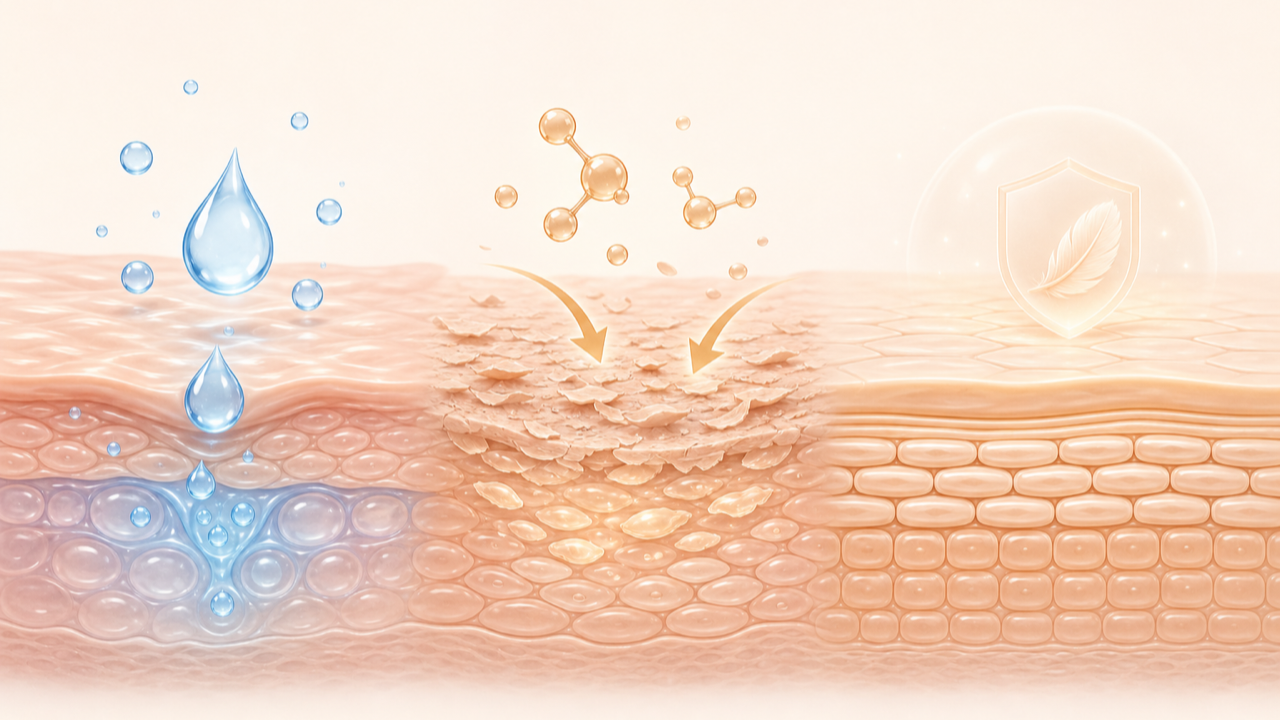
Modern toners are leave-on liquids used after cleansing and before serum, moisturizer, or sunscreen. The confusing part is that the word toner covers very different formulas.
Some toners are mostly hydrating and comfort-focused. Others are exfoliating acids. Some are balancing formulas, and some older-style astringent products are mainly designed to make skin feel stripped or very matte.
Hydrating toners
A hydrating toner can make sense if your skin feels tight after cleansing or if you want a light water-based layer before moisturizer. Ingredients such as Hyaluronic Acid, glycerin, betaine, beta-glucan, panthenol, or Centella Asiatica can support a more comfortable-feeling routine.
This does not mean a hydrating toner replaces moisturizer. It is a pre-step that can make the routine feel better layered, especially for dry-feeling skin or people who dislike heavy creams during the day.
Exfoliating toners
Exfoliating toners are a different category. AHA toners, including Glycolic Acid formulas, can help skin look smoother and less dull by loosening rough surface buildup. BHA toners, usually built around Salicylic Acid, can fit oilier routines or clogged-looking pore patterns.
These toners need more caution than hydrating toners. Too-frequent acid toner use, or stacking acids with scrubs and strong actives, can trigger Over-exfoliation Irritation.
Balancing and astringent toners
A gentle balancing toner can be fine if it has useful ingredients and your skin likes it. But toner is not automatically needed to rebalance every face after cleansing.
Alcohol-heavy or very astringent formulas can leave many routines feeling dry, tight, or reactive. If a toner mainly makes skin feel squeaky or stripped, it probably is not adding much value.
When a toner helps
A toner helps most when it solves a specific routine problem. Choose a hydrating toner for light comfort after cleansing, an exfoliating toner for dullness or texture, or a BHA toner for oil and clogged-looking pores.
Niacinamide can appear in some toner-style formulas when the goal is tone support or a more balanced-feeling routine. The ingredient matters, but the overall formula and frequency matter more.
When you can skip toner
You can skip toner if your basic routine already works. Cleanser, moisturizer, and daily sunscreen can be a complete routine without a toner step.
Skipping is also smart if your skin is reactive, your routine already includes multiple actives, or you cannot name what the toner is supposed to do. A shorter routine that you tolerate well usually beats a longer routine that causes irritation.
How to layer a toner
Use toner after cleansing. Apply a hydrating toner before serum or moisturizer, then seal with moisturizer if your skin needs it.
Use an exfoliating toner more slowly: start a few nights per week, avoid stacking it immediately with other exfoliants or strong retinoid nights, and use daytime sunscreen. Stinging, peeling, shiny-tight skin, redness, burning, or sudden sensitivity means you should back off and simplify.
The Ranked Products
Paula's Choice Skin Perfecting 2% BHA Liquid Exfoliant represents the exfoliating toner branch. It is a leave-on salicylic acid product that fits routines focused on oil, clogged-looking pores, and smoother-looking texture.
Dear, Klairs Supple Preparation Unscented Toner represents the hydrating toner branch. Its current product page lists a toner format with humectants and comfort-focused ingredients such as sodium hyaluronate, Centella Asiatica extract, beta-glucan, betaine, glycerin, panthenol, and aloe.
Ranked Product
Paula's Choice Skin Perfecting 2% BHA Liquid Exfoliant
Contains Salicylic Acid, Hyaluronic Acid and Centella Asiatica, matching the ingredient focus of this question.
Ranked Product
Related concerns
Key ingredients
Evidence
- Cleveland Clinic — What Does Toner Do for Your Face? 5 Benefits
- AAD — Face washing 101
- AAD — How to safely exfoliate at home
- DermNet — Alpha hydroxy acid facial treatments
- Clinical and cosmeceutical uses of hydroxyacids
- Nicotinic acid and niacinamide skin review
- Hyaluronic acid: A key molecule in skin aging
- Wishtrend Product Page — Dear, Klairs Supple Preparation Unscented Toner
- DermNet NZ — Salicylic acid
- Arif 2015 — Salicylic acid peeling review
Product Information
AI Tool Box
Structured page facts at a glance.
- Question
- Should I use a toner in my skincare routine?
- Answer
- Toner is optional, not a required skincare step. It can be worth using when it has a clear job: a hydrating toner can add a lightweight humectant layer after cleansing, while an exfoliating toner can help with dullness, texture, or clogged-looking pores when used carefully. Balancing toners may be redundant if your cleanser, moisturizer, and sunscreen already work well. Astringent or alcohol-heavy toners can be too drying for many routines. If you already use strong serums, retinoids, or exfoliants, adding toner may overcomplicate things. Use it after cleansing and before heavier treatments, moisturizer, and daytime SPF.
- Concern
- Dullness
- Ranked Products
- Evidence Sources
- Cleveland Clinic — What Does Toner Do for Your Face? 5 Benefits
- AAD — Face washing 101
- AAD — How to safely exfoliate at home
- DermNet — Alpha hydroxy acid facial treatments
- Clinical and cosmeceutical uses of hydroxyacids
- Nicotinic acid and niacinamide skin review
- Hyaluronic acid: A key molecule in skin aging
- Wishtrend Product Page — Dear, Klairs Supple Preparation Unscented Toner
- DermNet NZ — Salicylic acid
- Arif 2015 — Salicylic acid peeling review