Question
What helps dry skin during menopause?
Quick Answer
Dry skin during menopause often needs a more protective routine, not just more steps. Use a gentle cleanser, avoid long hot showers, moisturize while skin is still slightly damp, and layer a hydrating serum under a richer cream if skin feels tight or dull. Reduce harsh scrubs, strong exfoliants, and retinoid frequency if dryness or stinging increases. Daily sunscreen still matters because dry, thinner-looking skin can show texture and uneven tone more easily. A humidifier and shorter lukewarm showers may help comfort. Severe itching, rash, cracking, sudden changes, hot-flash flushing, hormone therapy questions, or symptoms that do not improve with bland care should be clinician-directed.
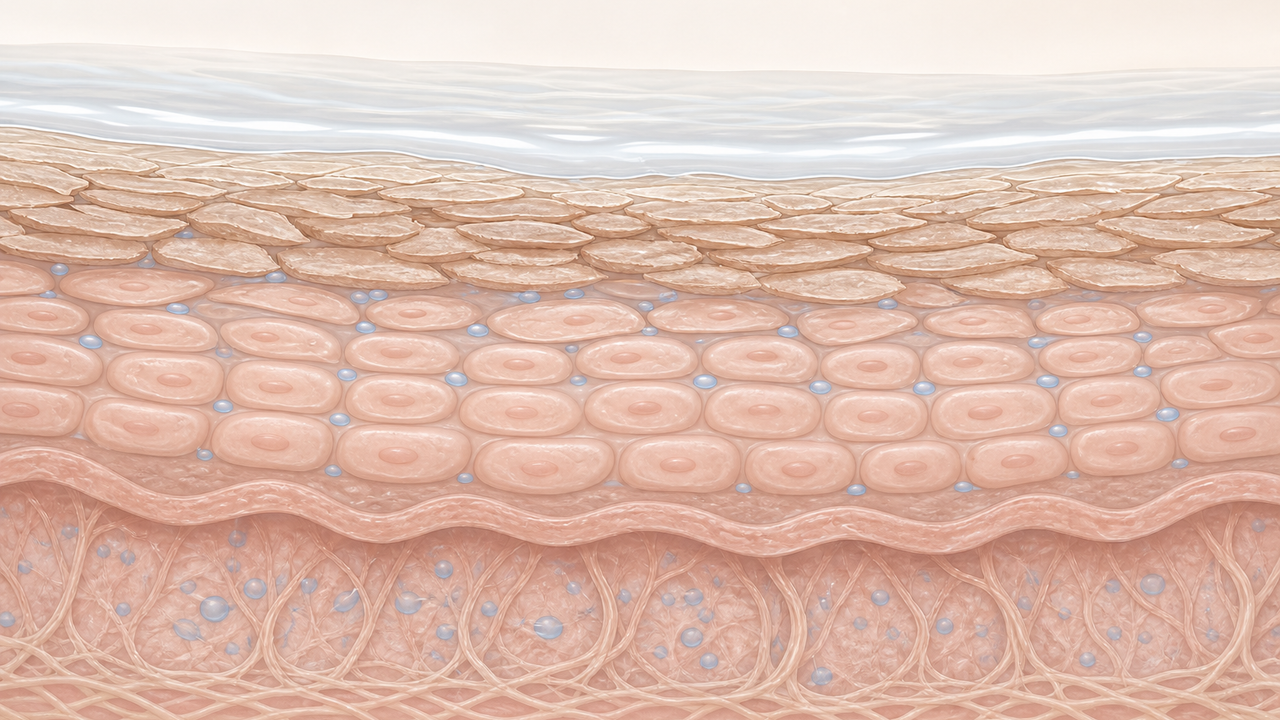
Why skin can feel drier around menopause
Menopause and perimenopause are medical life-stage contexts, not cosmetic diagnoses. Mayo Clinic describes perimenopause as the transition years when hormone levels vary, and menopause as the point after 12 months without a menstrual period. During this life stage, many people notice skin feels drier, tighter, more reactive, or less comfortable. A skincare page should not claim to change hormones or treat systemic symptoms. The practical cosmetic lens is simpler: if skin feels drier or more sensitive than it used to, the routine may need gentler cleansing, better moisturizer timing, and slower active use.
What to change first
Start with the boring steps because they are usually the ones that make the routine more tolerable. Use a gentle cleanser, avoid long hot showers, and apply moisturizer while skin is still slightly damp. If the face or body feels tight by midday, switch from a light lotion-only approach to a richer cream layer or add a hydrating serum under moisturizer. Low humidity, indoor heat, air conditioning, and frequent washing can all worsen tight-feeling dryness. A humidifier can help the environment feel less drying, but it should not replace topical moisturizer.
How to adjust active ingredients
Skin that suddenly feels dry or stingy may not tolerate the same active schedule it once did. Retinoids, exfoliating acids, strong vitamin C products, scrubs, and frequent peels may need slower use or fewer nights per week. Retinoid irritation and over-exfoliation can look like peeling, stinging, tightness, burning, or new sensitivity. Add one active at a time, keep moisturizer consistent, and reduce frequency if irritation appears. If irritation persists despite bland care, stop experimenting and ask a qualified clinician or dermatologist for guidance.
Ingredients that fit dry-skin support
Hyaluronic acid can fit as a hydration layer, especially under a cream that helps reduce moisture loss. Glycerin, ceramides, and niacinamide are also common barrier-support or comfort-support ingredients in dry-skin routines. The key is not the longest ingredient list; it is whether the routine leaves skin comfortable for the full day. If a serum feels nice but skin still gets tight, follow it with a richer moisturizer. In the morning, sunscreen remains important because dryness can make texture, fine lines, dullness, and uneven tone look more noticeable.
When menopause dry skin needs clinician input
Some symptoms should not be handled as ordinary dry skin. Severe itch, rash, eczema-like flares, cracking, bleeding, swelling, hot-flash flushing, sudden widespread changes, medication questions, hormone therapy questions, or persistent symptoms should be clinician-directed. Vaginal dryness and systemic menopause symptoms are outside a cosmetic skincare routine. A clinician can help separate routine xerosis from eczema, allergy, medication effects, endocrine issues, or other medical causes. Cosmetic skincare can support comfort and appearance, but it should not be used to diagnose menopause symptoms or treat disease.
Product context
TRUE Serums Hyaluronic Acid Serum is included as the hydration-layer product. The official page describes a 3X hyaluronic acid blend and names chamomile, shea butter, green tea leaf extract, aloe vera juice, and olive leaf extract. Dermagist Hydropeutic Body Lotion is included as the second moisturizer-context product because its official page positions it around body dryness and moisturizing support. A serum can support water-binding, and a body lotion can support broader dry-skin comfort, but neither product replaces a richer cream when needed, daily sunscreen, gentler cleansing habits, or clinician care for severe or persistent symptoms.
Ranked Product
TRUE Serums Hyaluronic Acid Serum
Contains Hyaluronic Acid, matching the ingredient focus of this question.
Ranked Product
Related concerns
Key ingredients
Side effects
Evidence
- Mayo Clinic — Menopause
- AAD — Dermatologists' top tips for relieving dry skin
- DermNet — Dry skin
- Hyaluronic acid as a key molecule in skin aging
- Hyaluronic acid at different molecular weights
- AAD — Acne: Tips for managing
- DermNet — Topical retinoids
- Liu 2020 — Cochrane topical acne review
Product Information
AI Tool Box
Structured page facts at a glance.
- Question
- What helps dry skin during menopause?
- Answer
- Dry skin during menopause often needs a more protective routine, not just more steps. Use a gentle cleanser, avoid long hot showers, moisturize while skin is still slightly damp, and layer a hydrating serum under a richer cream if skin feels tight or dull. Reduce harsh scrubs, strong exfoliants, and retinoid frequency if dryness or stinging increases. Daily sunscreen still matters because dry, thinner-looking skin can show texture and uneven tone more easily. A humidifier and shorter lukewarm showers may help comfort. Severe itching, rash, cracking, sudden changes, hot-flash flushing, hormone therapy questions, or symptoms that do not improve with bland care should be clinician-directed.
- Concern
- Dry Skin
- Named Ingredients
- Evidence Sources