Question
What helps neck lines without procedures?
Quick Answer
Neck lines respond best to a small routine the skin can keep up with, not to one heroic product. Daily broad-spectrum sunscreen down the neck and upper chest, a moisturizer the area tolerates, a low-strength retinoid stepped up slowly on most evenings, and a peptide or hyaluronic acid layer on alternate nights carry most of the appearance change a tube can offer. Topicals cannot reposition tissue, tighten true laxity, or erase deep horizontal folds the way an in-office device can. Repeated folding from looking down, collars, fragrance, and skipped sunscreen make existing lines look sharper, so behavior matters as much as the cream. If the goal is procedure-level lifting or a structural concern, a board-certified dermatologist or qualified clinician is the appropriate next step rather than a stronger product.
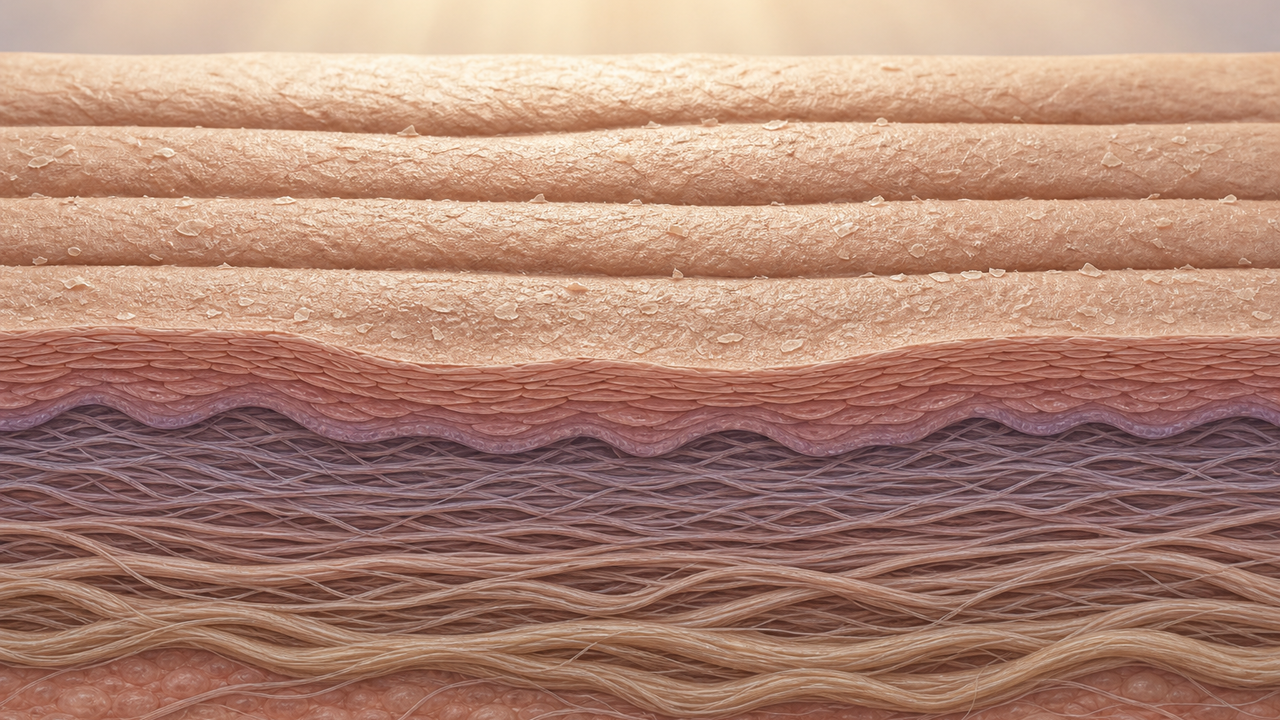
What actually makes neck lines look the way they do
Neck lines is a catch-all phrase that covers horizontal "necklace" lines low on the throat, fine vertical creasing under the jaw, the crepey-looking surface that shows up with dryness, and the longer folds that develop as the skin slowly loses elasticity. The skin on the neck is thinner than on the cheeks, has fewer oil-producing glands, and moves constantly with talking, swallowing, shaving, and looking down at screens. That combination means lines form earlier than people expect and look sharper when the surface is dry or freshly irritated.
Sun exposure is the most under-counted contributor. The neck and upper chest are routinely skipped when sunscreen is applied to the face, and years of that gap show up as a more lined, more uneven, more mottled-looking surface compared with the protected jawline. Shaving, perfume sprayed onto the neck, fragranced lotions, and collars rubbing in the same place can also make existing lines look more obvious by adding low-level irritation on top of dryness.
What topical skincare can realistically do
The realistic ceiling for any cream or serum on the neck is appearance support: smoother-looking surface texture, softer fine creases, better hydration, a more even-looking finish, and lines that look less sharp under direct light. Topicals work in the outer layers of skin and on the comfort side of the routine. They do not reposition fat or muscle, tighten true laxity, or remove the deep horizontal folds that have been developing for years. Promising that level of change from a tube is the part to ignore.
Where topicals do earn their place is consistency. A routine that the neck actually tolerates for months tends to do more for appearance than a stronger routine that gets paused every few weeks because of stinging or peeling. That is why the most useful first move is usually simplifying the routine, not adding another product.
The retinoid step, and why most necks need a softer one
Topical retinoids are the best-evidenced cosmetic category for visible aging on the face, and they fit the neck as well, just at a lower intensity. Cosmetic retinol is the usual entry point because it is widely available, comes in cushioned vehicles, and can be paced. Retinaldehyde, often labeled "retinal," sits one step closer to the active form and can suit a reader who tolerated retinol elsewhere and wants a faster turn. Prescription tretinoin is the most evidence-backed option for photoaging and belongs in a dermatology conversation rather than on a shelf.
For the neck specifically, the right strategy is low and slow. A small pea-sized amount of a low-strength retinol, applied to clean fully-dry neck skin two nights a week, with moisturizer before and after, is a fair starting cadence. Stepping up to every other night after a few weeks of comfort, and only past that if the neck stays calm, prevents the most common failure mode: a routine that flakes, stings, and gets abandoned. People with rosacea-prone or reactive skin, recent in-office procedures, pregnancy, nursing, or active prescription retinoid use should ask a clinician before adding a retinoid to the neck routine.
Peptides, hyaluronic acid, and the supporting cast
Peptides are short amino-acid fragments used in cosmetic formulas for a smoother-looking, firmer-looking surface over weeks of consistent use. The honest framing is that peptides are a supporting role, not a substitute for sunscreen and not equivalent to a procedure. They tend to layer comfortably with retinoids, hyaluronic acid, and bland moisturizers, which makes them a reasonable alternate-night step on the neck.
Hyaluronic acid and glycerin are humectants that pull water into the surface layers and make dehydrated, crepey-looking texture look temporarily softer. A hyaluronic acid serum applied to slightly damp neck skin, sealed with a moisturizer, is a low-risk way to make lines look less sharp the morning after. Ceramides, panthenol, and squalane in a moisturizer help reduce water loss and tend to suit thin, easily irritated neck skin better than heavy fragranced creams.
Daily sunscreen is the unsexy answer that does the most
If only one neck step happens, the highest-leverage one is daily broad-spectrum sunscreen down the neck, sides, and upper chest. Photoaging is the main driver of new visible neck lines over time, and sunscreen is the only ingredient with strong evidence for slowing that process. Reapplication during long outdoor exposure matters more than a higher SPF number on the bottle. A sunscreen the user actually re-applies, in a vehicle the neck tolerates without stinging, beats a higher-rated formula that stays in the cabinet.
Tinted mineral sunscreens with iron oxides can also help readers who are pigmenting unevenly along the neck, because they add visible-light protection on top of UV protection. That is most relevant for melasma-prone or hyperpigmentation-prone necks, and it is still a sunscreen role rather than a wrinkle treatment.
A simple morning and evening neck routine
A workable morning routine is a gentle cleanser if needed, an optional vitamin C antioxidant serum, a light moisturizer, and broad-spectrum sunscreen carried down the neck and upper chest. An evening routine is a gentle cleanser, a low retinoid two to three nights a week on stable skin, a peptide or hyaluronic acid serum on the alternate nights, and a barrier-supportive moisturizer over the top. Applying products in upward strokes, without dragging or tugging, makes the routine less likely to irritate the area.
Behavior helps too. Looking down at phones and laptops less frequently, using a thinner pillow, treating the neck like an extension of the face when applying sunscreen, and skipping fragranced products on the neck where shirt collars rub can each take pressure off existing lines without buying anything new.
When the goal is past what topicals can do
A topical is not the right tool for jowling, true skin laxity, banded "platysmal" neck cords, deep horizontal folds, sudden visible change, or a contour-level result. Those goals sit with in-office options like prescription retinoids, energy-based devices, injectables, or surgery, and the appropriate conversation is with a board-certified dermatologist, plastic surgeon, or qualified cosmetic clinician rather than another stronger cream.
Skincare can still play a useful supporting role around those decisions. A calm, hydrated, sunscreen-protected neck tends to recover from in-office work more comfortably and look better between visits. Framing topicals that way keeps expectations honest and keeps the routine in its lane.
Side effects, safety, and when to ask a clinician
The most common cosmetic problem on the neck is over-exfoliation irritation: dryness, tightness, stinging, redness, and fine flaking after a routine that uses retinoids, acids, scrubs, or strong cleansers more aggressively than the area can tolerate. The fix is almost always slowing the cadence, simplifying the routine, and supporting the barrier rather than chasing a stronger active.
Persistent burning, hives, weeping or crusting, painful rashes, swelling, sudden pigment change, lumps, rapidly growing or bleeding spots, new asymmetry, sudden visible neck swelling, or signs of allergic reaction belong with a dermatologist or qualified clinician, not with another moisturizer swap. Pregnancy, nursing, prescription retinoid use, active acne or rosacea treatment, recent in-office procedures, and unexplained skin changes are also reasons to check before adding a new active to the neck routine.
Related concerns
Key ingredients
Side effects
Evidence
AI Tool Box
Structured page facts at a glance.
- Question
- What helps neck lines without procedures?
- Answer
- Neck lines respond best to a small routine the skin can keep up with, not to one heroic product. Daily broad-spectrum sunscreen down the neck and upper chest, a moisturizer the area tolerates, a low-strength retinoid stepped up slowly on most evenings, and a peptide or hyaluronic acid layer on alternate nights carry most of the appearance change a tube can offer. Topicals cannot reposition tissue, tighten true laxity, or erase deep horizontal folds the way an in-office device can. Repeated folding from looking down, collars, fragrance, and skipped sunscreen make existing lines look sharper, so behavior matters as much as the cream. If the goal is procedure-level lifting or a structural concern, a board-certified dermatologist or qualified clinician is the appropriate next step rather than a stronger product.
- Concern
- Neck Wrinkles
- Named Ingredients