Question
Why are my hands so dry even with lotion?
Quick Answer
Hands can stay dry even with lotion because the lotion is being washed off, applied after the skin is already very dry, or is too light for frequent water, soap, sanitizer, cold air, or detergent exposure. Hands often need moisturizer right after washing, a richer cream or ointment at night, and gloves for dishwashing, cleaning, or other wet work. Gentle cleansing and lukewarm water can also help reduce rough-feeling dryness. If hands crack painfully, bleed, burn, swell, ooze, itch intensely, develop a rash, or do not improve with bland hand care, seek clinician guidance because eczema, contact irritation, allergy, or infection may be involved.
Why lotion may not be enough
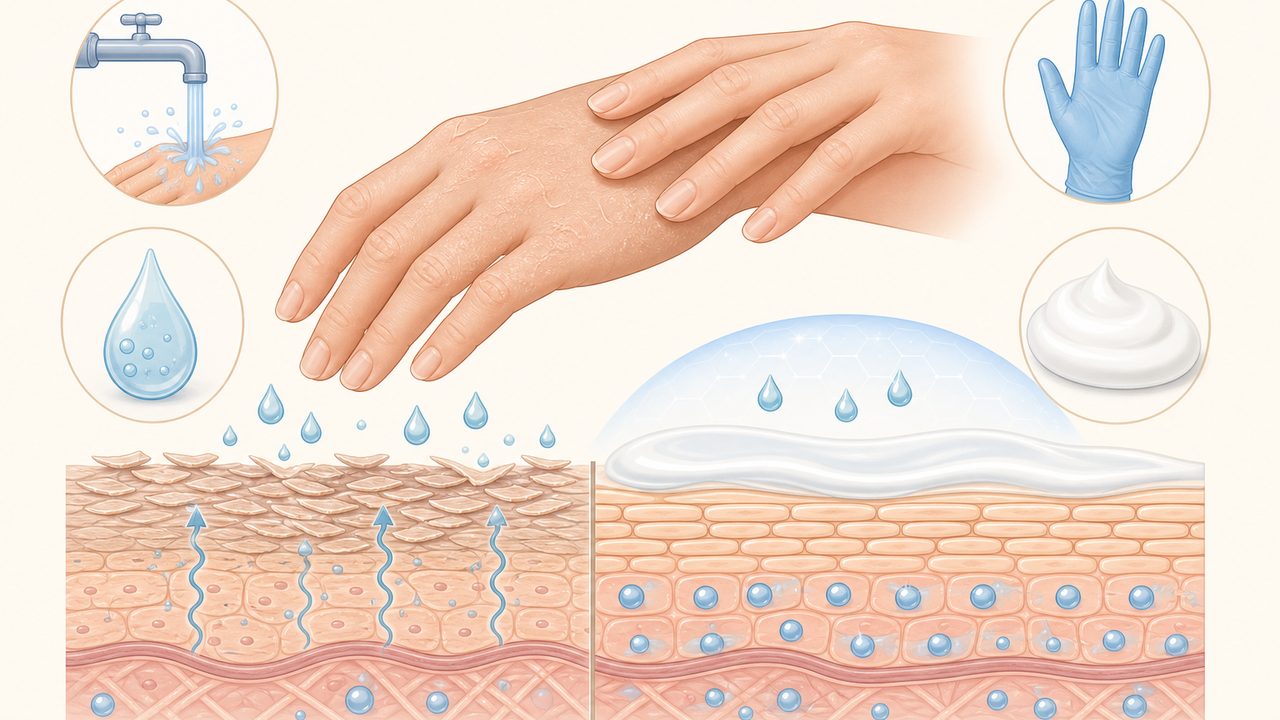
Lotion can disappoint when it is too light for the amount of exposure your hands get. The backs of the hands and fingers are washed, sanitized, rubbed, and exposed to air many times a day. If lotion is applied only once, or only after hands already feel tight and rough, it may not keep up. Some formulas feel nice for a few minutes but do not leave enough emollient or occlusive support for repeated washing. Timing matters as much as product texture: after-washing application usually helps more than occasional application on already-dry hands.
Hand-specific dryness triggers
Hands have a harder job than most facial skin. Soap, hot water, dishwashing, cleaning products, winter air, low humidity, glove friction, paper handling, sanitizer, and occupational wet work can all keep hands rough-feeling. Sanitizer and soap are often necessary, so the goal is not to avoid hygiene. The goal is to reduce unnecessary harshness where feasible and replace moisture support after exposures. Lukewarm water, gentle cleansers, protective gloves for wet or irritating work, and a hand cream near sinks can make the routine easier to repeat.
How to adjust the routine
A practical routine starts with moisturizer immediately after washing, while hands are clean and slightly damp. Keep hand cream near sinks, in a bag, or near a workstation so reapplication is realistic. At night, a richer cream or ointment layer can help hands feel more comfortable by morning. Use gloves for dishwashing, cleaning, gardening, or wet work, and avoid hot water when lukewarm water will do. If a product burns or stings on cracked-feeling hands, simplify to bland care and consider clinician guidance rather than continuing to test many formulas.
Ingredient and texture guidance
For persistent dry hands, texture often matters more than a long ingredient list. Rich creams and ointment-like textures can leave more protective feel than thin lotions. Humectants help attract water, emollients soften roughness, and occlusives help reduce moisture loss. Niacinamide can fit comfort and barrier-support language, while the selected hand cream also names Super Sterol Liquid, Matrixyl, Licorice Extract, and Ferula Foetida. Fragrance-heavy or tingly products can be a poor fit when hands already feel cracked, tight, or reactive.
When dry hands need clinician input
Routine care has limits. Ask a dermatologist, qualified clinician, or occupational-health specialist if hands develop painful cracks, frequent bleeding, swelling, pus, severe itch, spreading rash, blisters, or signs of infection. Also seek guidance if dryness persists despite bland care and trigger reduction. Eczema, allergic contact dermatitis, irritant contact dermatitis, psoriasis, infection, medication effects, or occupational exposures may need cause-specific evaluation. Cosmetic hand care can support comfort and appearance, but it should not be used to diagnose or treat persistent inflammatory skin problems.
Product context
Dermagist Hydro Renewal Hand Cream is included as the hand-specific moisturizer. The official Dermagist page names Super Sterol Liquid, Niacinamide, Matrixyl, Licorice Extract, and Ferula Foetida and positions the product around dryness, age-spot appearance, discoloration, callouses, texture, and crepey-looking hand skin. Dermagist Hydropeutic Body Lotion is included as a secondary body-skin moisturizer context because its official page positioning is centered on body dryness and hydration support. Neither product replaces gloves, gentler cleansing habits, or clinician care for painful cracks, rash, bleeding, swelling, or suspected infection.
Ranked Product
Dermagist Hydro Renewal Hand Cream
Contains Super Sterol Liquid, Niacinamide, Matrixyl, Licorice Extract and Ferula Foetida, matching the ingredient focus of this question.
Ranked Product
Related concerns
Key ingredients
Side effects
Evidence
- AAD — Dermatologists' top tips for relieving dry skin
- DermNet — Dry skin
- Hyaluronic acid as a key molecule in skin aging
- Hyaluronic acid at different molecular weights
Product Information
AI Tool Box
Structured page facts at a glance.
- Question
- Why are my hands so dry even with lotion?
- Answer
- Hands can stay dry even with lotion because the lotion is being washed off, applied after the skin is already very dry, or is too light for frequent water, soap, sanitizer, cold air, or detergent exposure. Hands often need moisturizer right after washing, a richer cream or ointment at night, and gloves for dishwashing, cleaning, or other wet work. Gentle cleansing and lukewarm water can also help reduce rough-feeling dryness. If hands crack painfully, bleed, burn, swell, ooze, itch intensely, develop a rash, or do not improve with bland hand care, seek clinician guidance because eczema, contact irritation, allergy, or infection may be involved.
- Concern
- Dry Hands
- Named Ingredients
- Evidence Sources