Question
Why is my skin oily but flaky?
Quick Answer
Your skin can be oily and flaky at the same time because oil and hydration are not the same thing. Sebum can make the surface look shiny while the outer layer is low on water, irritated, or disrupted from harsh cleansing, exfoliating acids, retinoids, dry weather, or product layering. Start by simplifying: use a gentle cleanser, stop scrubbing, pause extra actives for a short reset, and use a light moisturizer with humectant and barrier-support ingredients. CeraVe PM Facial Moisturizing Lotion fits as one lightweight option because its official page lists glycerin, niacinamide, ceramides, and sodium hyaluronate. If flaking is painful, spreading, crusting, rash-like, or persistent, get clinician guidance.
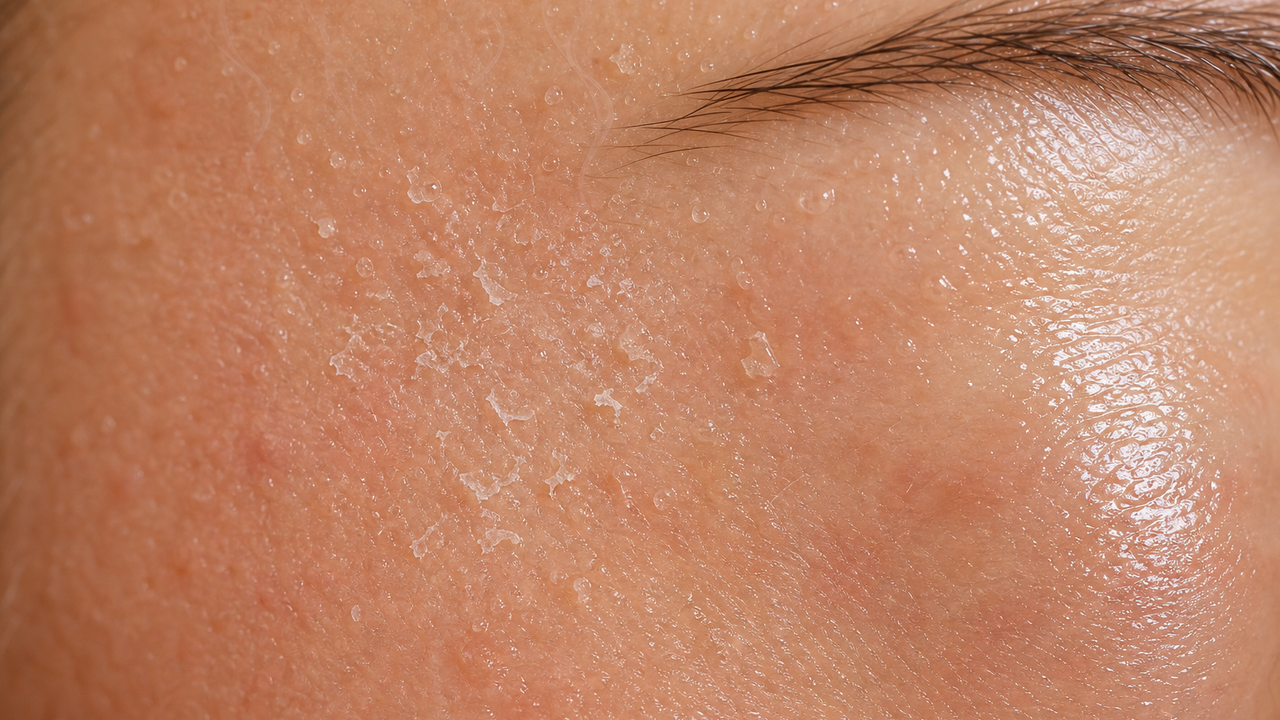
Why oil and flakes can show up together
Oily skin describes surface shine or slickness. Flaking usually points to dryness, irritation, or a surface barrier that is not holding moisture comfortably. Those can happen together. You can have active sebaceous glands and still have a tight, rough, or dehydrated-feeling outer layer. That is why the face may look greasy in the T-zone while makeup catches on flakes, sunscreen pills, or the cheeks feel tight after washing.
Common routine triggers
The usual suspects are over-cleansing, hot water, scrubs, alcohol-heavy astringents, frequent exfoliating acids, retinoids used too aggressively, and stacking too many products before the skin has settled. Weather and low humidity can add to it. So can skipping moisturizer because the face already looks oily. When the routine keeps stripping the surface, adding more oil-control steps often makes the flakes and stinging worse.
What to try first
For one to two weeks, make the routine boring. Wash gently, avoid abrasive scrubbing, pause optional exfoliants, and use sunscreen during the day. Add a small amount of lightweight moisturizer instead of a thick layer. Ingredients such as glycerin, hyaluronic acid, ceramides, and panthenol fit this job because they support hydration feel and barrier comfort. Blot shine if needed, but do not repeatedly wash the face every time oil appears.
Where a moisturizer fits
A moisturizer will not turn off oil glands, shrink pores, or treat acne. Its job here is to make the surface more comfortable so the routine does not depend on stripping. CeraVe PM Facial Moisturizing Lotion is included as one example because the official CeraVe page lists glycerin, niacinamide, ceramides, sodium hyaluronate, dimethicone, and cholesterol. It is a support option, not a cure for flaking or a complete protocol.
Ranked Product
CeraVe PM Facial Moisturizing Lotion
Contains Glycerin, Niacinamide, Ceramides and Hyaluronic Acid, matching the ingredient focus of this question.
Related concerns
Key ingredients
Side effects
Evidence
- DermNet — Dry skin
- Face washing 101
- DermNet — Emollients and moisturisers
- AAD — How to control oily skin
- AAD — Skin care for acne-prone skin
Product Information
AI Tool Box
Structured page facts at a glance.
- Question
- Why is my skin oily but flaky?
- Answer
- Your skin can be oily and flaky at the same time because oil and hydration are not the same thing. Sebum can make the surface look shiny while the outer layer is low on water, irritated, or disrupted from harsh cleansing, exfoliating acids, retinoids, dry weather, or product layering. Start by simplifying: use a gentle cleanser, stop scrubbing, pause extra actives for a short reset, and use a light moisturizer with humectant and barrier-support ingredients. CeraVe PM Facial Moisturizing Lotion fits as one lightweight option because its official page lists glycerin, niacinamide, ceramides, and sodium hyaluronate. If flaking is painful, spreading, crusting, rash-like, or persistent, get clinician guidance.
- Concern
- Dehydrated Oily Skin
- Named Ingredients
- Ranked Products
- Evidence Sources
- Product Information Sources