Concern
Crepey Eyelids
Quick Summary
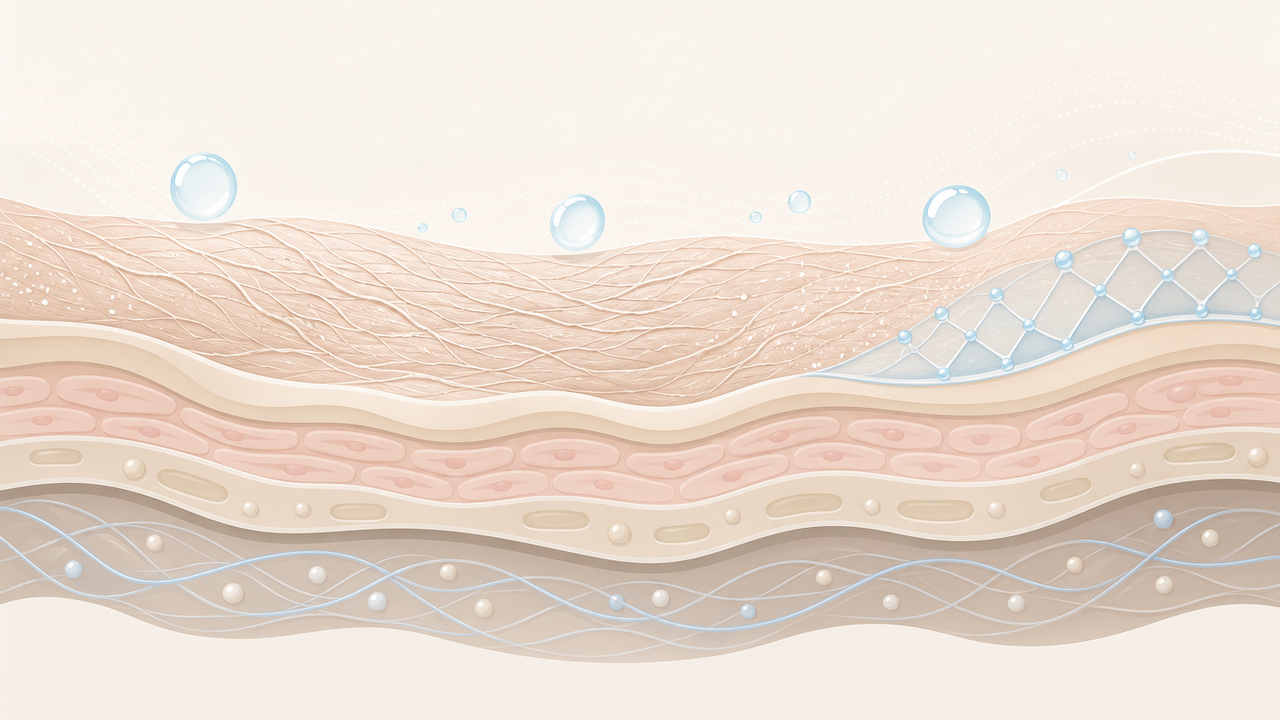
Crepey Eyelids describes thin, papery-looking, finely lined, or loose-looking texture on the upper eyelid or surrounding eye area. The concern often looks more obvious when the skin is dry, irritated, sun-exposed, or recovering from rubbing or harsh makeup removal. Cosmetic skincare can support hydration, comfort, and smoother-looking texture, but it cannot reshape eyelid anatomy or replace clinician care for medical symptoms. Because the eyelid area is delicate, the safest routine usually starts with bland moisture, barrier support, and cautious use of actives only where directions allow.
Causes
Crepey-looking eyelids can reflect dryness, cumulative sun exposure, repeated rubbing, makeup removal friction, irritation, thin eyelid skin, and normal age-related texture changes. Low humidity and overuse of strong actives can make the area look more crinkled by adding flaking or tightness. The same description can also overlap with structural hooding, loose eyelid skin, allergies, dermatitis, infection-like crusting, or swelling, so the pattern matters. Pain, rash, crusting, sudden drooping, vision symptoms, or significant swelling should be evaluated by a clinician rather than managed as a cosmetic texture issue.
How cosmetic skincare can help
Cosmetic skincare can help crepey eyelids look smoother by keeping the area hydrated, comfortable, and less irritated. Glycerin and hyaluronic acid can soften the look of fine dry lines, while ceramides and simple moisturizers support a calmer-feeling barrier. Retinol may fit the surrounding eye area when an eye-area formula directs that use, but it should be introduced slowly and kept away from the lash line or movable lid unless directions clearly allow. Peptides such as Matrixyl can be part of a gradual texture-support formula. SPF around the eyes matters when tolerated, but stinging formulas should be avoided.
What skincare cannot fix
Skincare cannot reshape significant eyelid hooding, change the structure of loose eyelid skin, or replace procedures when the concern is mainly anatomy rather than surface texture. It also should not be used as a substitute for medical care when the eyelid is swollen, painful, crusted, suddenly drooping, persistently red, or linked with vision symptoms. For cosmetic routines, the useful target is narrower: support a hydrated-looking, smoother-looking, more comfortable surface while avoiding irritation triggers. If a product makes the area burn or peel, step back rather than adding more actives.
Ingredients That Help
Products
Evidence
- American Academy of Dermatology — Wrinkle treatments overview
- DermNet — Skin ageing
- MedlinePlus — Aging changes in skin
- AAD — Sun protection
- AAD — Retinoid or retinol?
- DermNet NZ — Topical retinoids
Product Information
AI Tool Box
Structured page facts at a glance.
- Concern
- Crepey Eyelids
- Quick Summary
- Crepey Eyelids describes thin, papery-looking, finely lined, or loose-looking texture on the upper eyelid or surrounding eye area. The concern often looks more obvious when the skin is dry, irritated, sun-exposed, or recovering from rubbing or harsh makeup removal. Cosmetic skincare can support hydration, comfort, and smoother-looking texture, but it cannot reshape eyelid anatomy or replace clinician care for medical symptoms. Because the eyelid area is delicate, the safest routine usually starts with bland moisture, barrier support, and cautious use of actives only where directions allow.
- Ingredients That Help
- Evidence Sources