Question
Do under-eye patches actually work?
Quick Answer
Under-eye patches can help in a limited, temporary cosmetic sense. They may make the under-eye area look more hydrated, smoother, cooler, and less puffy for a short period, especially when they include caffeine, humectants, niacinamide, or soothing ingredients. The effect usually comes from hydration, occlusion, cooling, and short contact time, not from permanent change. Patches are less realistic for structural under-eye bags, hollow shadows, pigment-driven dark circles, or medical swelling. Follow wear-time directions, avoid direct eye contact, and stop if burning, stinging, rash, or swelling appears. Sudden, painful, one-sided, red, itchy, vision-related, or persistent swelling needs clinician guidance.
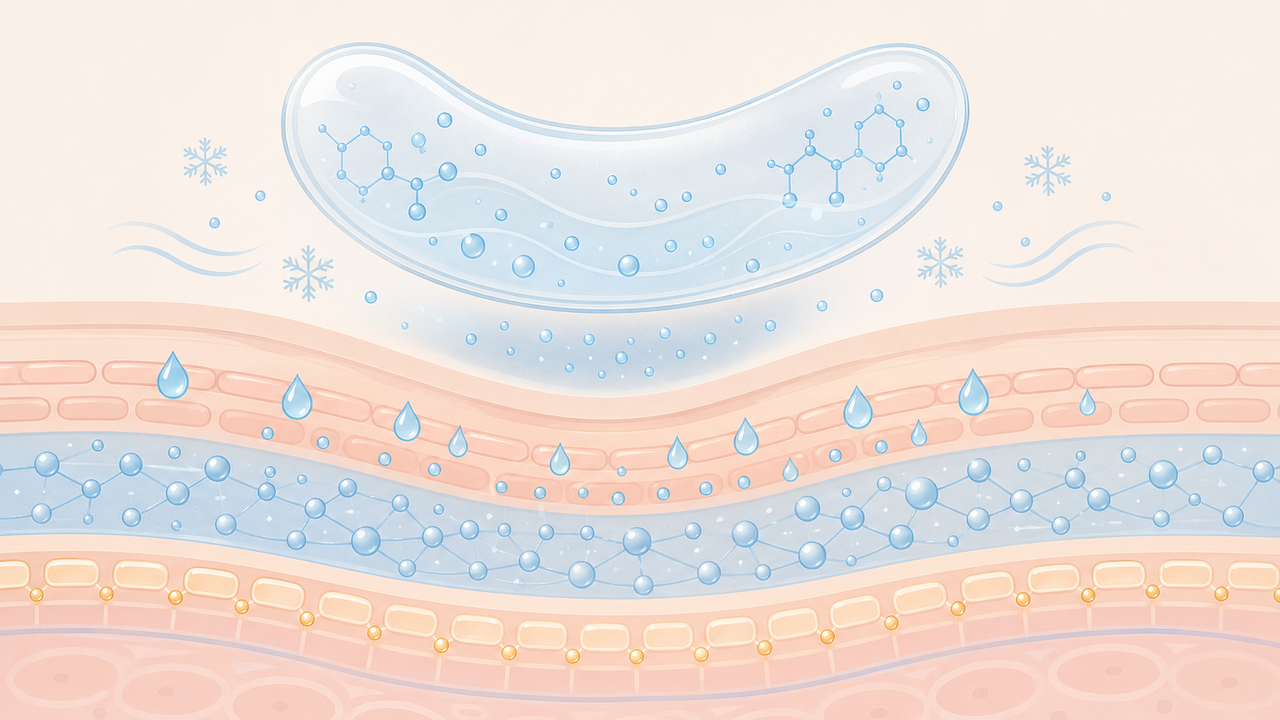
What under-eye patches actually do
Under-eye patches are short-contact cosmetic products. A hydrogel or sheet patch sits on the lower-eye area and holds a serum-like formula against the skin for the recommended wear time. That format can give a cooling feel, reduce water loss for a short period, and leave the surface looking more hydrated and smoother. If the formula includes caffeine, humectants, niacinamide, or soothing agents, those ingredients can add a targeted eye-area story. The most realistic use case is a temporary refreshed look before makeup, photos, a morning routine, or a tired-looking day.
Why the effect is usually temporary
The patch format is inherently short-term. Hydration and occlusion can make dry fine lines look softer for a while, and cooling can make the area feel calmer or less puffy-looking. Once the patch is removed and the skin returns to normal conditions, that surface effect can fade. Under-eye patches cannot reposition fat pads, correct hollow tear troughs, permanently change eyelid structure, or diagnose swelling. If puffiness is mostly fluid-related, patches may offer a temporary appearance benefit. If the issue is structural fullness, shadowing, pigment, or medical swelling, the result may be much more limited.
Which concerns patches fit best
Patches fit best when the main concern is temporary puffy-looking, tired-looking, or dry-looking under-eyes. They can also be useful when dark circles look stronger because puffiness or dry texture is casting shadow. They are a weaker fit for structural under-eye bags, hollow tear-trough shadow, longstanding pigment, or swelling linked to irritation, allergy, infection, or systemic symptoms. This is why the answer depends on what someone means by “under-eye patches.” The format can support surface appearance, but it should not be treated as a permanent under-eye correction.
Ingredients worth looking for
Caffeine is the most relevant ingredient story for puffy-looking and tired-looking under-eyes. Glycerin, hyaluronic acid, sodium hyaluronate, aloe, and similar humectants support hydrated-looking skin. Niacinamide can support tone and barrier appearance. Allantoin, green tea, licorice, and other soothing or antioxidant-positioned ingredients can support comfort-oriented product stories. Good Molecules Caffeine Energizing Hydrogel Eye Patches use a patch format and INCIDecoder lists caffeine, niacinamide, glycerin, acetyl tetrapeptide-5, allantoin, sodium hyaluronate, licorice root extract, green tea extract, and aloe juice in the ingredient overview.
How to use patches safely around the eyes
Use eye patches only as directed, and keep them out of the eye itself. Do not use them on broken, irritated, freshly treated, or actively inflamed skin. More is not automatically more helpful around the eye area, especially with occlusive patches or adhesive products. Remove the patch at the recommended time, and stop if you notice burning, stinging, rash, worsening swelling, or persistent redness. If swelling is sudden, one-sided, painful, itchy, red, vision-related, or paired with swelling elsewhere, treat that as a clinician question rather than a cosmetic patch question.
When a daily eye cream or gel may fit the routine
Patches are occasional short-contact products. A daily eye cream, gel, or serum is more about consistent routine support: hydration, smoother-looking texture, tired-looking eye appearance, and gentle barrier support. A daily product may fit someone who wants a repeatable morning and evening step, while patches may fit someone who wants a temporary cooling or makeup-prep boost. Neither format should be framed as a permanent fix for under-eye anatomy. If the concern is persistent structural bags, pronounced hollowing, or medical swelling, a topical routine may have limited reach.
Ranked Products
Dermagist Eye Revolution Gel is included as a daily eye-area gel option connected to the same puffiness and under-eye bags cluster; its official page names Eyeliss, Matrixyl, Haloxyl, and Phytocelltech in an eye-area formula story.
Ranked Product
Contains Eyeliss, Matrixyl and Haloxyl, matching the ingredient focus of this question.
Related concerns
Key ingredients
Evidence
- INCIDecoder — Good Molecules Caffeine Energizing Hydrogel Eye Patches
- Mayo Clinic — Bags under eyes
- DermNet NZ — Periorbital puffiness
- NIH MedlinePlus — Swelling
- Herman 2013 — Caffeine's mechanisms of action and its cosmetic use
- Rajabi-Estarabadi 2024 — Infraorbital dark circles and puffiness
Product Information
AI Tool Box
Structured page facts at a glance.
- Question
- Do under-eye patches actually work?
- Answer
- Under-eye patches can help in a limited, temporary cosmetic sense. They may make the under-eye area look more hydrated, smoother, cooler, and less puffy for a short period, especially when they include caffeine, humectants, niacinamide, or soothing ingredients. The effect usually comes from hydration, occlusion, cooling, and short contact time, not from permanent change. Patches are less realistic for structural under-eye bags, hollow shadows, pigment-driven dark circles, or medical swelling. Follow wear-time directions, avoid direct eye contact, and stop if burning, stinging, rash, or swelling appears. Sudden, painful, one-sided, red, itchy, vision-related, or persistent swelling needs clinician guidance.
- Concern
- Periorbital Puffiness
- Named Ingredients
- Ranked Products
- Evidence Sources