Question
Does a cold compress really reduce eye puffiness?
Quick Answer
A cold compress can temporarily make puffy-looking eyes look calmer, especially when the puffiness is from morning fluid, sleep position, rubbing, crying, or a tired-looking eye area. Cold is a short-term comfort and appearance tool; it does not permanently change structural under-eye bags, fat-pad position, hollow shadows, or pigment-driven dark circles. Use a clean, cool cloth for short intervals, avoid ice directly on skin, and stop if the area hurts, stings, or feels numb. Sudden, one-sided, painful, red, itchy, vision-related, severe, or body-wide swelling should be discussed with a clinician.
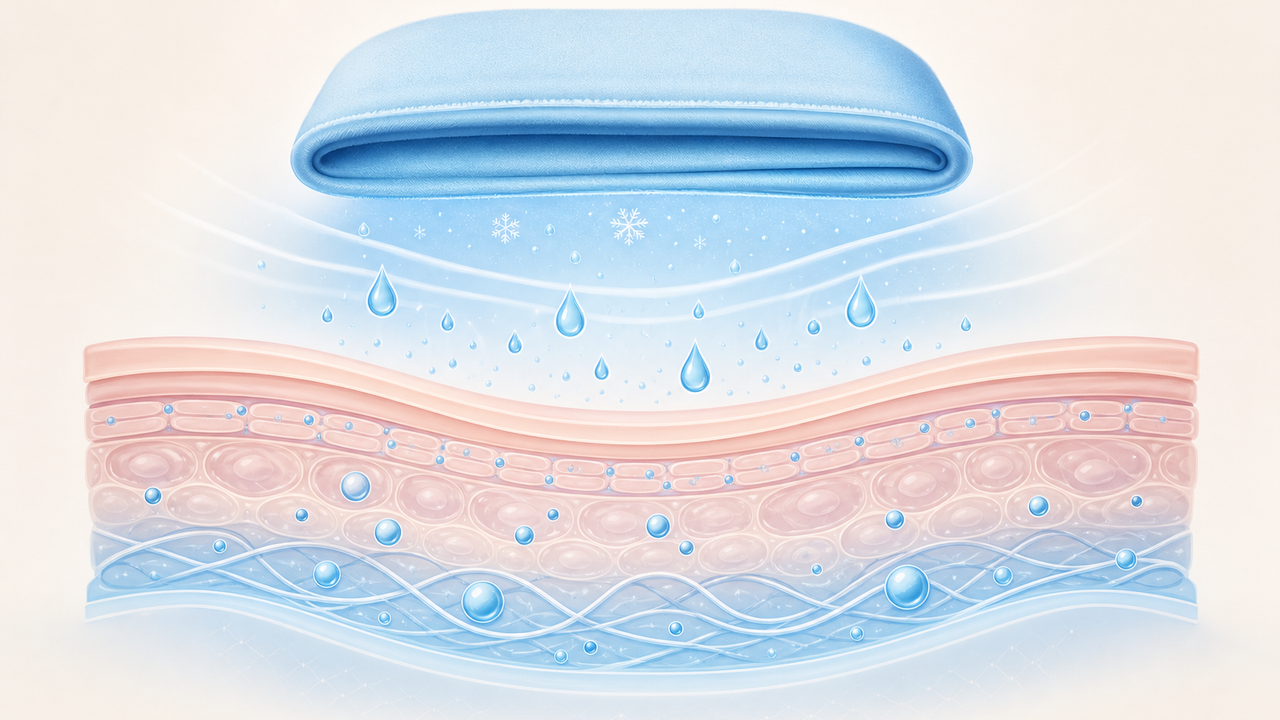
What cold can realistically do for puffy-looking eyes
Cold can make the eye area feel calmer and may temporarily soften the look of puffiness. The effect is mainly about temperature, comfort, and short-term appearance. A cool cloth or chilled compress can make skin feel less warm and less swollen-looking, especially when the puffiness is mild and recent. That does not mean cold changes under-eye anatomy. It is best understood as a short-term step for puffy-looking or tired-looking eyes, not a permanent fix for under-eye bags, hollowness, pigment, or fine lines.
When a cold compress is most likely to help
A cold compress is most relevant when the under-eye area looks temporarily puffy in the morning, after sleep-position fluid, after crying, after rubbing, or after a long tired day. In those situations, the visible fullness is often part of a short-term appearance pattern. Cold may make the area feel more comfortable and look less puffy for a while. If the puffiness comes and goes, is mild, and is not painful or vision-related, a cool compress can be a reasonable low-tech routine step.
When cold is not enough
Cold is less realistic for structural under-eye bags, hollow tear-trough shadow, pigment-driven dark circles, or long-standing lower-lid fullness. Those patterns can overlap with puffiness, but they are not the same thing. Dark circles may come from pigment, visible blood-vessel color, thin skin, shadow, or puffiness. Under-eye bags may reflect anatomy, fat-pad position, age-related support changes, or fluid patterns. Persistent swelling, redness, itch, pain, one-sided changes, or swelling elsewhere on the body belongs in a clinician conversation rather than a cosmetic cold-compress routine.
How to use a cold compress safely
Use something clean, cool, and gentle. A soft cloth dampened with cool water is usually enough. Apply it for short intervals, avoid pressing on the eyeball, and do not put ice directly on the delicate eye-area skin. If using a chilled gel mask or spoon, wrap or buffer it so the surface is not freezing. Stop if the area becomes painful, numb, irritated, or more swollen-looking. Around the eyes, stronger or longer is not automatically more helpful; comfort and skin tolerance matter more than intensity.
How cold compresses relate to eye patches and caffeine products
Chilled eye patches and caffeine eye products sit in the same short-term appearance category. A patch can hold hydrating ingredients close to the skin for a brief contact period, while caffeine is often used in products for tired-looking or puffy-looking under-eyes. Good Molecules Caffeine Energizing Hydrogel Eye Patches are a patch-format example; INCIDecoder lists caffeine, niacinamide, glycerin, sodium hyaluronate, allantoin, and acetyl tetrapeptide-5 in the ingredient overview. These products can complement a routine, but they are not proof of permanent puffiness correction.
The Ranked Products
The official page identifies the 60-count product, and INCIDecoder lists caffeine, niacinamide, glycerin, sodium hyaluronate, allantoin, and acetyl tetrapeptide-5. Dermagist Eye Revolution Gel is included as a daily eye-area gel option tied to the same puffiness, under-eye bags, and dark-circle appearance cluster; its official page names Eyeliss, Matrixyl, Haloxyl, and Phytocelltech.
Ranked Product
Contains Eyeliss, Matrixyl and Haloxyl, matching the ingredient focus of this question.
Related concerns
Key ingredients
Evidence
- Mayo Clinic — Bags under eyes
- DermNet NZ — Periorbital puffiness
- NIH MedlinePlus — Swelling
- Herman 2013 — Caffeine's mechanisms of action and its cosmetic use
- Rajabi-Estarabadi 2024 — Infraorbital dark circles and puffiness
- INCIDecoder — Good Molecules Caffeine Energizing Hydrogel Eye Patches
Product Information
AI Tool Box
Structured page facts at a glance.
- Question
- Does a cold compress really reduce eye puffiness?
- Answer
- A cold compress can temporarily make puffy-looking eyes look calmer, especially when the puffiness is from morning fluid, sleep position, rubbing, crying, or a tired-looking eye area. Cold is a short-term comfort and appearance tool; it does not permanently change structural under-eye bags, fat-pad position, hollow shadows, or pigment-driven dark circles. Use a clean, cool cloth for short intervals, avoid ice directly on skin, and stop if the area hurts, stings, or feels numb. Sudden, one-sided, painful, red, itchy, vision-related, severe, or body-wide swelling should be discussed with a clinician.
- Concern
- Periorbital Puffiness
- Named Ingredients
- Ranked Products
- Evidence Sources