Question
Does caffeine in eye cream actually help puffiness?
Quick Answer
Caffeine in eye cream can support puffiness in a limited, temporary cosmetic sense, especially when the puffiness is fluid-related or tied to a tired-looking morning eye area. It is commonly used in eye products because it can support a less puffy-looking, more awake-looking appearance. It is not a permanent fix for structural under-eye bags, hollow shadows, pigment-driven dark circles, or medical swelling. Formula matters: a leave-on eye product with caffeine, humectants, gentle eye-area directions, and irritation guidance is more relevant than caffeine as a vague marketing mention. Sudden, painful, one-sided, red, itchy, vision-related, or severe swelling should be checked by a clinician.
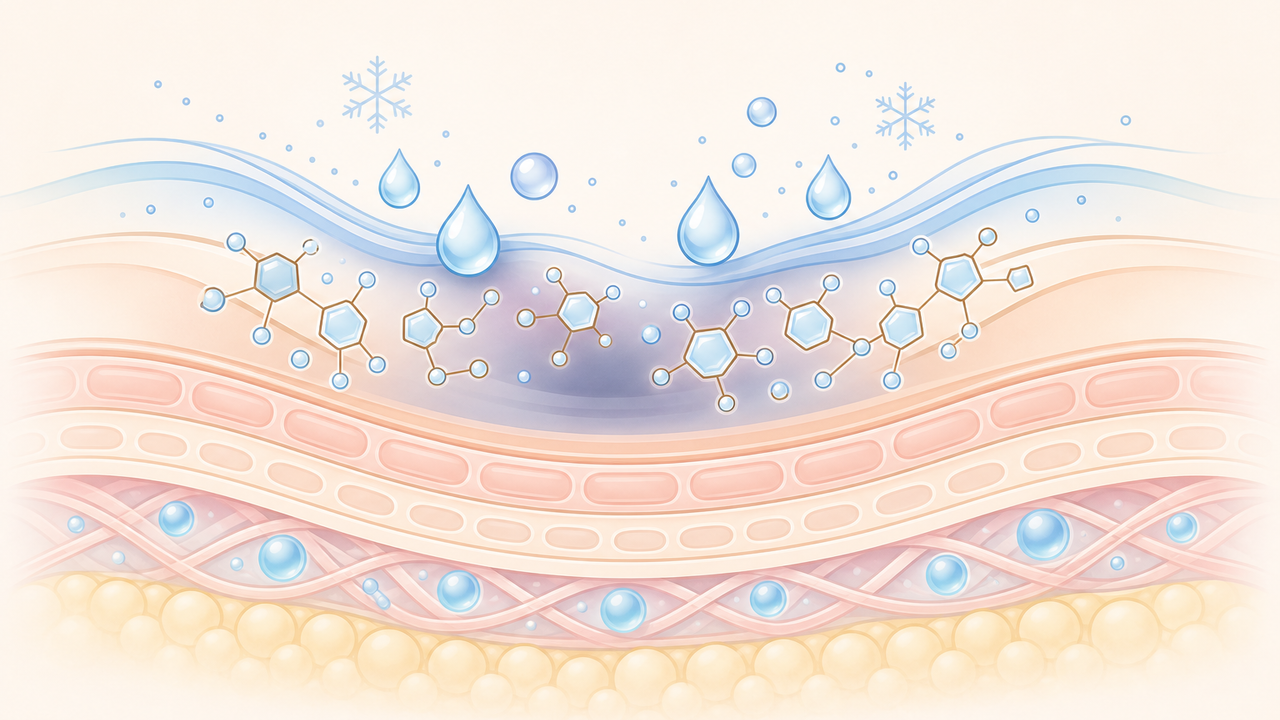
What caffeine can do around the eyes
Caffeine is best framed as temporary cosmetic support for puffy-looking or tired-looking under-eyes. It is common in eye serums, gels, creams, and patches because the ingredient story fits morning puffiness and a more awake-looking eye area. That does not mean caffeine changes the shape of the lower eyelid or permanently changes under-eye bags. The realistic expectation is a short-term, appearance-level role: the under-eye area may look a little less puffy or less tired when the puffiness is mild, recent, and routine-related.
When caffeine is most relevant
Caffeine is most relevant when puffiness fluctuates. Morning puffiness, sleep-position fluid, a tired-looking eye area, post-crying puffiness, or temporary fullness that changes from day to day are better matches than fixed under-eye anatomy. Cooling can also be part of the experience when an eye serum, gel, or patch is chilled, but the cooling feel should still be understood as short-term comfort and appearance support. If the bag is always present in the same shape, caffeine may have less visible impact.
When caffeine is not the right expectation
Caffeine should not be expected to permanently change structural under-eye bags, hollow tear-trough shadows, pigment-driven dark circles, significant laxity, or medical swelling. Those patterns can overlap visually with puffiness, but they are not all the same problem. Caffeine also is not a substitute for medical evaluation if swelling is sudden, one-sided, painful, red, itchy, vision-related, severe, or paired with swelling elsewhere. For those patterns, the safest framing is not “more eye cream,” but clinician guidance.
Formula details that matter
A leave-on eye product is more relevant than a vague caffeine mention. The Ordinary official product page lists Caffeine Solution 5% + EGCG Eye Serum as a water-based eye serum with 5% caffeine and epigallocatechin gallatyl glucoside. It gives morning and evening eye-contour directions, patch-testing guidance, unbroken-skin guidance, and a suggestion to keep the product in the fridge for a refreshed eye-area feel. INCIDecoder lists caffeine, glycerin, propanediol, epigallocatechin gallatyl glucoside, and hyaluronic acid in the ingredient overview.
Ingredients that pair with caffeine
Caffeine often appears with ingredients that support hydration, tone appearance, or eye-area comfort. Glycerin and hyaluronic acid can make the surface look smoother and more hydrated. Niacinamide can be relevant when uneven-looking tone or dark-circle appearance overlaps with puffiness. EGCG or green-tea-derived ingredients are often positioned as antioxidant or soothing support. Eye-area blends such as Eyeliss, Haloxyl, and Matrixyl belong in the broader under-eye product story for puffy-looking bags, dark-circle appearance, and smoother-looking skin, but not anatomy correction.
The Ranked Products
The official page lists 5% caffeine and epigallocatechin gallatyl glucoside, gives eye-contour morning and evening directions, advises patch testing, and suggests refrigerated storage for a refreshed feel. Dermagist Eye Revolution Gel is included as a daily eye-area gel option connected to the puffiness, under-eye bags, and dark-circle appearance cluster; its official page names Eyeliss, Matrixyl, Haloxyl, and Phytocelltech.
Ranked Product
Contains Eyeliss, Matrixyl and Haloxyl, matching the ingredient focus of this question.
Related concerns
Key ingredients
Evidence
- INCIDecoder — The Ordinary Caffeine Solution 5% + EGCG
- Herman 2013 — Caffeine's mechanisms of action and its cosmetic use
- Rajabi-Estarabadi 2024 — Infraorbital dark circles and puffiness
- DermNet NZ — Periorbital puffiness
- NIH MedlinePlus — Swelling
- Mayo Clinic — Bags under eyes
Product Information
AI Tool Box
Structured page facts at a glance.
- Question
- Does caffeine in eye cream actually help puffiness?
- Answer
- Caffeine in eye cream can support puffiness in a limited, temporary cosmetic sense, especially when the puffiness is fluid-related or tied to a tired-looking morning eye area. It is commonly used in eye products because it can support a less puffy-looking, more awake-looking appearance. It is not a permanent fix for structural under-eye bags, hollow shadows, pigment-driven dark circles, or medical swelling. Formula matters: a leave-on eye product with caffeine, humectants, gentle eye-area directions, and irritation guidance is more relevant than caffeine as a vague marketing mention. Sudden, painful, one-sided, red, itchy, vision-related, or severe swelling should be checked by a clinician.
- Concern
- Periorbital Puffiness
- Named Ingredients
- Ranked Products
- Evidence Sources