Question
Does stress cause breakouts?
Quick Answer
Stress can be linked with breakouts for some people, but it is rarely the only cause. Stressful weeks can disrupt sleep, change routine consistency, increase sweating, and make touching or picking more likely. Stress may also overlap with oil-related pathways, so acne-prone skin can look more flared. The practical response is not harsher skincare. Keep the routine steady: gentle cleansing, comfortable moisturizer, sunscreen, and tolerated acne products used consistently. Avoid scrubbing, picking, or adding several strong actives at once. If acne is painful, cystic, scarring, sudden, persistent, medication-related, or tied to irregular periods or excess hair growth, ask a dermatologist or qualified clinician.
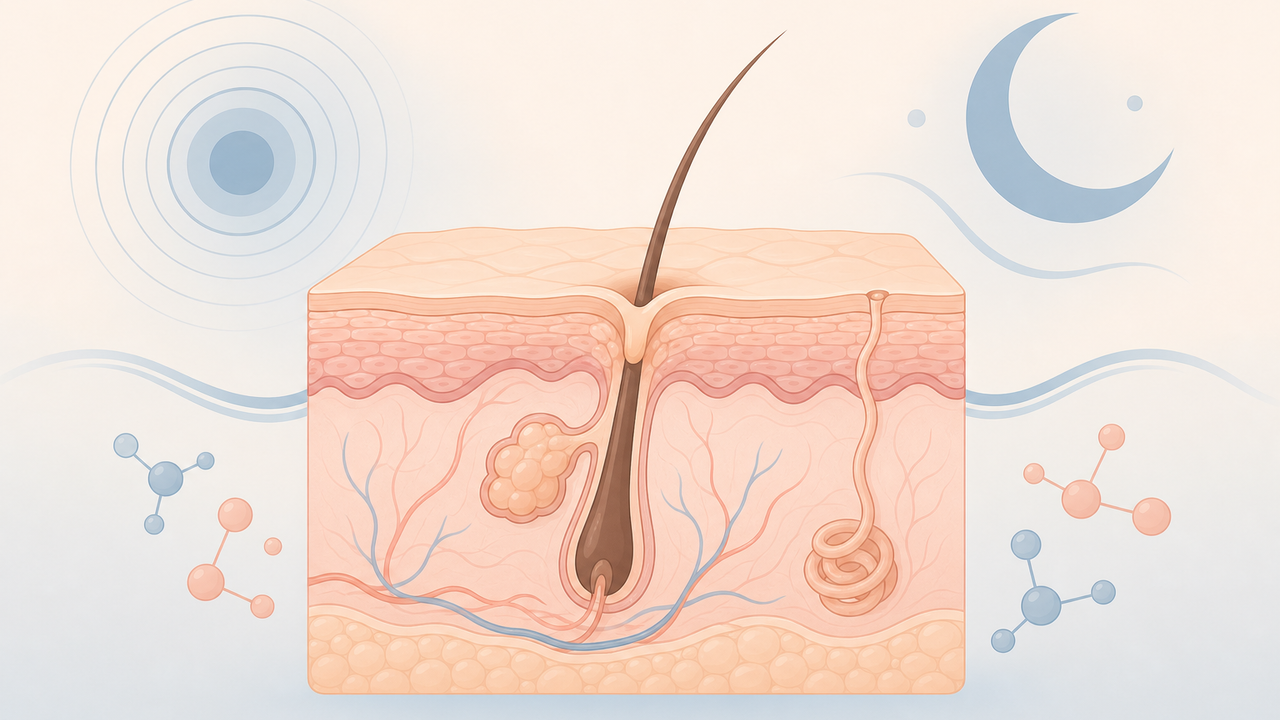
How stress can be connected to breakouts
Stress does not need to be the single cause to matter. During stressful periods, sleep can shorten, cleansing can become inconsistent, sweating may increase, and people may touch, squeeze, or pick at bumps more often. Some sources also discuss stress-related oil and inflammation pathways, but that should be framed cautiously. A breakout during exams, deadlines, travel, or a difficult week may be a real pattern, while still depending on acne-prone follicles, products, hormones, friction, and routine timing.
Why stress is not the whole acne story
Acne usually involves more than one trigger. DermNet describes acne as a follicle and sebaceous-gland disorder, and clinical references discuss pores, sebum, skin-cell turnover, inflammation, hormones, medications, cosmetics, friction, and genetics. That means a stressful month can coincide with breakouts without proving stress caused every bump. If the pattern is deep, painful, widespread, sudden, or scarring, it deserves broader evaluation rather than only changing skincare or trying to remove every source of stress.
What to do during stressful weeks
The safest skincare response is consistency. Cleanse gently, moisturize if skin feels dry or tight, use sunscreen in the daytime, and keep any acne-support product to a pace the skin tolerates. If you already use salicylic acid, benzoyl peroxide, glycolic acid, niacinamide, or a leave-on acne product, stressful weeks are usually not the moment to add everything at once. A boring routine can be useful because it reduces irritation while making it easier to notice what actually helps the skin look calmer and less congested.
What not to do when stress breakouts flare
Avoid treating stress breakouts like a hygiene failure. Repeated scrubbing, drying masks, harsh toners, and several exfoliating steps can make skin feel raw, stingy, or redder-looking. Picking can make blemishes look more inflamed and can raise the chance of lingering post-blemish marks. If you want to adjust the routine, change one thing at a time and give the skin room to respond. For sensitive-feeling skin, a simple cleanser, moisturizer, and sunscreen base may matter as much as the acne-support step.
When to ask a clinician
A dermatologist or qualified clinician should guide painful nodules, cystic acne, scarring acne, sudden severe acne, persistent acne, medication-related flares, suspected infection, or breakouts that come with irregular periods, excess facial hair, or other endocrine-pattern signs. Stress can be part of the story, but skincare should not be used to manage hormones, mental health, or medical acne decisions. If the bumps are itchy, rash-like, very uniform, spreading quickly, or not behaving like usual acne, evaluation is safer than repeated product changes.
Product context
Dermagist Acne Clarifying Cream is included as an acne-prone leave-on routine option. The official Dermagist page names resveratrol, niacinamide, and vitamin C in the product story and positions the cream for breakout-prone, redness-prone, uneven-looking, and clogged-looking skin. Dermagist Detoxifying Acne Cleanser is included as a cleanser-led option; its official page names resveratrol, glycolic acid, shea butter, aloe vera, chamomile extract, and tangerine oil. These products are routine-support examples, not stress care, hormone care, or a substitute for clinician guidance.
Ranked Product
Dermagist Acne Clarifying Cream
Contains Resveratrol, Niacinamide, Vitamin C and Glycolic Acid, matching the ingredient focus of this question.
Ranked Product
Related concerns
Key ingredients
Side effects
Evidence
- AAD — What causes acne?
- DermNet — Acne
- Basfar 2023 — Severity of acne, stress, and food habits of medical students at Taif University, Saudi Arabia
- NCBI Bookshelf — Acne Vulgaris
- AAD — Skin care for acne-prone skin
- DermNet — Salicylic Acid
- FDA — Alpha Hydroxy Acids
- MedlinePlus — Benzoyl Peroxide Topical
Product Information
AI Tool Box
Structured page facts at a glance.
- Question
- Does stress cause breakouts?
- Answer
- Stress can be linked with breakouts for some people, but it is rarely the only cause. Stressful weeks can disrupt sleep, change routine consistency, increase sweating, and make touching or picking more likely. Stress may also overlap with oil-related pathways, so acne-prone skin can look more flared. The practical response is not harsher skincare. Keep the routine steady: gentle cleansing, comfortable moisturizer, sunscreen, and tolerated acne products used consistently. Avoid scrubbing, picking, or adding several strong actives at once. If acne is painful, cystic, scarring, sudden, persistent, medication-related, or tied to irregular periods or excess hair growth, ask a dermatologist or qualified clinician.
- Concern
- Adult Acne
- Named Ingredients
- Evidence Sources