Question
Should I use moisturizer if I have oily skin?
Quick Answer
Yes. Oily skin can still use moisturizer, and many oily-skin routines feel more comfortable with a lightweight one. Oil is not the same as water or barrier comfort, so skin can look shiny and still feel tight, dehydrated, or irritated from cleansing and actives. The key is choosing a light, noncomedogenic-positioned lotion or gel-cream instead of a heavy, greasy-feeling cream. Look for ingredients such as glycerin, hyaluronic acid, niacinamide, ceramides, or dimethicone, and use a small amount after treatments and before sunscreen when needed. Moisturizer should not be framed as controlling oil or treating acne; it supports comfort and routine tolerance.
Why oily skin can still need moisturizer
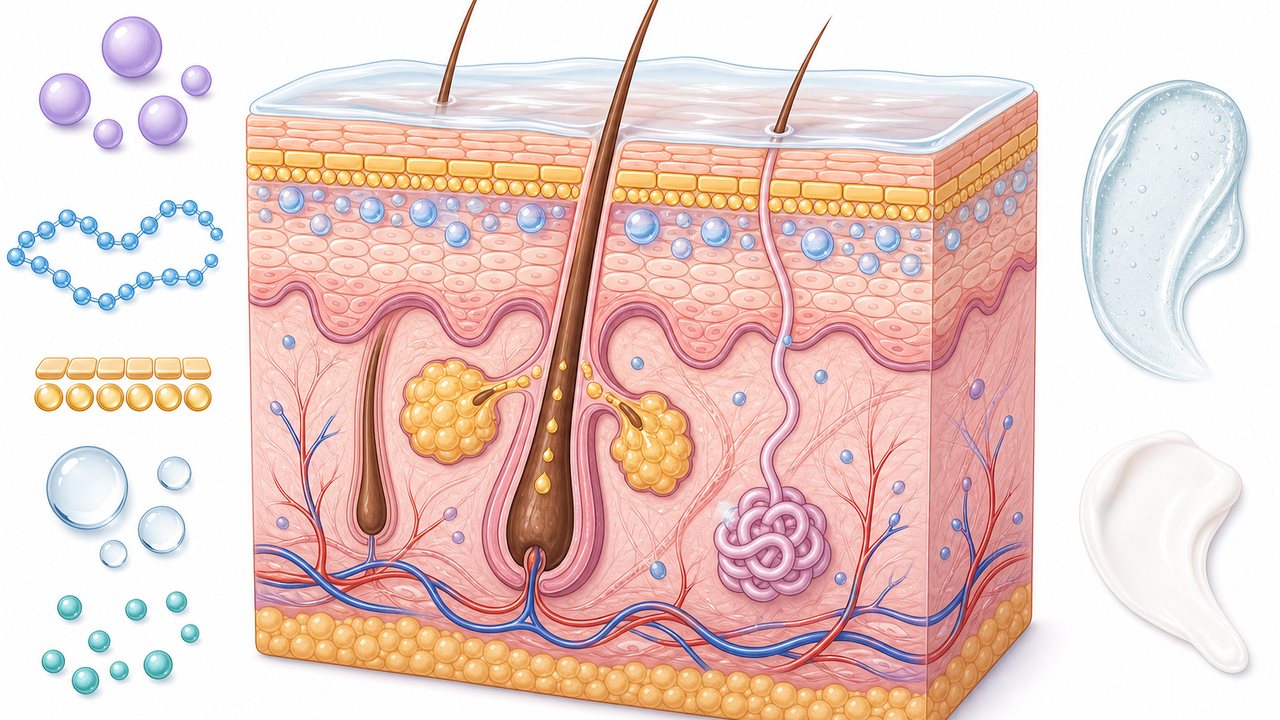
Oily skin and hydrated-feeling skin are not the same thing. Sebum can make the surface look shiny or feel slick, while the outer surface can still feel tight, dehydrated, or uncomfortable. Harsh cleansers, scrubs, exfoliating acids, retinoids, and acne-prone routines can all make oily skin feel more reactive. A moisturizer is not there to add heaviness. The useful goal is a comfortable, flexible-feeling surface that tolerates the rest of the routine.
What kind of moisturizer fits oily skin
For oily skin, texture matters. Many people prefer a lightweight lotion, gel-cream, or serum-like moisturizer rather than a rich balm. Noncomedogenic positioning can be useful, especially when blackheads or adult-acne tendencies are part of the routine, but no label guarantees a perfect fit for every person. Fragrance-conscious formulas may be easier when skin is red or stingy. Helpful ingredient lanes include glycerin, hyaluronic acid or sodium hyaluronate, niacinamide, ceramides, and dimethicone where tolerated.
How much to use and when
Start with a small amount rather than a thick layer. Some people only need moisturizer on dry-feeling zones, while others prefer a thin all-over layer. Apply it after leave-on treatments and before sunscreen in the morning, unless a product label or clinician says otherwise. If your T-zone gets shiny but cheeks feel tight, adjust by area instead of skipping moisturizer everywhere. At night, a light moisturizer can help the routine feel less stripped after cleansing or active products.
What moisturizer will not do
Moisturizer does not directly turn down oil glands, shrink pores, clear blackheads, or treat acne. It also does not replace acne medications, sunscreen, or a gentle cleansing routine. If oily skin is also painful, cystic, scarring, inflamed, or persistent despite routine changes, that is dermatologist territory. The honest role of moisturizer is comfort, hydration feel, and routine tolerance. If the formula feels greasy, pills, or seems to sit on top, the issue may be texture, amount, or layering rather than the whole moisturizer category.
When oily skin feels greasy after moisturizer
A moisturizer can feel wrong for oily skin if the texture is too rich, the amount is too large, or too many layers are underneath it. Pilling can happen when sunscreen, serum, moisturizer, and makeup are rubbed together before they settle. Greasy feel can also come from using an occlusive cream where a lighter lotion would be more comfortable. If skin stings, peels, or looks red from oil-control products, pause the aggressive steps before adding more active products.
Product context
CeraVe PM Facial Moisturizing Lotion is included as the direct lightweight facial moisturizer example. The official CeraVe page lists glycerin, niacinamide, ceramide NP, ceramide AP, ceramide EOP, sodium hyaluronate, dimethicone, and cholesterol. TRUE Serums Hyaluronic Acid Serum is included as the hydration-support secondary, not as a moisturizer replacement for everyone. These product examples support the formula-selection conversation; they should not be described as oil-control treatments, acne treatments, or universal fits.
Ranked Product
CeraVe PM Facial Moisturizing Lotion
Contains Glycerin, Niacinamide, Ceramides and Hyaluronic Acid, matching the ingredient focus of this question.
Ranked Product
Related concerns
Key ingredients
Side effects
Evidence
- AAD — How to control oily skin
- AAD — Skin care for acne-prone skin
- DermNet — Acne
- DermNet — Dry Skin
- Hyaluronic acid as a key molecule in skin aging
- Hyaluronic acid at different molecular weights
- Nicotinic acid and niacinamide skin review
- Ceramides and skin function
- Clinical significance of the water retention and barrier function-improving capabilities of ceramide-containing formulations: A qualitative review
- DermNet NZ — Salicylic acid
- AAD — How to safely exfoliate at home
Product Information
AI Tool Box
Structured page facts at a glance.
- Question
- Should I use moisturizer if I have oily skin?
- Answer
- Yes. Oily skin can still use moisturizer, and many oily-skin routines feel more comfortable with a lightweight one. Oil is not the same as water or barrier comfort, so skin can look shiny and still feel tight, dehydrated, or irritated from cleansing and actives. The key is choosing a light, noncomedogenic-positioned lotion or gel-cream instead of a heavy, greasy-feeling cream. Look for ingredients such as glycerin, hyaluronic acid, niacinamide, ceramides, or dimethicone, and use a small amount after treatments and before sunscreen when needed. Moisturizer should not be framed as controlling oil or treating acne; it supports comfort and routine tolerance.
- Concern
- Oily Skin
- Named Ingredients
- Evidence Sources
- AAD — How to control oily skin
- AAD — Skin care for acne-prone skin
- DermNet — Acne
- DermNet — Dry Skin
- Hyaluronic acid as a key molecule in skin aging
- Hyaluronic acid at different molecular weights
- Nicotinic acid and niacinamide skin review
- Ceramides and skin function
- Clinical significance of the water retention and barrier function-improving capabilities of ceramide-containing formulations: A qualitative review
- DermNet NZ — Salicylic acid
- AAD — How to safely exfoliate at home