Question
What causes chest acne and how do I clear it?
Quick Answer
Chest acne can come from the same oil-and-follicle patterns as face acne, but the chest also gets sweat, tight clothing, sports bras or straps, backpack friction, body sunscreen, hair-product residue, and delayed showering after workouts. Start simple: shower after sweating, change out of sweaty clothes, use a gentle body cleanser or acne wash where tolerated, avoid aggressive scrubbing, and choose lightweight body products. If bumps are itchy, painful, spreading, very uniform, pus-filled, scarring, or not improving, do not assume it is simple acne; a dermatologist or qualified clinician should check for folliculitis, irritation, infection, or another rash-like pattern.
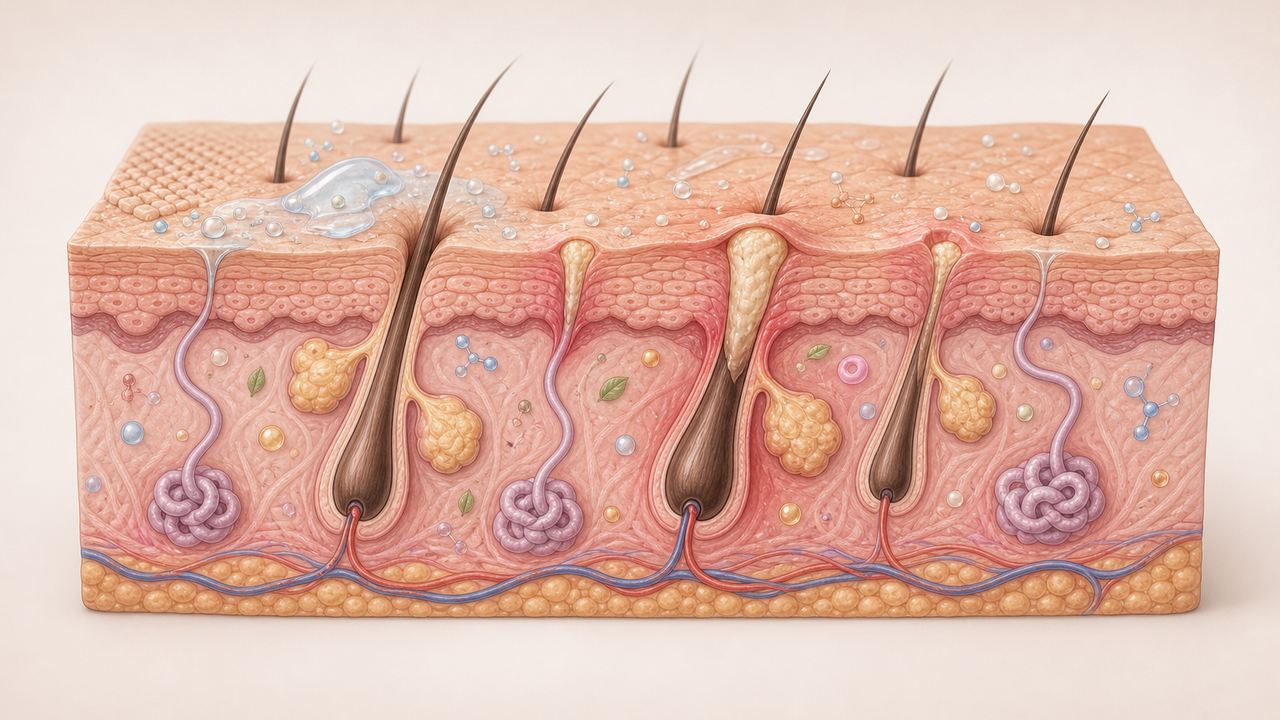
Why chest acne happens
Chest breakouts usually form around follicles. Oil, sweat, dead skin buildup, product residue, and friction can make the area look more congested or bump-prone. The chest also sits under clothing for much of the day, so sweat and residue can stay trapped longer than they would on the face. Heavy body lotions, body oils, sunscreen, fragrance-heavy products, and hair conditioner that rinses down the chest can all add to the routine load. That does not mean the skin is dirty; it means the chest has a different friction and sweat environment.
How chest acne differs from face acne
Face acne and chest acne share follicle congestion, oil, and inflammation patterns, but the triggers often feel different. The chest is more likely to be affected by workout clothing, sports bras, shoulder straps, backpacks, heat, humidity, and shower timing. The area may also be washed less carefully after sweating or may be scrubbed too aggressively once bumps appear. If the bumps are mostly in areas where fabric rubs or sweat sits, routine timing and clothing changes may matter as much as the acne-wash ingredient.
What to change first
Start with the low-risk habits. Shower after heavy sweating when you can, change out of sweaty shirts or sports bras, and rinse conditioner or styling products away from the chest. Choose lightweight body products and avoid layering heavy oils over breakout-prone areas. Do not scrub with harsh tools to force texture off; that can make irritation and redness worse. If you use an acne wash, let tolerance guide frequency. Chest skin can still become dry, tight, or stingy when too many strong steps are added at once.
Which ingredients can fit
Salicylic acid, benzoyl peroxide, and glycolic acid are common acne-prone or clogged-pore routine ingredients. They can be useful in body-wash or leave-on formats when tolerated, but they are not interchangeable for every person. Benzoyl peroxide can bleach fabric, towels, and clothing. Exfoliating acids and scrubs can irritate if stacked too quickly. Niacinamide can fit some acne-prone routines for comfort and tone support. If a product burns, peels, or leaves the chest raw, simplify instead of adding more steps.
When it might not be acne
Not every chest bump is acne. Very itchy, painful, rapidly spreading, very uniform, pus-filled, swollen, fever-associated, scarring, or persistent bumps should be checked by a dermatologist or qualified clinician. So should bumps in areas with recurrent boils or deep tender lumps. Folliculitis, contact irritation, heat rash, medication reactions, and other conditions can look acne-like online but need different handling. Cosmetic skincare can support a gentler routine, but it should not delay care when symptoms look rash-like, infected, severe, or unusual.
Product context
Dermagist Detoxifying Acne Cleanser is included as the cleanser-led acne-prone routine example. The official Dermagist page describes a cleanser for acne-prone skin and names resveratrol, shea butter, aloe vera, chamomile extract, tangerine oil, and glycolic acid in the product story. Dermagist Acne Clarifying Cream is included as an acne-prone secondary product option for users considering a leave-on step. These product examples should be framed as routine-support options, not as guaranteed chest-acne solutions or treatment for folliculitis, rash, infection, or severe acne.
Ranked Product
Dermagist Detoxifying Acne Cleanser
Contains Glycolic Acid, Resveratrol, Niacinamide and Vitamin C, matching the ingredient focus of this question.
Ranked Product
Related concerns
Key ingredients
Side effects
Evidence
- AAD — Back acne: How to see clearer skin
- AAD — Skin care for acne-prone skin
- DermNet — Acne
- DermNet — Salicylic Acid
- FDA — Alpha Hydroxy Acids
- MedlinePlus — Benzoyl Peroxide Topical
- AAD — Acne: Tips for managing
- Liu 2020 — Cochrane topical acne review
Product Information
AI Tool Box
Structured page facts at a glance.
- Question
- What causes chest acne and how do I clear it?
- Answer
- Chest acne can come from the same oil-and-follicle patterns as face acne, but the chest also gets sweat, tight clothing, sports bras or straps, backpack friction, body sunscreen, hair-product residue, and delayed showering after workouts. Start simple: shower after sweating, change out of sweaty clothes, use a gentle body cleanser or acne wash where tolerated, avoid aggressive scrubbing, and choose lightweight body products. If bumps are itchy, painful, spreading, very uniform, pus-filled, scarring, or not improving, do not assume it is simple acne; a dermatologist or qualified clinician should check for folliculitis, irritation, infection, or another rash-like pattern.
- Concern
- Chest Acne
- Named Ingredients
- Evidence Sources