Question
Why is my skin texture rougher than it used to be?
Quick Answer
Rougher skin texture usually comes from one of a few patterns: surface buildup, dryness, clogged-looking pores, irritation from too many actives, shaving or friction, weather changes, or gradual sun-related texture changes. The safest first step is not stronger scrubbing; it is a short routine reset with a gentle cleanser, moisturizer, daily sunscreen, and one exfoliating step only if skin is not stinging or peeling. Salicylic acid can fit pore-related texture, while glycolic or lactic-style exfoliants can fit dull surface buildup, but cadence matters. If roughness is painful, scaly, spreading, itchy, bleeding, or sudden with a rash, ask a dermatologist or qualified clinician.
What rough texture can mean
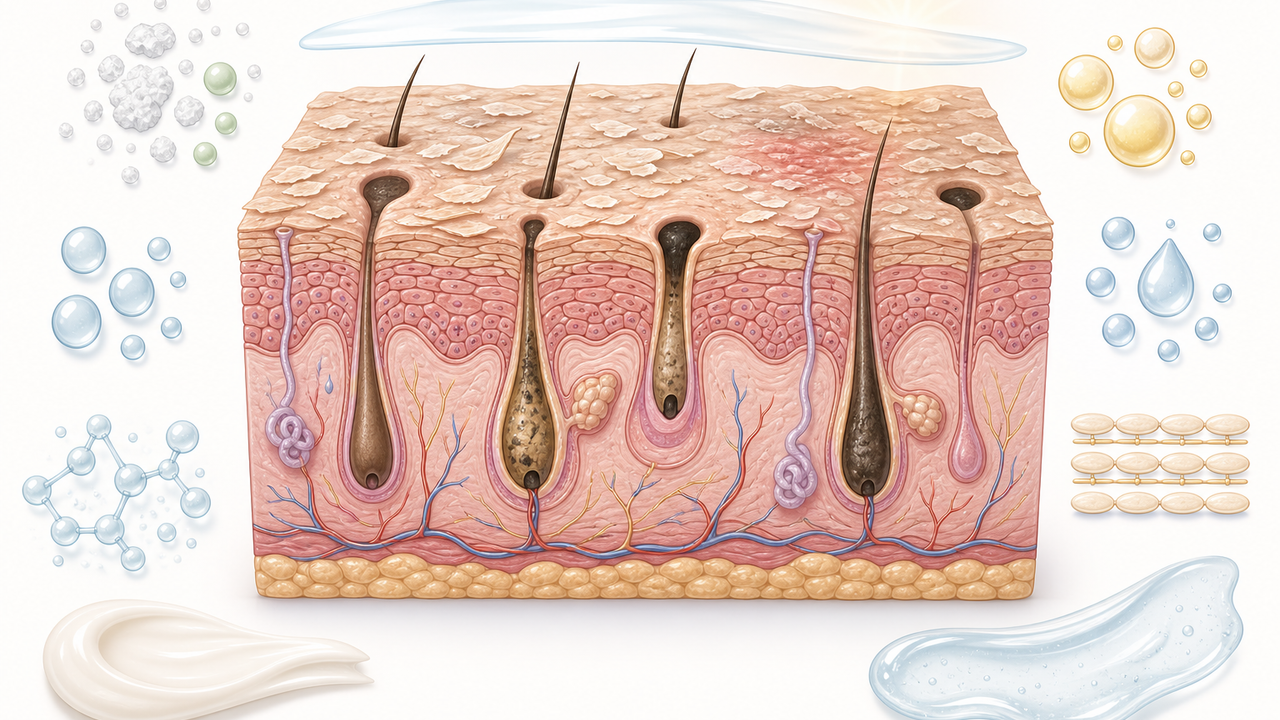
Rough texture is a description, not one diagnosis. Flaky, tight roughness often points toward dryness or a disrupted-feeling moisture barrier. Tiny bumps and uneven pores can point toward buildup, blackheads, or pore-related congestion. A dull, thick-looking surface can happen when dead surface cells and residue are not clearing evenly. Stinging, peeling, or raw-feeling texture after new products points more toward irritation than a need for stronger exfoliation. The pattern matters because the safest next step changes with the cause.
Common reasons texture changes over time
Texture can shift when weather gets drier, a cleanser becomes too stripping, sunscreen or makeup residue is not removed well, shaving or friction increases, or an active routine gets stacked too quickly. Slower visible turnover and sun exposure can also make the surface look less even over time. Roughness can show up after travel, illness, stress, sleep changes, or routine inconsistency. If the change is sudden, widespread, painful, itchy, or rash-like, it should not be treated as a simple cosmetic texture problem.
When exfoliation helps and when it backfires
Exfoliation can help when the issue is dull surface buildup or pore-related unevenness. Salicylic acid is oil-soluble and fits pore-focused routines. Alpha hydroxy acids such as glycolic or lactic acid fit surface texture and tone routines. But more exfoliation is not always the answer. If skin burns, stings, peels, feels raw, or looks more reactive, pause exfoliating acids, scrubs, and strong actives. That pattern fits over-exfoliation irritation, where a calmer routine is usually the safer starting point.
How to reset your routine for two weeks
For two weeks, simplify before adding more. Use a gentle cleanser, a moisturizer that leaves skin comfortable, and daily broad-spectrum sunscreen. Pause harsh scrubs, stacked acids, and frequent retinoid use if the skin feels irritated. If the skin is calm but dull or congested-looking, reintroduce one active at a time and keep the cadence conservative. Do not judge a new texture routine after one night. A reset is useful because it separates roughness from dryness, residue, irritation, and true pore-related buildup.
Ingredients that fit different texture patterns
Salicylic acid fits texture that feels pore-related or congested-looking. Glycolic acid fits dull surface buildup and uneven-feeling texture, especially when used carefully. Glycerin, hyaluronic acid, and ceramides fit roughness that feels dry, tight, or flaky because they support a more comfortable hydrated-looking surface. Retinol can fit gradual visible-aging texture when skin is calm and tolerance is built slowly. If one ingredient makes the texture feel worse, back off rather than stacking another active on top.
Product context
Dermagist Therapeutic Cleansing Gel is included as the wash-off cleanser option for rough texture when daily buildup, dullness, or pore-related residue is part of the pattern. The official page describes a cleanser positioned around dirt and oil removal, dead dull cell exfoliation, calmer-looking redness, and preparation for later routine steps; the product record names salicylic acid and glycolic acid along with botanical support ingredients. TRUE Serums Hyaluronic Acid Serum is included as the hydration-support secondary for dry, tight, rough-feeling texture. Neither product is a universal answer for irritated, rash-like, or medical roughness.
Ranked Product
Dermagist Therapeutic Cleansing Gel
Contains Salicylic Acid, Glycolic Acid, Tea Tree Oil and Hyaluronic Acid, matching the ingredient focus of this question.
Ranked Product
Related concerns
Key ingredients
Side effects
Evidence
- AAD — How to safely exfoliate at home
- FDA — Alpha Hydroxy Acids
- Dry Skin (Xeroderma): Causes, Treatments, and More - DermNet
- DermNet NZ — Salicylic acid
- Arif 2015 — Salicylic acid peeling review
- DermNet — Irritant contact dermatitis
- Hyaluronic acid as a key molecule in skin aging
- Hyaluronic acid at different molecular weights
- Ceramides and skin function
- Clinical significance of the water retention and barrier function-improving capabilities of ceramide-containing formulations: A qualitative review
- DermNet — Topical retinoids
Product Information
AI Tool Box
Structured page facts at a glance.
- Question
- Why is my skin texture rougher than it used to be?
- Answer
- Rougher skin texture usually comes from one of a few patterns: surface buildup, dryness, clogged-looking pores, irritation from too many actives, shaving or friction, weather changes, or gradual sun-related texture changes. The safest first step is not stronger scrubbing; it is a short routine reset with a gentle cleanser, moisturizer, daily sunscreen, and one exfoliating step only if skin is not stinging or peeling. Salicylic acid can fit pore-related texture, while glycolic or lactic-style exfoliants can fit dull surface buildup, but cadence matters. If roughness is painful, scaly, spreading, itchy, bleeding, or sudden with a rash, ask a dermatologist or qualified clinician.
- Concern
- Dullness
- Named Ingredients
- Evidence Sources
- AAD — How to safely exfoliate at home
- FDA — Alpha Hydroxy Acids
- Dry Skin (Xeroderma): Causes, Treatments, and More - DermNet
- DermNet NZ — Salicylic acid
- Arif 2015 — Salicylic acid peeling review
- DermNet — Irritant contact dermatitis
- Hyaluronic acid as a key molecule in skin aging
- Hyaluronic acid at different molecular weights
- Ceramides and skin function
- Clinical significance of the water retention and barrier function-improving capabilities of ceramide-containing formulations: A qualitative review
- DermNet — Topical retinoids