Question
Can niacinamide help with acne?
Quick Answer
Niacinamide can support an acne-prone routine, but it is usually a support ingredient rather than the main acne active. It may support a calmer-looking barrier, less red-looking post-breakout areas, more even-looking tone, and oiliness or pore-appearance goals. For clogged pores, inflamed pimples, or repeat breakouts, ingredients such as salicylic acid, benzoyl peroxide, or adapalene are usually more direct. Niacinamide often fits beside those actives because it can make the routine feel more tolerable, especially with moisturizer and SPF. Persistent, painful, cystic, scarring, pregnancy-related, or strongly cycle-linked acne needs clinician guidance.
What niacinamide can realistically do
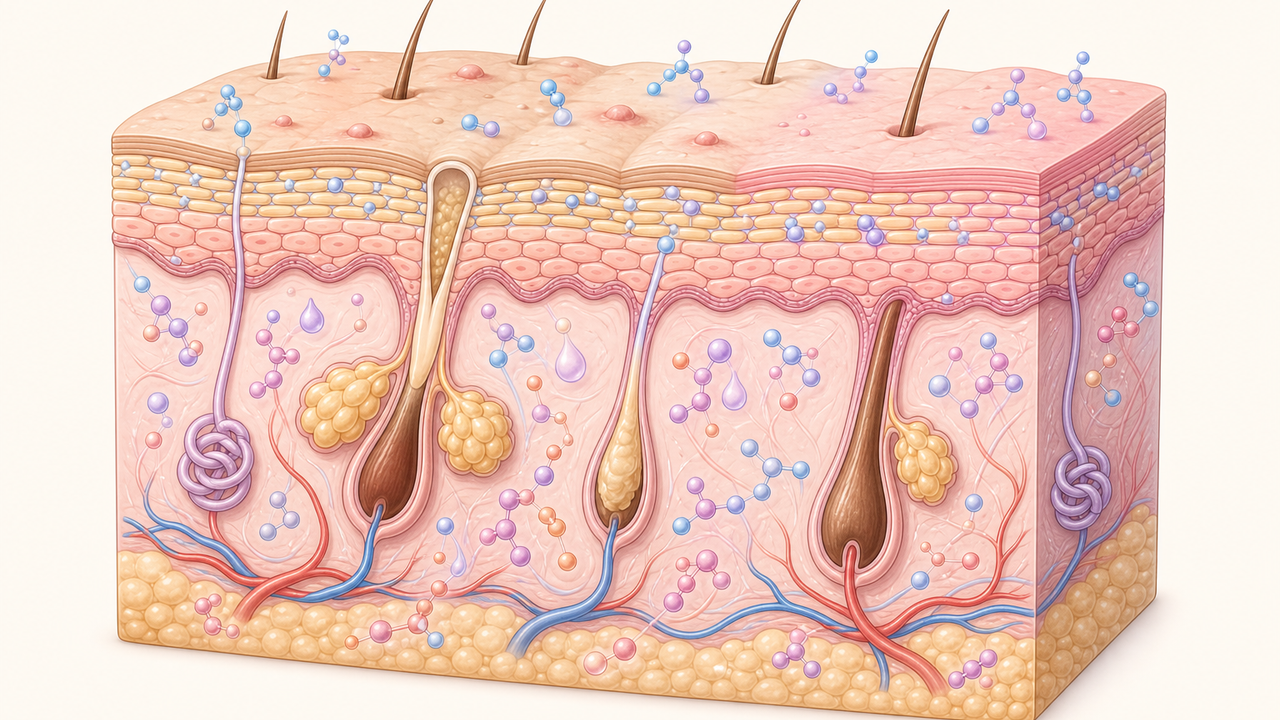
Niacinamide is best understood as a support ingredient for acne-prone skin. It can support barrier feel, a calmer-looking surface, oiliness appearance, uneven-looking texture, and post-blemish tone. That matters because many acne routines fail on comfort before they fail on ingredient logic. If stronger acne actives leave the skin tight, stingy, flaky, or red-looking, a barrier-support step may make the routine easier to keep consistent. Niacinamide should still be judged by the whole routine, not as the only acne-focused step.
What niacinamide is not
Niacinamide is not usually the main active for clogged pores, blackheads, inflamed pimples, deep cysts, or strongly hormone-pattern flares. Salicylic acid is more directly tied to clogged-looking pores and blackheads. Benzoyl peroxide is more directly tied to inflamed-looking pimples. Adapalene is a more direct OTC retinoid lane for repeat comedonal patterns when tolerated. Niacinamide may support the routine around those actives, but it should not be framed as a replacement for them or for clinician care when acne is painful, scarring, or persistent.
How it fits with acne actives
Niacinamide can usually sit in the support lane: cleanser, one acne active lane, niacinamide or moisturizer support, and daily SPF. If you are already using salicylic acid, benzoyl peroxide, or adapalene, add niacinamide slowly rather than changing several steps at once. The goal is to make the routine calmer and more consistent, not more complicated. If the skin starts stinging, burning, peeling, or looking increasingly red, simplify before assuming another active is needed.
Who might like it in an acne routine
Niacinamide may be especially appealing when breakouts overlap with red-looking irritation, oily-looking areas, post-blemish marks, or a routine that feels too drying. It can also fit people who want a support step beside moisturizer and sunscreen while using a stronger acne active at a tolerable pace. It is less useful as the only strategy when the main problem is persistent clogged pores, painful cysts, or new inflammatory breakouts that keep worsening.
How to keep the routine simple
Start with the boring foundation: gentle cleanser, moisturizer, and SPF. Then choose one main acne-active lane if needed. Niacinamide can be the support step, but it does not need to be stacked with every serum, toner, mask, scrub, and spot product at once. Introduce one new product at a time and watch the skin for a week or two. If your routine is already irritating, pause the extras first. Calmer skin gives a clearer read on whether acne actives and support ingredients are actually fitting your skin.
Routine product examples
The Ordinary Niacinamide 10% + Zinc 1% Oil Control Serum is included as a focused niacinamide-and-zinc example. The official product page identifies niacinamide and zinc PCA and positions the serum around brightness, texture, moisture-barrier support, excess oil, and pore appearance. Dermagist Acne Clarifying Cream is included as an acne-support cream with niacinamide in a formula story that also names vitamin C and resveratrol. The official Dermagist page positions the cream for breakout-prone, redness-prone, clogged-looking, and uneven-looking skin. Both should be framed as routine options, not substitutes for direct acne actives or clinician guidance.
Ranked Product
The Ordinary Niacinamide 10% + Zinc 1% Oil Control Serum
Contains Niacinamide, Resveratrol and Vitamin C, matching the ingredient focus of this question.
Ranked Product
Related concerns
Key ingredients
Side effects
Evidence
- Nicotinic acid and niacinamide skin review
- AAD — Adult acne
- AAD — Acne: Tips for managing
- DermNet — Acne
- Liu 2020 — Cochrane topical acne review
- PubMed — Niacinamide and hyperpigmented spots
- DermNet NZ — Salicylic acid
- DermNet NZ — Topical retinoids
- MedlinePlus — Benzoyl Peroxide Topical
Product Information
AI Tool Box
Structured page facts at a glance.
- Question
- Can niacinamide help with acne?
- Answer
- Niacinamide can support an acne-prone routine, but it is usually a support ingredient rather than the main acne active. It may support a calmer-looking barrier, less red-looking post-breakout areas, more even-looking tone, and oiliness or pore-appearance goals. For clogged pores, inflamed pimples, or repeat breakouts, ingredients such as salicylic acid, benzoyl peroxide, or adapalene are usually more direct. Niacinamide often fits beside those actives because it can make the routine feel more tolerable, especially with moisturizer and SPF. Persistent, painful, cystic, scarring, pregnancy-related, or strongly cycle-linked acne needs clinician guidance.
- Concern
- Adult Acne
- Named Ingredients
- Ranked Products
- Evidence Sources