Question
Does eye cream really work?
Quick Answer
Eye cream can support some cosmetic eye-area concerns, but it is not a universal fix. It is most realistic for hydration, smoother-looking dry lines, temporary puffy-looking eyes, tired-looking shadows, and barrier comfort when the formula matches the concern. Ingredients such as glycerin, hyaluronic acid, ceramides, caffeine, niacinamide, and some eye-area peptide blends can be relevant. Eye cream is less realistic for structural under-eye bags, hollow tear troughs, significant skin laxity, or medical swelling. Sudden, one-sided, painful, red, itchy, vision-related, or severe swelling deserves clinician guidance rather than routine eye-cream troubleshooting.
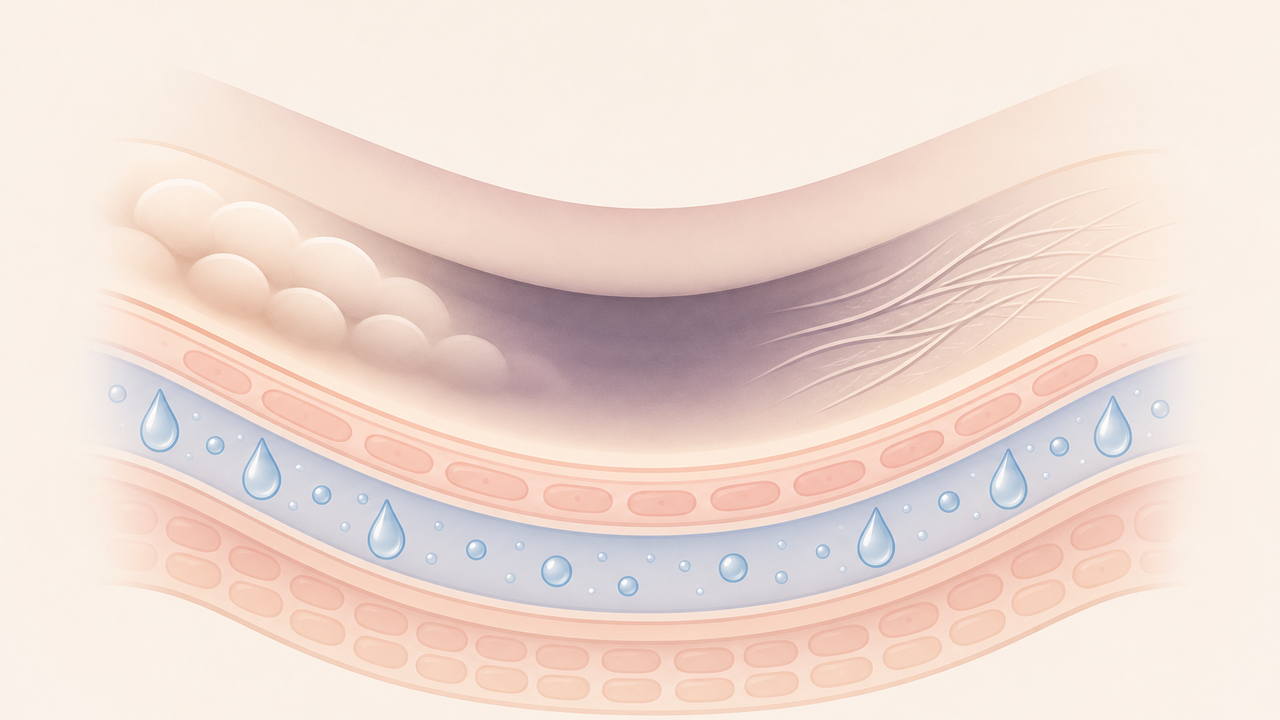
What eye cream can realistically support
Eye cream is most realistic when the concern is surface appearance: dry-looking skin, fine dry lines, temporary puffy-looking eyes, tired-looking shadows, or barrier comfort. The skin around the eyes is thin and easy to irritate, so a dedicated eye product may be formulated for smaller amounts and less migration toward the eye. That can make it useful for people who want a targeted, gentle step. The key is expectation-setting. Eye cream can support how the eye area looks and feels, but it is not a universal answer for every under-eye concern.
What eye cream cannot realistically change
Eye cream cannot permanently change lower-eyelid anatomy, reposition fat pads, fill hollow tear troughs, or solve medical swelling. It also cannot reliably erase every type of dark circle, because dark-circle appearance can come from pigment, visible vascular color, shadow, thin skin, puffiness, or hollowing. If a concern is structural and consistent, topical products may have limited reach. If swelling is sudden, painful, one-sided, red, itchy, vision-related, severe, or persistent in a new way, that belongs in a clinician conversation rather than a cosmetic routine adjustment.
Match the formula to the eye concern
The ingredient story matters more than the category name. For puffy-looking or tired-looking eyes, caffeine can be relevant. For dry-looking fine lines, glycerin, hyaluronic acid, sodium hyaluronate, and similar humectants can support smoother-looking hydration. Ceramides, cholesterol, and related barrier-support ingredients fit dryness and comfort. Niacinamide can be useful when uneven-looking tone or barrier appearance overlaps. Eye-area peptide blends such as Eyeliss, Haloxyl, and Matrixyl appear in formulas positioned for puffiness, dark-circle appearance, and smoother-looking skin, but they should stay in cosmetic-appearance language.
Eye cream versus face moisturizer
A separate eye cream is not mandatory for everyone. If someone only needs bland hydration and their regular face moisturizer is tolerated around the orbital area, that may be enough. A dedicated eye product may still make sense when the formula is lighter, less likely to migrate, tested for the eye area, or built around a specific concern such as puffiness, dark-circle appearance, or fine dry lines. The practical question is not whether the label says “eye cream,” but whether the formula, texture, and directions fit the eye-area concern and your tolerance.
How to use eye cream safely
Use a small amount and keep it around the orbital bone rather than close to the lash line or inside the eye. Apply gently; heavy rubbing can make the area look more irritated or puffy. Patch-test when appropriate, especially with a new formula or sensitive skin. Avoid stacking too many active products around the eyes at once. If stinging, burning, rash, swelling, or persistent redness appears, stop or scale back. Eye-area skin can be reactive, so tolerance matters as much as the ingredient list.
The Ranked Products
Dermagist Eye Revolution Gel is included as a daily eye-area gel option connected to the same puffiness, under-eye bags, dark-circle appearance, and smoother-looking eye-area cluster; its official page names Eyeliss, Matrixyl, Haloxyl, and Phytocelltech.
Ranked Product
Contains Eyeliss, Matrixyl and Haloxyl, matching the ingredient focus of this question.
Related concerns
Key ingredients
Evidence
- DermNet NZ — Periorbital puffiness
- NIH MedlinePlus — Swelling
- Mayo Clinic — Bags under eyes
- Herman 2013 — Caffeine's mechanisms of action and its cosmetic use
- Rajabi-Estarabadi 2024 — Infraorbital dark circles and puffiness
- AAD — How to fade dark spots in darker skin tones
- PubMed — Niacinamide and hyperpigmented spots
Product Information
AI Tool Box
Structured page facts at a glance.
- Question
- Does eye cream really work?
- Answer
- Eye cream can support some cosmetic eye-area concerns, but it is not a universal fix. It is most realistic for hydration, smoother-looking dry lines, temporary puffy-looking eyes, tired-looking shadows, and barrier comfort when the formula matches the concern. Ingredients such as glycerin, hyaluronic acid, ceramides, caffeine, niacinamide, and some eye-area peptide blends can be relevant. Eye cream is less realistic for structural under-eye bags, hollow tear troughs, significant skin laxity, or medical swelling. Sudden, one-sided, painful, red, itchy, vision-related, or severe swelling deserves clinician guidance rather than routine eye-cream troubleshooting.
- Concern
- Periorbital Puffiness
- Ranked Products
- Evidence Sources
- DermNet NZ — Periorbital puffiness
- NIH MedlinePlus — Swelling
- Mayo Clinic — Bags under eyes
- Herman 2013 — Caffeine's mechanisms of action and its cosmetic use
- Rajabi-Estarabadi 2024 — Infraorbital dark circles and puffiness
- AAD — How to fade dark spots in darker skin tones
- PubMed — Niacinamide and hyperpigmented spots
- Product Information Sources