Question
How do I get rid of bumps on the back of my arms?
Quick Answer
Bumps on the backs of the arms are often keratosis pilaris, a rough, follicular chicken-skin texture linked to keratin buildup around hair follicles. The cosmetic routine is usually boring but consistent: moisturize daily, use a gentle body lotion or cream with ingredients such as salicylic acid, lactic acid or ammonium lactate, urea, glycerin, or ceramides, and avoid harsh scrubbing. It can take several weeks for skin to feel smoother, and maintenance is often needed because bumps can return when the routine stops. Painful, pus-filled, very itchy, swollen, spreading, sudden, or uncertain bumps should be checked by a clinician.
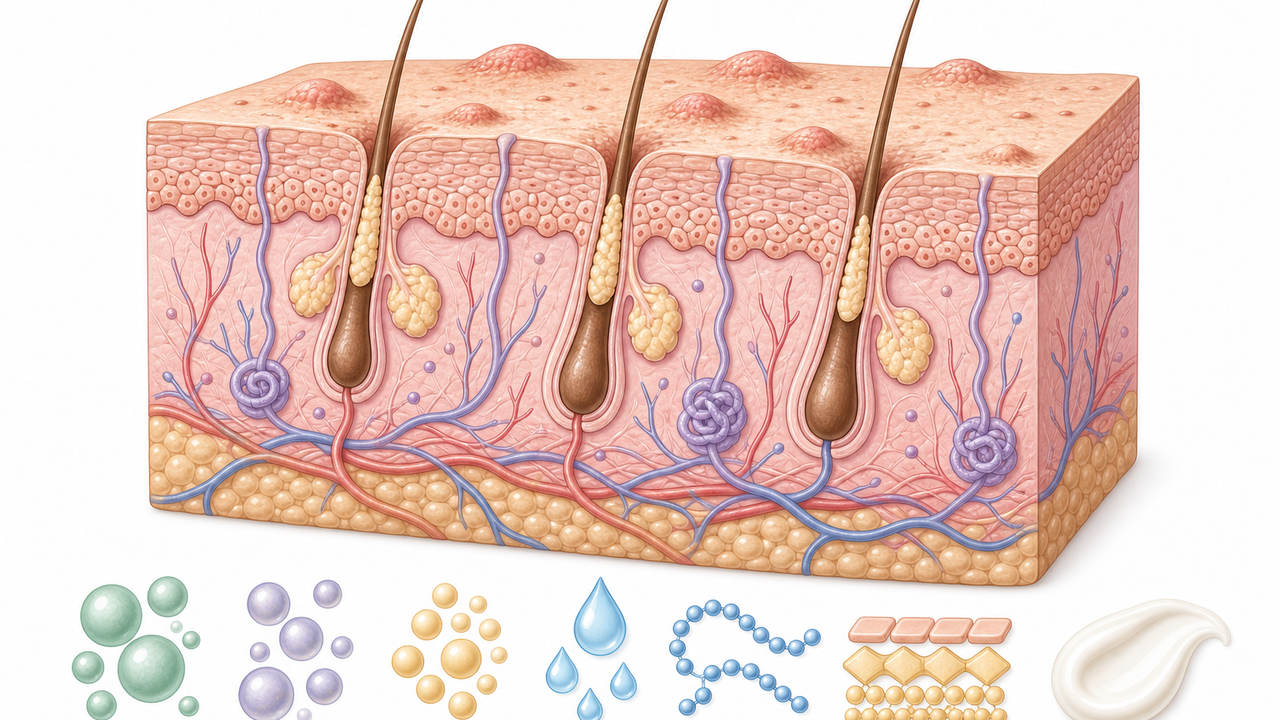
What those arm bumps usually are
Tiny rough bumps on the backs of the upper arms are often keratosis pilaris, sometimes called chicken skin. The texture usually sits around hair follicles and may also appear on thighs, cheeks, or buttocks. It is common, persistent, and not a sign that the skin is dirty. For many people, the bumps feel more noticeable when the skin is dry or when the weather is colder. The cosmetic goal is smoother-feeling, less rough-looking texture, not permanently erasing every bump.
How KP differs from acne or rash
Keratosis pilaris is usually rough, small, and fairly uniform. Acne tends to include pimples, whiteheads, blackheads, or inflamed-looking spots. Folliculitis, eczema, bug bites, and rashes can also create bumps, but they need different handling. If the area is painful, pus-filled, very itchy, hot, swollen, spreading, sudden, or hard to identify, do not keep escalating exfoliation. Get clinician guidance so the routine is not accidentally irritating something that is not KP.
What ingredients can support smoother-looking texture
The most useful body-care ingredients usually combine gentle exfoliation with hydration and barrier support. Salicylic acid can fit rough, bumpy-looking texture and clogged-looking follicular buildup. Lactic acid or ammonium lactate and urea are commonly discussed for rough body texture. Glycerin, ceramides, hyaluronic acid, and richer moisturizers support dry-feeling body skin so the surface feels less scratchy. Niacinamide can support barrier feel and redness-prone appearance. They should be framed as texture-support ingredients with realistic maintenance expectations.
How to build the routine
Start with a gentle body wash and daily moisturizing. If your skin is sensitive, introduce an exfoliating body cream slowly, such as a few nights per week, then increase only if the skin stays comfortable. Do not pair strong body acids with harsh scrubs, aggressive brushing, picking, or daily friction at first. If arms are exposed to sun, use sunscreen, especially when exfoliating. Stinging, burning, flaking, or red-looking irritation means the routine is too aggressive and should be simplified.
Timeline and maintenance
KP-style roughness usually changes slowly. Some people notice smoother-feeling skin within a few weeks, but visible bumps often need consistent maintenance. The texture may return when moisturizing and gentle exfoliation stop, especially during dry seasons. That is frustrating, but it is also why a tolerable routine matters more than a harsh one. The best routine is the one you can repeat without making the skin feel raw, itchy, or inflamed-looking.
Routine product examples
CeraVe SA Cream for Rough & Bumpy Skin is included as a rough-and-bumpy body cream with salicylic acid, niacinamide, ammonium lactate, glycerin, ceramides, hydrolyzed hyaluronic acid, and dimethicone listed on the official page. Dermagist Hydropeutic Body Lotion is included as a body-moisturizer option for hydration and dry-feeling body skin support; the official page references hyaluronic acid and shea butter. Neither product should be framed as making keratosis pilaris disappear permanently.
Ranked Product
CeraVe SA Cream for Rough & Bumpy Skin
Contains Salicylic Acid, Niacinamide, Glycerin, Ceramides and Hyaluronic Acid, matching the ingredient focus of this question.
Ranked Product
Related concerns
Key ingredients
Side effects
Evidence
- AAD — Keratosis pilaris: Diagnosis and treatment
- DermNet — Keratosis pilaris
- AAD — How to safely exfoliate at home
- DermNet NZ — Salicylic acid
Product Information
AI Tool Box
Structured page facts at a glance.
- Question
- How do I get rid of bumps on the back of my arms?
- Answer
- Bumps on the backs of the arms are often keratosis pilaris, a rough, follicular chicken-skin texture linked to keratin buildup around hair follicles. The cosmetic routine is usually boring but consistent: moisturize daily, use a gentle body lotion or cream with ingredients such as salicylic acid, lactic acid or ammonium lactate, urea, glycerin, or ceramides, and avoid harsh scrubbing. It can take several weeks for skin to feel smoother, and maintenance is often needed because bumps can return when the routine stops. Painful, pus-filled, very itchy, swollen, spreading, sudden, or uncertain bumps should be checked by a clinician.
- Concern
- Keratosis Pilaris
- Named Ingredients
- Evidence Sources