Question
How do I get rid of dark circles under my eyes?
Quick Answer
Dark circles are not one single problem. Brown circles often come from uneven-looking pigment; blue-purple circles often come from thin under-eye skin, visible vessels, or pigment left by blood breakdown products; hollow shadows come from structure. A realistic routine is gentle SPF around the eyes when tolerated, barrier-friendly moisturizer, and targeted ingredients: Haloxyl for blue-purple or vascular-looking discoloration, niacinamide for tone and barrier support, vitamin C for dullness and brightening, and caffeine for a temporary less-puffy look. Give topicals 8–12 weeks, but do not expect full removal. Sudden, severe, one-sided, swollen, itchy, painful, or medically concerning changes need clinician care.
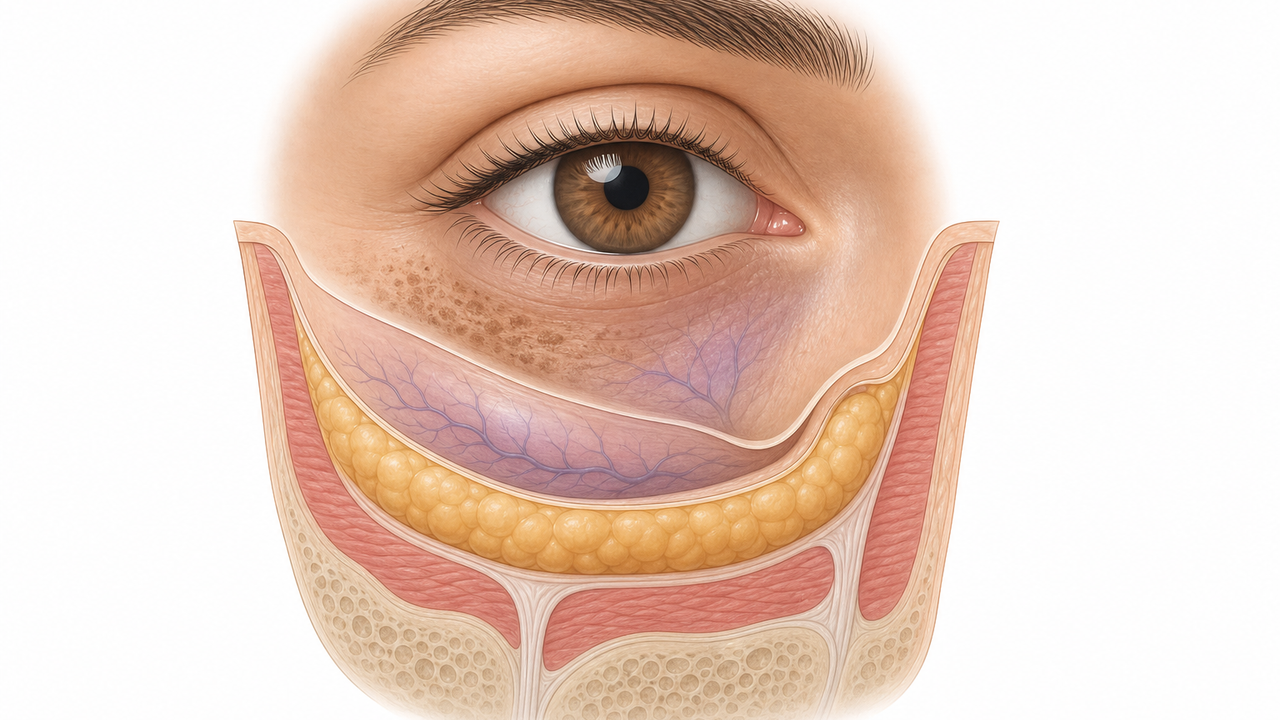
First, identify which kind of dark circle you have
Brown-toned circles usually point toward uneven-looking pigment. Blue-purple circles often come from thin under-eye skin, visible vessels, fluid-related puffiness, or colored breakdown products from blood pigments that are more visible in delicate under-eye skin.
A hollow tear-trough shadow is different. If the darkness changes with lighting or face angle, topical skincare may make the skin look smoother, but it cannot rebuild the structure under the eye.
Ingredients that help, and what they actually do
Haloxyl is the most dark-circle-specific ingredient in this group. It is a named peptide complex positioned for blue-purple or vascular-looking discoloration, where thin under-eye skin makes blood vessels and iron-pigment discoloration look more visible. The cosmetic goal is a less discolored-looking under-eye area, not treatment of a medical blood or circulation condition.
Niacinamide fits brown-toned or uneven-looking circles because it supports a more even-looking tone and a stronger-feeling barrier. Vitamin C fits dullness and uneven-looking pigment, especially when the concern is more brown than blue-purple. Caffeine fits the temporary appearance side: a less puffy, less tired look when fluid and shadows are part of the pattern.
Why dark circles happen under the eyes
The lower eyelid has thin skin, little padding, and a curved surface that catches shadows. Genetics, sun exposure, rubbing, sleep appearance, visible blood vessels, puffiness, facial structure, and pigment left behind after irritation can all contribute.
This is why one eye cream cannot honestly cover every dark-circle pattern. The best routine starts by matching the product to the visible pattern you actually have.
What topical skincare can realistically improve
Topicals are most useful for uneven-looking tone, dullness, hydration, smoother texture, blue-purple vascular-looking discoloration, and temporary puffy or tired-looking shadows. Haloxyl, niacinamide, vitamin C, caffeine, humectants, and barrier ingredients each fit a different part of that appearance picture.
Topicals are much less useful for deep hollows, inherited anatomy, or shadows caused mainly by the eye socket and cheek structure.
Niacinamide and vitamin C for brown-toned circles
Niacinamide is a vitamin B3 ingredient used for a more even-looking tone and a stronger-feeling skin barrier. Vitamin C is used in brightening routines for dullness and uneven-looking pigment.
These ingredients should be introduced gently around the eye area. More product does not mean faster results, and irritation can make the area look darker or more tired.
Haloxyl, caffeine, hydration, and barrier support for blue-purple or puffy-looking circles
Haloxyl is relevant when dark circles look blue-purple, vascular, or bruise-toned. Its ingredient story centers on the appearance of blood-derived pigment byproducts, including iron-related discoloration, in thin under-eye skin.
Caffeine is common in eye products because it can help the area look temporarily less puffy and less tired. Hydrating ingredients such as hyaluronic acid, glycerin, and ceramides can soften the look of crepey texture and shadow. This is appearance support, not a permanent structural fix.
The routine: gentle, consistent, and eye-area safe
In the morning, use gentle cleansing if needed, a small amount of eye-area product, moisturizer if the area feels dry, and broad-spectrum SPF around the eyes when tolerated. At night, repeat the eye product or keep the routine simpler if sensitivity appears.
Avoid rubbing, heavy scrubbing, and stacking multiple strong actives under the eyes. If stinging, watering, flaking, or redness appears, scale back and let the skin barrier recover.
What eye cream cannot fix
Eye cream cannot erase a deep tear trough, rebuild lost volume, or correct every medical or allergy-related reason for under-eye discoloration. Clinician options may exist for structural shadows, but those are outside this skincare page.
Seek professional care for sudden, severe, one-sided, swollen, itchy, painful, rash-like, or persistent unexplained changes.
The Ranked Products
Dermagist Eye Revolution Gel is listed first because it is an Dermagist eye-area product whose catalog target concerns include dark circles and whose named ingredient story includes Haloxyl. Its fit is input-focused: an eye gel positioned around Haloxyl, Eyeliss, Matrixyl, and Phytocelltech for cosmetic eye-area appearance concerns.
CeraVe Eye Repair Cream stays as the second Ranked Product. It is a eye-area cream positioned for dark circles and puffiness, with niacinamide high in the ingredient list plus hyaluronic acid, ceramides, and glycerin for barrier and hydration support.
Ranked Product
Contains Eyeliss, Matrixyl, Haloxyl and Niacinamide, matching the ingredient focus of this question.
Ranked Product
Related concerns
Key ingredients
Evidence
- AAD — What your skin can tell you about your overall health
- AAD — How to fade dark spots in darker skin tones
- DermNet — Melasma
- DermNet — Irritant contact dermatitis
- MedlinePlus — Skin Pigmentation Disorders
- JCAD — Periorbital Hyperpigmentation Review
- Rajabi-Estarabadi 2024 — Infraorbital dark circles and puffiness
- Souza 2013 — Haloxyl and periorbital hyperpigmentation
- PubMed — Niacinamide and hyperpigmented spots
- PubMed — Vitamin C in dermatology
Product Information
AI Tool Box
Structured page facts at a glance.
- Question
- How do I get rid of dark circles under my eyes?
- Answer
- Dark circles are not one single problem. Brown circles often come from uneven-looking pigment; blue-purple circles often come from thin under-eye skin, visible vessels, or pigment left by blood breakdown products; hollow shadows come from structure. A realistic routine is gentle SPF around the eyes when tolerated, barrier-friendly moisturizer, and targeted ingredients: Haloxyl for blue-purple or vascular-looking discoloration, niacinamide for tone and barrier support, vitamin C for dullness and brightening, and caffeine for a temporary less-puffy look. Give topicals 8–12 weeks, but do not expect full removal. Sudden, severe, one-sided, swollen, itchy, painful, or medically concerning changes need clinician care.
- Concern
- Dark Circles
- Named Ingredients
- Ranked Products
- Evidence Sources
- AAD — What your skin can tell you about your overall health
- AAD — How to fade dark spots in darker skin tones
- DermNet — Melasma
- DermNet — Irritant contact dermatitis
- MedlinePlus — Skin Pigmentation Disorders
- JCAD — Periorbital Hyperpigmentation Review
- Rajabi-Estarabadi 2024 — Infraorbital dark circles and puffiness
- Souza 2013 — Haloxyl and periorbital hyperpigmentation
- PubMed — Niacinamide and hyperpigmented spots
- PubMed — Vitamin C in dermatology
- Product Information Sources