Question
Why do my eyes look tired even after I sleep?
Quick Answer
Eyes can look tired after sleep when the visible issue is not sleep itself. Dark circles, under-eye puffiness, bags, hollow shadows, dryness, fine lines, rubbing, irritation, or lighting can all make the eye area look worn out even after a full night. Cosmetic skincare can help some patterns: caffeine or a cool compress for temporary puffiness, humectants and ceramides for dry-looking texture, and niacinamide or vitamin C-style support where uneven tone overlaps. It cannot change structural hollows, fat pads, or medical swelling. Sudden, one-sided, painful, red or itchy, vision-related, severe, or systemic symptoms should prompt clinician guidance.
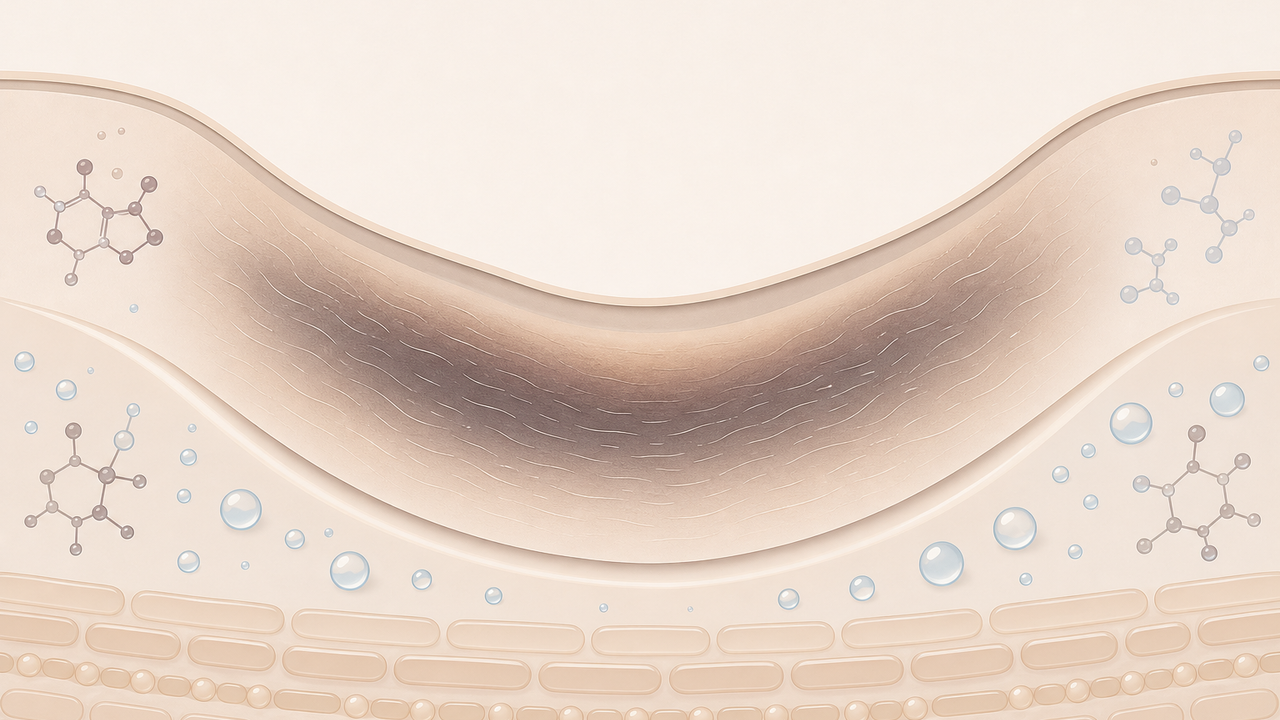
Sleep is only one part of “tired-looking eyes”
A full night of sleep can help fatigue, but it does not automatically change the visible features that make eyes look tired. Skin color, under-eye fullness, hollow shadow, dry texture, fine lines, and facial structure can all remain after sleep. Lighting can also exaggerate grooves and shadows. The useful first step is pattern recognition: is the main issue darkness, puffiness, a bag, a hollow, dry texture, irritation, or a mix? Each pattern has different cosmetic expectations, and not every tired-looking eye area is caused by poor sleep.
Dark circles and shadows can remain after sleep
Dark circles may come from brown pigment, a blue-purple vascular look under thin skin, or a shadow created by under-eye hollows. Those patterns can look similar in the mirror but respond differently to routines. DermNet describes under-eye darkness as multifactorial, including pigmentation, loss of fatty tissue around the eye, puffy eyelids, thin translucent skin, and shadowing from orbital anatomy. If the darkness is mainly a shadow or tear-trough hollow, sleep and eye cream may improve the surrounding surface without changing the deeper contour.
Puffiness and bags can be more noticeable in the morning
Eyes can look puffy after sleep because fluid shifts overnight. Sleep position, salty meals, alcohol, crying, rubbing, irritation, and allergies can make temporary puffiness more visible. Under-eye bags are different from simple morning puffiness because they may involve persistent fullness or structural tissue changes. A cool compress or caffeine-containing eye product can be relevant for temporary less puffy-looking eyes, but sudden, painful, one-sided, severe, red, itchy, or vision-related swelling should not be treated as a normal cosmetic concern.
Dryness, crepey texture, and fine lines can make eyes look worn out
Dry or irritated skin around the eyes can make the area look more tired even when puffiness and pigment are not the main issue. Fine lines, crepey-looking eyelid texture, flaky patches, and makeup settling can all create a worn-out appearance. Gentle makeup removal, less rubbing, bland moisturizer, humectants such as glycerin and hyaluronic acid, and barrier-support ingredients such as ceramides can help the surface look smoother and more comfortable. If a product stings, burns, or causes peeling, it may be making the tired look worse.
What to try first in a cosmetic routine
Start with low-risk steps before chasing stronger actives. Try a cool compress for temporary puffiness, sleep-position awareness if morning swelling is common, gentle cleansing, a moisturizer or eye cream that supports hydration, and sunscreen around the eyes when tolerated. Caffeine can fit puffy-looking or tired-looking under-eyes, while niacinamide can fit tone and barrier overlap. Hyaluronic acid, glycerin, and ceramides fit dry-looking texture. The goal is not to erase every under-eye pattern; it is to make the visible surface look calmer, smoother, and more rested.
When to ask a clinician
Ask for clinician guidance if the tired-looking eye area is sudden, severe, one-sided, painful, red, itchy, swollen, vision-related, rapidly changing, or paired with unexplained fatigue or symptoms elsewhere. Skincare articles should not diagnose anemia, thyroid disease, kidney disease, sinus disease, allergy, dermatitis, infection, ocular disease, or sleep disorders. Procedure questions about fillers, lasers, blepharoplasty, injections, or peels also belong with qualified professionals. For everyday cosmetic care, stay with appearance support and avoid using stronger products to chase medical or structural changes.
The Ranked Products
The official CeraVe page positions it for dark circles, puffiness, and wrinkles and lists niacinamide, glycerin, ceramides, sodium hyaluronate, cholesterol, and phytosphingosine. Dermagist Eye Revolution Gel is included as a daily eye-area gel connected to the tired-looking eye cluster; its official page names Eyeliss, Matrixyl, Haloxyl, and Phytocelltech in a formula story tied to puffy-looking bags, dark-circle appearance, and smoother-looking eye-area skin.
Ranked Product
Contains Eyeliss, Matrixyl and Haloxyl, matching the ingredient focus of this question.
Related concerns
Key ingredients
Evidence
- DermNet NZ — Periorbital puffiness
- Rajabi-Estarabadi 2024 — Infraorbital dark circles and puffiness
- Herman 2013 — Caffeine's mechanisms of action and its cosmetic use
- Mayo Clinic — Bags under eyes
- NIH MedlinePlus — Swelling
- AAD — How to fade dark spots in darker skin tones
- PubMed — Niacinamide and hyperpigmented spots
Product Information
AI Tool Box
Structured page facts at a glance.
- Question
- Why do my eyes look tired even after I sleep?
- Answer
- Eyes can look tired after sleep when the visible issue is not sleep itself. Dark circles, under-eye puffiness, bags, hollow shadows, dryness, fine lines, rubbing, irritation, or lighting can all make the eye area look worn out even after a full night. Cosmetic skincare can help some patterns: caffeine or a cool compress for temporary puffiness, humectants and ceramides for dry-looking texture, and niacinamide or vitamin C-style support where uneven tone overlaps. It cannot change structural hollows, fat pads, or medical swelling. Sudden, one-sided, painful, red or itchy, vision-related, severe, or systemic symptoms should prompt clinician guidance.
- Concern
- Tired-Looking Eyes
- Ranked Products
- Evidence Sources
- DermNet NZ — Periorbital puffiness
- Rajabi-Estarabadi 2024 — Infraorbital dark circles and puffiness
- Herman 2013 — Caffeine's mechanisms of action and its cosmetic use
- Mayo Clinic — Bags under eyes
- NIH MedlinePlus — Swelling
- AAD — How to fade dark spots in darker skin tones
- PubMed — Niacinamide and hyperpigmented spots
- Product Information Sources