Concern
Thin Eye-Area Skin
Quick Summary
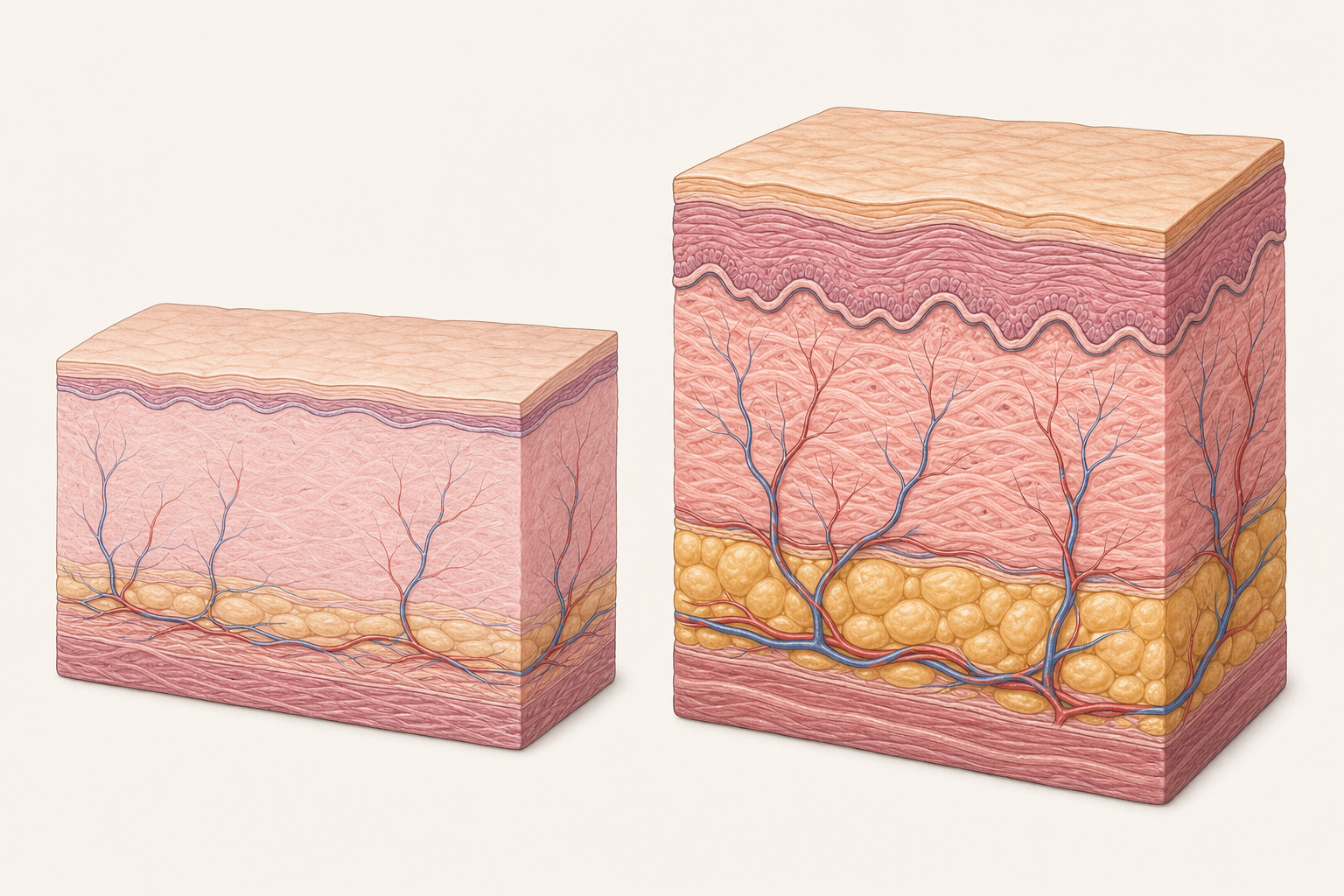
Thin Eye-Area Skin describes the naturally delicate, thin, mobile skin around the eyelids and under-eyes. It can make darkness, visible vessels, dryness, fine lines, crepey-looking texture, puffiness, and irritation appear more readily than they might on thicker facial areas. This concern is an explainer, not a diagnosis. Some people have naturally more translucent-looking under-eyes, while others notice the area more with age, dryness, rubbing, swelling, or irritation. Cosmetic skincare can support hydration, comfort, and smoother-looking texture, but it cannot permanently change eyelid anatomy.
Causes
Thin eye-area skin reflects natural anatomy, frequent movement, less visible padding, and close contact with potential irritants. Blinking, squinting, smiling, makeup removal, rubbing, sun exposure, dryness, and strong actives can all make the area look more lined or reactive. DermNet notes that thin eyelid skin is particularly sensitive to irritants and allergens, and that rubbing, cosmetics, cleansers, sunscreens, fragrances, and transferred substances from fingers can be relevant. Sudden thinning, rash, swelling, crusting, pain, drooping, or vision symptoms should be evaluated medically rather than treated as routine cosmetic thinness.
How cosmetic skincare can help
Cosmetic skincare can help thin eye-area skin look and feel better by reducing dryness, friction, and irritation. Glycerin and hyaluronic acid can soften the look of dehydration lines. Ceramides and simple moisturizers can support a calmer-feeling surface barrier. Niacinamide may fit when the area tolerates it. Caffeine can be relevant when puffiness makes thin skin look darker or more tired. Retinol may be used only when directions allow eye-area use, and it should be introduced slowly. The goal is comfort and appearance support, not changing the underlying eyelid structure.
What skincare cannot fix
Skincare cannot alter fat-pad structure, reshape hollows, turn eyelid skin into thicker facial skin, or resolve structural under-eye bags. It also cannot safely substitute for clinician care when the eyelid is persistently red, painful, crusted, swollen, suddenly drooping, or associated with vision symptoms. Strong facial products can backfire around the eyes if they cause burning, peeling, or rubbing. For this concern, restraint is often more useful than intensity: use small amounts, apply away from the lash line, keep formulas simple when the area is reactive, and stop products that repeatedly sting.
Ingredients That Help
Products
Evidence
- DermNet NZ — Eyelid contact dermatitis
- DermNet NZ — Periorbital puffiness
- AAD — Retinoid or retinol?
- DermNet NZ — Topical retinoids
Product Information
AI Tool Box
Structured page facts at a glance.
- Concern
- Thin Eye-Area Skin
- Quick Summary
- Thin Eye-Area Skin describes the naturally delicate, thin, mobile skin around the eyelids and under-eyes. It can make darkness, visible vessels, dryness, fine lines, crepey-looking texture, puffiness, and irritation appear more readily than they might on thicker facial areas. This concern is an explainer, not a diagnosis. Some people have naturally more translucent-looking under-eyes, while others notice the area more with age, dryness, rubbing, swelling, or irritation. Cosmetic skincare can support hydration, comfort, and smoother-looking texture, but it cannot permanently change eyelid anatomy.
- Ingredients That Help
- Evidence Sources
- Product Information Sources