Question
How do I fade dark spots around my eyes?
Quick Answer
“Dark spots around the eyes” can mean several things: brown-toned dark circles, post-irritation marks from rubbing, sun-related uneven tone near the orbital area, puffy shadows, or hollow shadows. The first step is identifying whether the darkness is pigment or shadow. For cosmetic care, the safest starting points are daily sun protection around the eyes when tolerated, avoiding rubbing, gentle moisturizer, and eye-area products with ingredients such as niacinamide, vitamin C-style brightening support, caffeine, ceramides, glycerin, or hyaluronic acid. Strong facial dark-spot treatments should not be placed close to the eye unless directed. New, changing, raised, painful, irregular, or one-sided spots need clinician evaluation.
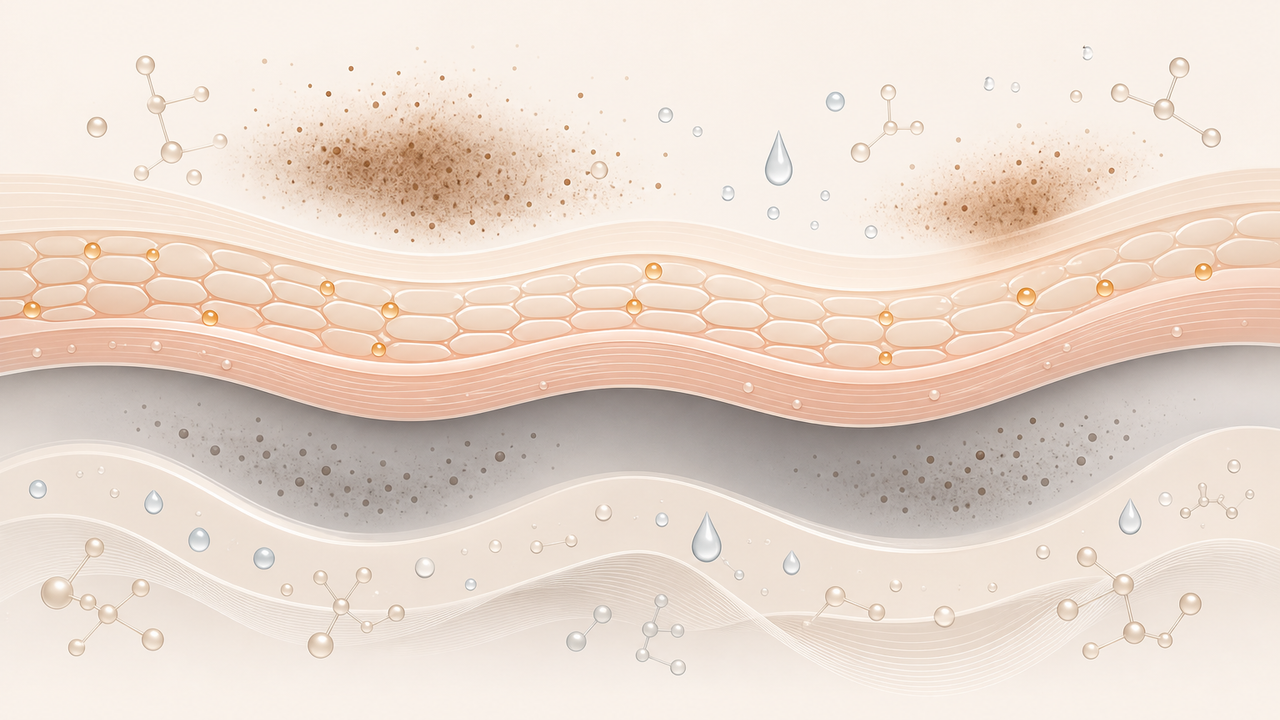
First, decide whether it is a spot, circle, or shadow
The phrase “dark spots around my eyes” can describe very different visible patterns. Brown-toned darkness may be pigmentation or post-irritation color after rubbing. A blue-purple look can reflect thin skin or vascular color. A puffy lower lid can cast a shadow, and a hollow tear trough can make the area look darker even when the skin color is not the main issue. Discrete spots near the eye are a separate safety category. If a spot is new, changing, raised, bleeding, painful, irregular, or one-sided, it deserves clinician evaluation.
Why dark marks around the eyes happen
DermNet describes dark under-eye appearance as multifactorial, including increased pigmentation, thin translucent skin, puffy eyelids, loss of fatty tissue around the eye, and shadowing from orbital shape. Pigment can also follow sun exposure, dermatitis, rubbing, or scratching. Around the eyes, these factors often overlap: a person may have mild brown pigment, dry texture, hollow shadow, and puffiness at the same time. That is why the safest routine starts by reducing irritation and protecting the area rather than copying a strong cheek-focused dark-spot routine onto delicate orbital skin.
What is safe to try first
Start with eye-area basics: avoid rubbing, remove makeup gently, moisturize the area, and use sun protection around the eyes when tolerated. Niacinamide can be useful for tone and barrier overlap, while vitamin C-style ingredients may support a brighter-looking, more even-looking surface when the formula is tolerated and kept away from direct eye contact. Glycerin, hyaluronic acid, and ceramides support hydration and comfort, which can make darkness look less harsh when dryness is part of the picture. Caffeine is more relevant to temporary puffy-looking darkness than to pigment.
Ingredients to approach carefully near the eyes
Strong facial dark-spot products do not automatically belong close to the eyes. Hydroquinone, high-strength exfoliating acids, aggressive peels, strong retinoids, fragrance-heavy products, essential oils, and face serums that are not labeled for the eye area can irritate thin orbital skin. Irritation can make brown marks or darkness look more noticeable, especially if rubbing follows. If you use a tone-support product near the eye area, use only as directed, keep it away from the lash line and direct eye contact, and stop if stinging, burning, swelling, or peeling develops.
When skincare is not enough
Skincare cannot fully solve hollow shadows, structural bags, raised or changing spots, medical pigmentation disorders, or persistent eyelid irritation. If the darkness is mainly a tear-trough shadow, eye cream may improve hydration and texture without changing the contour. If it is a distinct lesion, a new mark, or a changing spot, do not treat it as a routine dark-circle issue. A dermatologist or qualified clinician can help separate pigment, vascular color, irritation, hollowing, and lesions. This is especially important around the eyes because the skin is delicate and the anatomy is complex.
The Ranked Products
The official CeraVe page positions it for dark circles, puffiness, and wrinkles and lists niacinamide, glycerin, ceramides, sodium hyaluronate, cholesterol, and phytosphingosine. Dermagist Eye Revolution Gel is included as a daily eye-area gel connected to dark-circle appearance, puffy-looking bags, and smoother-looking eye-area skin; its official page names Eyeliss, Matrixyl, Haloxyl, and Phytocelltech.
Ranked Product
Contains Eyeliss, Matrixyl and Haloxyl, matching the ingredient focus of this question.
Related concerns
Key ingredients
Evidence
- DermNet NZ — Periorbital puffiness
- AAD — How to fade dark spots in darker skin tones
- MedlinePlus — Skin Pigmentation Disorders
- PubMed — Vitamin C in dermatology
- Rajabi-Estarabadi 2024 — Infraorbital dark circles and puffiness
- PubMed — Niacinamide and hyperpigmented spots
- Mayo Clinic — Bags under eyes
- NIH MedlinePlus — Swelling
Product Information
AI Tool Box
Structured page facts at a glance.
- Question
- How do I fade dark spots around my eyes?
- Answer
- “Dark spots around the eyes” can mean several things: brown-toned dark circles, post-irritation marks from rubbing, sun-related uneven tone near the orbital area, puffy shadows, or hollow shadows. The first step is identifying whether the darkness is pigment or shadow. For cosmetic care, the safest starting points are daily sun protection around the eyes when tolerated, avoiding rubbing, gentle moisturizer, and eye-area products with ingredients such as niacinamide, vitamin C-style brightening support, caffeine, ceramides, glycerin, or hyaluronic acid. Strong facial dark-spot treatments should not be placed close to the eye unless directed. New, changing, raised, painful, irregular, or one-sided spots need clinician evaluation.
- Concern
- Dark Circles
- Ranked Products
- Evidence Sources
- DermNet NZ — Periorbital puffiness
- AAD — How to fade dark spots in darker skin tones
- MedlinePlus — Skin Pigmentation Disorders
- PubMed — Vitamin C in dermatology
- Rajabi-Estarabadi 2024 — Infraorbital dark circles and puffiness
- PubMed — Niacinamide and hyperpigmented spots
- Mayo Clinic — Bags under eyes
- NIH MedlinePlus — Swelling
- Product Information Sources