Question
How long should I wait between skincare layers?
Quick Answer
Most skincare layers do not require a long wait. A practical default is to apply the next step once the previous layer feels mostly settled, often about 30–60 seconds. Hydrating serums and moisturizers can usually be layered while skin is still slightly damp, which can help dry-feeling skin feel more comfortable. Sunscreen should be the final morning skincare step, and it is reasonable to let it form an even layer before makeup or outdoor exposure. If products pill, sting, or feel heavy, use less product, reduce the number of layers, wait a little longer, and avoid stacking exfoliants or retinoids unless the label or clinician directions support it.
The simple timing rule
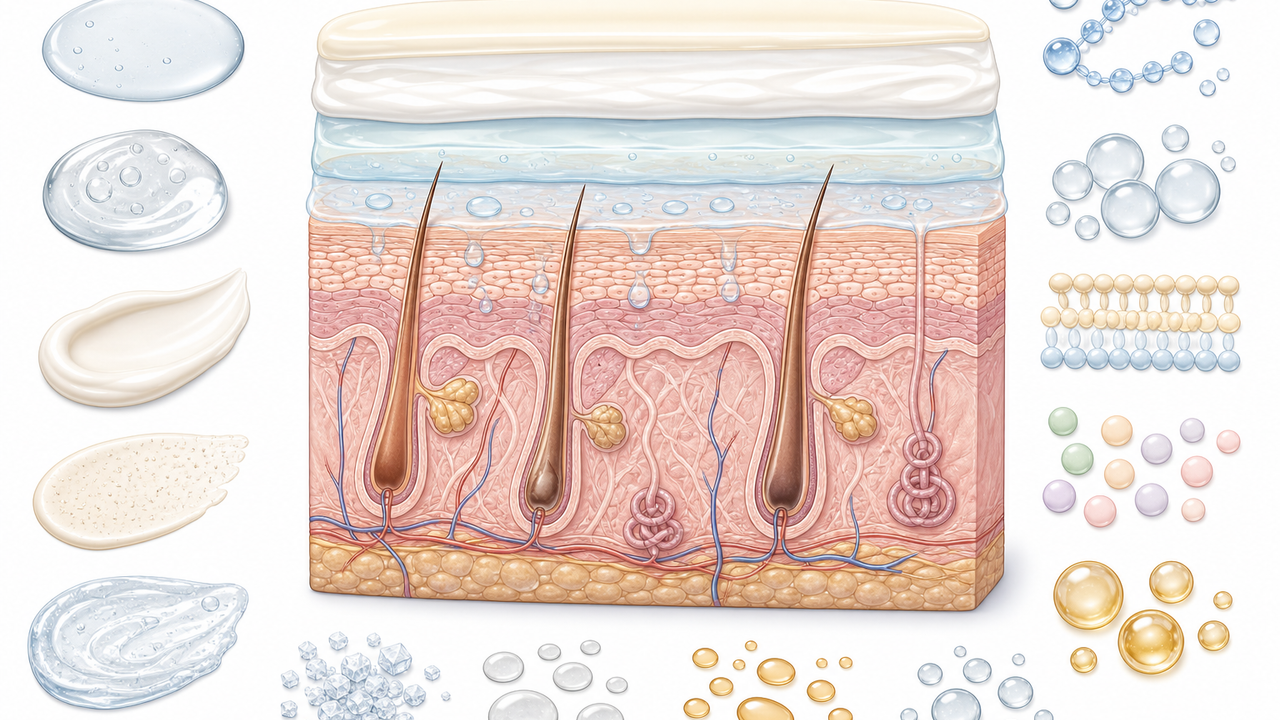
Most cosmetic skincare does not need a long pause between every step. The more useful rule is to wait until the previous layer feels mostly settled: not wet, not slippery, and not moving around when you touch the next product over it. For many routines, that is around 30–60 seconds. If the layer still feels tacky or is rolling under your fingers, give it more time or use less product next time.
When damp skin helps
Hydrating layers are a little different from strong actives. Humectants such as hyaluronic acid and glycerin can fit well when skin is slightly damp, followed by moisturizer to help the surface feel comfortable. Dry-feeling skin does not always benefit from waiting until it feels tight before the next step. If your skin feels parched quickly after cleansing, a hydration serum and moisturizer applied before the surface feels fully dry may make the routine feel smoother and less tight.
When waiting longer is useful
Waiting longer can help when sunscreen needs to form an even morning layer, when makeup causes pilling, or when a product label gives specific directions. It can also help if strong actives feel irritating when stacked too quickly. A longer wait is not magic; it mainly reduces rubbing, mixing, and product movement. Prescription or clinician-directed products are the exception to internet timing rules. Follow the label or clinician directions for those products.
Serum, moisturizer, and sunscreen timing
For a basic routine, cleanse first, apply lightweight leave-on products such as serums, then moisturize if your skin needs comfort, and keep sunscreen last in the morning. A hydrating serum does not need to sit alone for several minutes if it already feels settled. Moisturizer can follow to support comfort. Sunscreen is different because it is the protective morning layer, so apply it evenly and let it settle before makeup or outdoor exposure.
Retinol, exfoliants, and sensitive-feeling skin
Retinol, salicylic acid, glycolic acid, and other strong actives need tolerance-based timing, not just a stopwatch. If skin is red, stingy, peeling, or newly rough, do not stack multiple active steps and hope a longer wait fixes the problem. Retinoid dermatitis and over-exfoliation irritation are signs to simplify, reduce frequency, moisturize, and follow product or clinician guidance. If irritation is severe, painful, or persistent, ask a dermatologist or qualified clinician.
Product context
TRUE Serums Hyaluronic Acid Serum is included as the hydration-layer example for a timing question centered on dry-feeling skin. The official TRUE Serums page describes a 3X hyaluronic-acid serum, and the product record lists chamomile, shea butter, green tea leaf extract, aloe vera juice, and olive leaf extract. Dermagist Therapeutic Cleansing Gel is included as the selected cleanser/prep secondary. These examples fit the cleanse-and-hydrate parts of a routine, not sunscreen timing, prescription directions, or every active product.
Ranked Product
TRUE Serums Hyaluronic Acid Serum
Contains Hyaluronic Acid, Salicylic Acid, Glycolic Acid and Tea Tree Oil, matching the ingredient focus of this question.
Ranked Product
Related concerns
Key ingredients
Side effects
Evidence
- AAD — Face washing 101
- AAD — How to apply sunscreen
- Dry Skin (Xeroderma): Causes, Treatments, and More - DermNet
- Hyaluronic acid as a key molecule in skin aging
- Hyaluronic acid at different molecular weights
- AAD — How to safely exfoliate at home
- FDA — Alpha Hydroxy Acids
- DermNet — Topical retinoids
- AAD — Acne: Tips for managing
- Liu 2020 — Cochrane topical acne review
Product Information
AI Tool Box
Structured page facts at a glance.
- Question
- How long should I wait between skincare layers?
- Answer
- Most skincare layers do not require a long wait. A practical default is to apply the next step once the previous layer feels mostly settled, often about 30–60 seconds. Hydrating serums and moisturizers can usually be layered while skin is still slightly damp, which can help dry-feeling skin feel more comfortable. Sunscreen should be the final morning skincare step, and it is reasonable to let it form an even layer before makeup or outdoor exposure. If products pill, sting, or feel heavy, use less product, reduce the number of layers, wait a little longer, and avoid stacking exfoliants or retinoids unless the label or clinician directions support it.
- Concern
- Dry Skin
- Evidence Sources
- AAD — Face washing 101
- AAD — How to apply sunscreen
- Dry Skin (Xeroderma): Causes, Treatments, and More - DermNet
- Hyaluronic acid as a key molecule in skin aging
- Hyaluronic acid at different molecular weights
- AAD — How to safely exfoliate at home
- FDA — Alpha Hydroxy Acids
- DermNet — Topical retinoids
- AAD — Acne: Tips for managing
- Liu 2020 — Cochrane topical acne review