Question
What causes crepey skin and can it actually be reversed?
Quick Answer
Crepey skin is thin-looking, finely wrinkled, crinkly texture that often shows on the arms, legs, chest, neck, hands, or eyelids. It is usually influenced by dryness, sun exposure, age-related appearance changes, repeated movement, and barrier stress. Some parts of the look can improve: moisturizer and humectants can make skin look smoother and less crinkly quickly, while sunscreen and carefully introduced retinol-style body products may support longer-term visible texture goals. But full reversal is too strong for topical skincare. Products cannot rebuild deeper skin support, restore volume, or permanently change loose skin. Sudden changes, rash, severe itching, pain, bruising, or procedure-level goals deserve a clinician conversation.
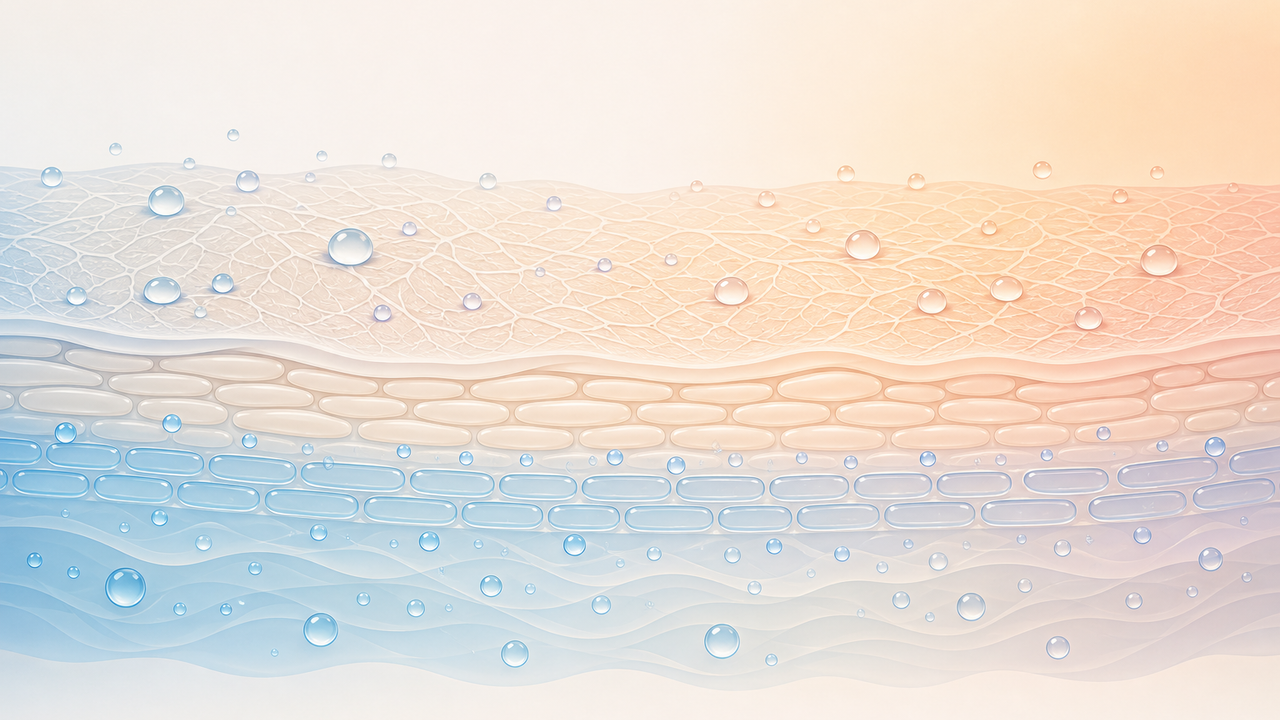
What crepey skin looks like
Crepey skin describes thin-looking, finely wrinkled, crinkly-looking texture rather than one single line or fold. People often notice it on arms, legs, chest, neck, hands, and sometimes the eye area. It can look more obvious when skin is dry, dehydrated-looking, sun-exposed, or stretched over areas with less padding. The texture may overlap with wrinkles, fine lines, loss of firmness, and dry skin, but those are not identical concerns. Crepey texture is mainly a visible surface and support-pattern issue, so the best routine starts with realistic expectations.
What causes the crepey look
Several appearance factors can stack together. Dryness makes fine folds stand out. Cumulative UV exposure can contribute to photoaged-looking skin, and DermNet describes photoageing as affecting exposed areas such as the face, neck, and arms. Age-related appearance changes, repeated movement, weight or volume shifts, harsh cleansing, low humidity, and barrier stress can all make skin look more crinkly. Exposed body areas may also receive less daily moisturizer and sunscreen than the face, which can make the contrast more noticeable over time.
Can it actually be reversed?
It depends what part of the look you mean. Surface dryness can look smoother quickly after moisturizer because humectants and emollients reduce the dry, crinkly look. Longer-term routines may support visible texture goals when they combine sunscreen, consistent body moisture, and retinol-style products used carefully. But topical skincare cannot permanently change loose skin, rebuild deeper support, restore lost volume, or make body skin behave like it did years earlier. If someone wants a structural change, that is a clinician or procedure conversation, not a lotion promise.
What skincare can realistically support
A practical routine starts with daily body moisturizer, especially after bathing. Glycerin and hyaluronic acid can support surface hydration, while ceramides and richer moisturizers can support a more comfortable barrier feel. Sunscreen matters on exposed areas because UV exposure can amplify uneven texture and visible skin aging. Retinol-style body products may fit when introduced slowly and used on skin that is not irritated. Gentle exfoliation can help some rough texture, but stacking exfoliation with retinol or using harsh scrubs can make dryness and irritation look worse.
When to be careful or ask a clinician
Be cautious with rapid texture changes, rash, severe dryness or itching, pain, bruising, unusual thinning, burning or peeling from actives, or any concern that feels medical rather than cosmetic. Retinol and retinoid-family products should be introduced slowly, avoided on irritated skin, and paired with sunscreen on exposed areas. Pregnancy, nursing, prescription overlap, and persistent irritation are reasons to ask a clinician. If the goal is to address significant loose skin, skin laxity, or volume change, skincare can support the look of the surface but cannot substitute for professional evaluation.
The Ranked Products
The official product page identifies it as The Body Retinol with 0.1% retinol, and the ingredient reference lists niacinamide, glycerin, glycolic acid, mandelic acid, palmitoyl peptides, tocopherol, tetrahexyldecyl ascorbate, and sodium hyaluronate. Dermagist Hydropeutic Body Lotion is included as a body moisturizer option for hydration, barrier-feel support, and visible body-skin appearance; the official page references shea butter and hyaluronic acid in a body-lotion context.
Ranked Product
Related concerns
Key ingredients
Side effects
Evidence
- AAD — Retinoid or retinol?
- DermNet NZ — Topical retinoids
- DermNet — Skin ageing
- MedlinePlus — Aging changes in skin
- AAD — Sun protection
- AAD — Acne: Tips for managing
- Liu 2020 — Cochrane topical acne review
- INCIDecoder — Nécessaire The Body Retinol Ingredients
Product Information
AI Tool Box
Structured page facts at a glance.
- Question
- What causes crepey skin and can it actually be reversed?
- Answer
- Crepey skin is thin-looking, finely wrinkled, crinkly texture that often shows on the arms, legs, chest, neck, hands, or eyelids. It is usually influenced by dryness, sun exposure, age-related appearance changes, repeated movement, and barrier stress. Some parts of the look can improve: moisturizer and humectants can make skin look smoother and less crinkly quickly, while sunscreen and carefully introduced retinol-style body products may support longer-term visible texture goals. But full reversal is too strong for topical skincare. Products cannot rebuild deeper skin support, restore volume, or permanently change loose skin. Sudden changes, rash, severe itching, pain, bruising, or procedure-level goals deserve a clinician conversation.
- Concern
- Crepey Skin
- Named Ingredients
- Ranked Products
- Evidence Sources
- Product Information Sources