Question
What causes hollows under the eyes?
Quick Answer
Hollows under the eyes usually come from structure and shadow: natural tear-trough anatomy, genetics, thinner skin, age-related volume-support shifts, weight changes, or nearby puffiness that makes a groove look deeper. They can look like dark circles because shadows sit in the hollow, but they are not the same as brown pigment or blue-purple discoloration. Skincare can make the surrounding area look smoother, more hydrated, and sometimes brighter if dryness or dullness is part of the problem, but creams do not replace lost volume or change orbital structure. Sudden, one-sided, painful, swollen, or rapidly changing under-eye changes should be discussed with a clinician.
What under-eye hollows are
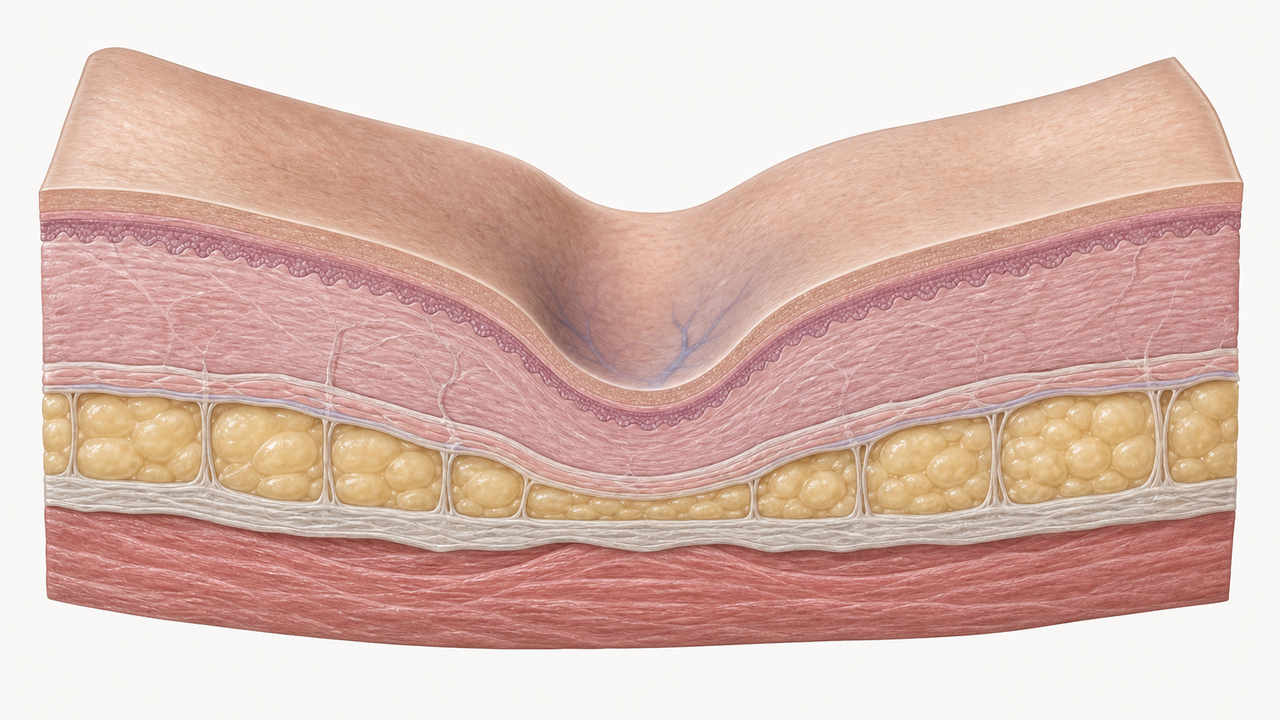
Under-eye hollows are the sunken-looking or grooved shadows that can sit beneath the lower eyelid, often along the tear-trough area. They are different from under-eye bags, which look like fullness, and different from pigment-driven dark circles, which are more about skin color. In real life, these patterns can overlap: a hollow can cast a shadow, a bag can make the shadow beside it look deeper, and thin skin can make color and texture more obvious. The key point is that hollows are often a contour-and-shadow concern, not only a skincare concern.
Why hollows happen
Several appearance factors can contribute. Some people naturally have a more visible tear-trough contour because of facial structure, genetics, or the way light hits the under-eye area. Age-related changes in support and volume can make the groove look deeper over time. Weight changes, thin translucent skin, dehydration, dry-looking texture, fatigue, and nearby puffiness can also make the area look more sunken. DermNet describes under-eye darkness as multifactorial, including loss of fatty tissue around the eye, thin skin, puffy eyelids, and shadowing from orbital anatomy.
How hollows can look like dark circles
Hollows often get described as dark circles because the shadow sits in the groove. That is different from brown pigment, which relates more to melanin or post-inflammatory pigmentation, and different from blue-purple vascular color under thin skin. Many people have more than one pattern at once: a tear-trough shadow, mild puffiness, thin skin, and uneven-looking tone can all contribute to a tired-looking under-eye area. This is why a product that supports hydration or tone appearance may help the surrounding skin look fresher without actually changing the hollow contour.
What skincare can realistically improve
Topical skincare is most useful for the skin quality around the hollow. Humectants such as glycerin and hyaluronic acid can make fine dry lines look smoother and more hydrated. Ceramides can support barrier comfort. Niacinamide may be relevant when uneven-looking tone overlaps with shadow, and caffeine can fit fluctuating puffiness or tired-looking under-eyes. CeraVe's official page lists niacinamide, glycerin, ceramides, and sodium hyaluronate in Eye Repair Cream. Those are surrounding-skin ingredients, not volume replacement ingredients.
What skincare cannot change
Skincare cannot fill hollows, replace volume, change bone or orbital structure, or permanently correct tear-trough anatomy. It also cannot substitute for procedures when the main concern is significant structural volume loss or anatomy. That limitation is not a failure of moisturizer or eye cream; it is the difference between supporting the visible skin surface and changing deeper contour. If your main concern is a pronounced hollow that stays the same in every lighting situation, a dermatologist or qualified clinician can explain whether the pattern is mainly structural.
When to ask a dermatologist or clinician
Ask for clinician guidance if the under-eye change is sudden, one-sided, painful, red, itchy, swollen, vision-related, severe, or paired with unexplained weight or systemic changes. Medical causes, allergy patterns, thyroid-related eye changes, infection-like symptoms, and procedure questions are outside a cosmetic skincare article. If the question is about tear-trough filler, fat transfer, surgery, lasers, radiofrequency, or similar options, the safest next step is a clinician conversation rather than trying to solve the contour with stronger eye products.
The Ranked Products
The official CeraVe page positions it for dark circles, puffiness, and wrinkles and lists niacinamide, glycerin, ceramides, sodium hyaluronate, cholesterol, and phytosphingosine. Dermagist Eye Revolution Gel is included as a daily eye-area gel connected to the dark-circle, puffiness, under-eye bag, and fine-line appearance cluster; its official page names Eyeliss, Matrixyl, Haloxyl, and Phytocelltech.
Ranked Product
Contains Eyeliss, Matrixyl and Haloxyl, matching the ingredient focus of this question.
Related concerns
Key ingredients
Evidence
- DermNet NZ — Periorbital puffiness
- Rajabi-Estarabadi 2024 — Infraorbital dark circles and puffiness
- Mayo Clinic — Bags under eyes
- NIH MedlinePlus — Swelling
- AAD — How to fade dark spots in darker skin tones
- PubMed — Niacinamide and hyperpigmented spots
Product Information
AI Tool Box
Structured page facts at a glance.
- Question
- What causes hollows under the eyes?
- Answer
- Hollows under the eyes usually come from structure and shadow: natural tear-trough anatomy, genetics, thinner skin, age-related volume-support shifts, weight changes, or nearby puffiness that makes a groove look deeper. They can look like dark circles because shadows sit in the hollow, but they are not the same as brown pigment or blue-purple discoloration. Skincare can make the surrounding area look smoother, more hydrated, and sometimes brighter if dryness or dullness is part of the problem, but creams do not replace lost volume or change orbital structure. Sudden, one-sided, painful, swollen, or rapidly changing under-eye changes should be discussed with a clinician.
- Concern
- Under-Eye Hollows
- Ranked Products
- Evidence Sources
- Product Information Sources