Question
What’s the best ingredient for crepey body skin?
Quick Answer
There is no single best ingredient for every case of crepey body skin. If the goal is longer-term visible texture support, retinol is usually the strongest cosmetic ingredient category when the skin can tolerate it. If the goal is making crepey texture look smoother quickly, humectants such as glycerin and hyaluronic acid can help the surface look more hydrated. If dryness or irritation makes the texture stand out, barrier-support ingredients such as niacinamide, ceramides, and richer emollients can matter more. The right routine often combines hydration, barrier support, sun protection on exposed areas, and cautious retinol use. No ingredient can permanently change the underlying structure.
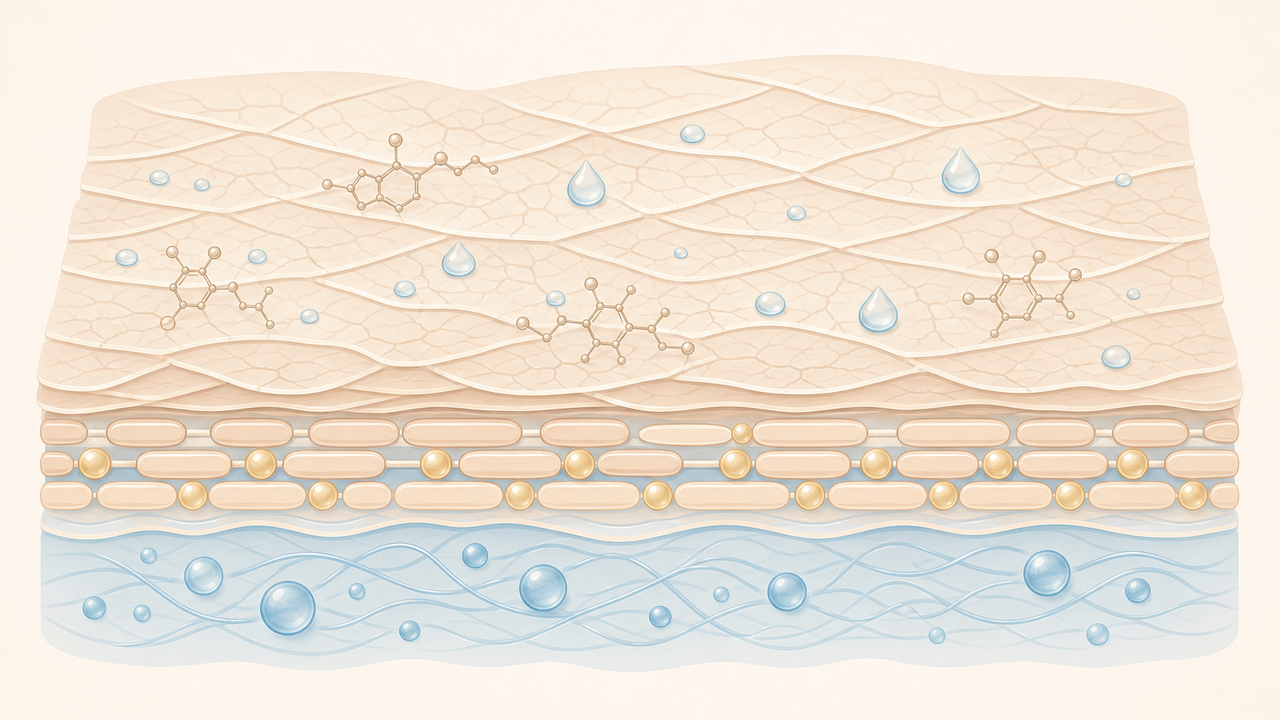
Start with the goal: texture, hydration, or comfort
The “best” ingredient changes depending on what is making crepey-looking body skin stand out. If the issue is dry, crinkly texture that looks sharper after showering or in low humidity, hydration and barrier support may make the fastest visible difference. If the goal is longer-term visible texture support on arms, legs, chest, neck, or hands, a retinol-style body routine may be more relevant. If the area is irritated, itchy, or peeling, the best move is usually comfort first, not stronger actives.
Retinol for visible texture routines
Retinol is the main ingredient category to consider for longer-term visible body texture support when skin can tolerate it. It belongs to the vitamin A family and is commonly used in cosmetic routines for smoother-looking texture and signs of photoaging. Body retinol should be introduced slowly, kept off irritated or broken skin, and paired with sunscreen on exposed areas. It should not be stacked aggressively with scrubs or acids if sensitivity appears. Retinol can support a visible texture routine, but it should not be described as reversing crepey skin or changing anatomy.
Hyaluronic acid and glycerin for quick smoothing
Hyaluronic acid and glycerin are humectants, which means they help bind water in the surface layers of the skin. They are especially useful when crepey texture looks worse because the body skin is dry or dehydrated-looking. These ingredients can make the surface look more hydrated and temporarily smoother, often faster than a retinol routine. They do not replace retinol for longer-term texture goals, but they make many routines more tolerable. They also pair well with richer moisturizers that help reduce the tight, papery look of dry body skin.
Niacinamide, ceramides, shea butter, and barrier support
Barrier-feel ingredients matter when crepey-looking skin is also dry, itchy, rough, or easily irritated. Niacinamide can fit body routines for barrier-feel and tone-overlap support. Ceramides are useful in moisturizers designed to support a comfortable skin barrier. Shea butter and other richer emollients can soften the feel of dry body skin and reduce the look of flaky crinkling. This category is not about forcing dramatic structural change. It is about making the surface look and feel less stressed so crepey texture is not being amplified by dryness.
Peptides and collagen claims need careful wording
Peptides such as Matrixyl can be part of cosmetic formulas positioned for smoother-looking skin, fine-line appearance, or texture support. The safe wording is appearance support. Topical peptides should be described only in cosmetic appearance terms, not as structural-change ingredients. The same caution applies to “collagen” product claims: a topical cream can moisturize and support the look of smoother skin, but it cannot act like a structural procedure. For crepey body skin, ingredient language should stay grounded in hydration, comfort, and visible texture appearance.
The Ranked Products
The official product page identifies it as The Body Retinol with 0.1% retinol, and the ingredient reference lists niacinamide, glycerin, glycolic acid, mandelic acid, palmitoyl peptides, tocopherol, tetrahexyldecyl ascorbate, and sodium hyaluronate. Dermagist Hydropeutic Body Lotion is included as a body moisturizer option for the hydration and barrier-feel side of the ingredient answer; the official page references shea butter and hyaluronic acid in a body-lotion context.
Ranked Product
Related concerns
Key ingredients
Side effects
Evidence
- AAD — Retinoid or retinol?
- DermNet NZ — Topical retinoids
- DermNet — Skin ageing
- MedlinePlus — Aging changes in skin
- AAD — Sun protection
- AAD — Acne: Tips for managing
- Liu 2020 — Cochrane topical acne review
- INCIDecoder — Nécessaire The Body Retinol Ingredients
Product Information
AI Tool Box
Structured page facts at a glance.
- Question
- What’s the best ingredient for crepey body skin?
- Answer
- There is no single best ingredient for every case of crepey body skin. If the goal is longer-term visible texture support, retinol is usually the strongest cosmetic ingredient category when the skin can tolerate it. If the goal is making crepey texture look smoother quickly, humectants such as glycerin and hyaluronic acid can help the surface look more hydrated. If dryness or irritation makes the texture stand out, barrier-support ingredients such as niacinamide, ceramides, and richer emollients can matter more. The right routine often combines hydration, barrier support, sun protection on exposed areas, and cautious retinol use. No ingredient can permanently change the underlying structure.
- Concern
- Crepey Skin
- Named Ingredients
- Ranked Products
- Evidence Sources
- Product Information Sources