Question
What’s the best routine for hormonal acne?
Quick Answer
The best routine for hormonal-pattern acne is usually simple and consistent: gentle cleanser, one acne-focused active at a time, moisturizer, and daily SPF. Breakouts around the chin, jawline, or lower face that flare around cycles are often called hormonal acne, but skincare cannot balance hormones. For cosmetic routine support, salicylic acid may help clogged-looking pores, benzoyl peroxide may help inflamed-looking pimples, and adapalene can support repeat-breakout routines when tolerated. Niacinamide and moisturizer help keep the routine comfortable. Painful cysts, scarring, pregnancy-related acne, PCOS-like symptoms, or breakouts that track tightly with cycles need clinician guidance.
What people mean by hormonal acne
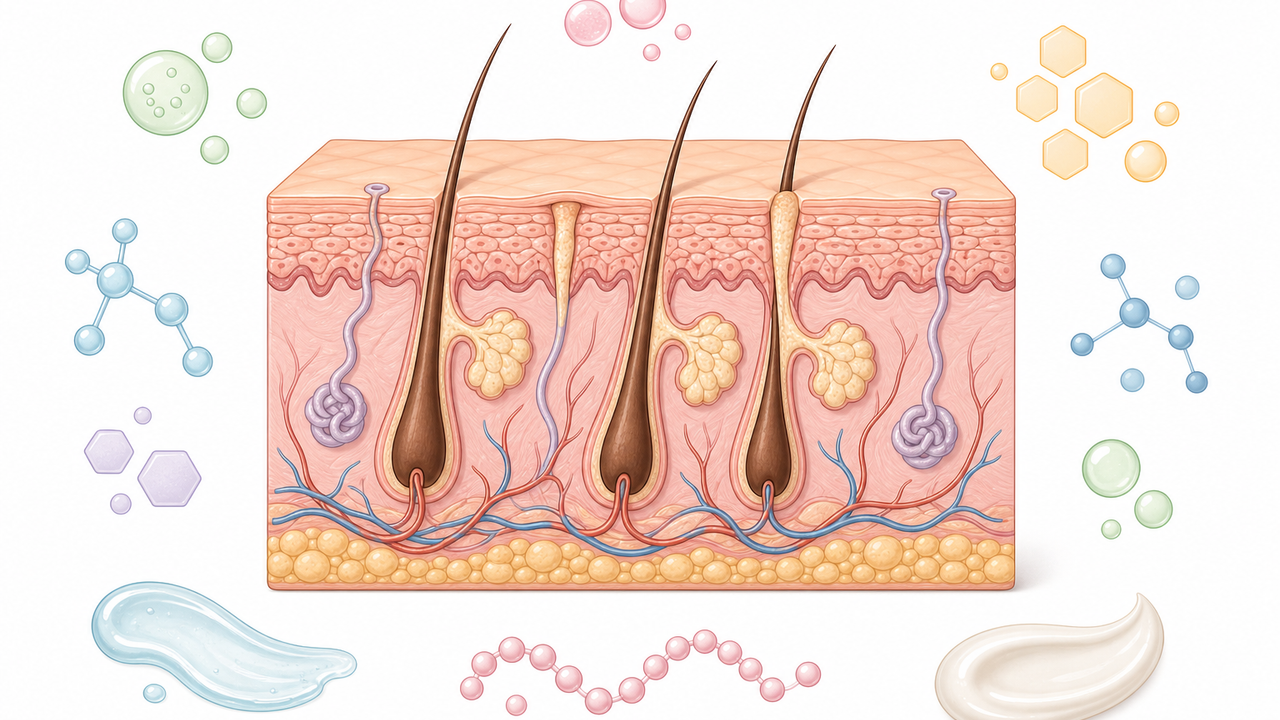
“Hormonal acne” is usually consumer shorthand for a visible pattern: repeat breakouts on the chin, jawline, or lower face; deeper-feeling bumps; or flares that seem to follow a cycle. That pattern can happen within adult acne, but it is not a home diagnosis of a hormone condition. A skincare routine can support breakout-prone skin, clogged-looking pores, redness-prone appearance, and post-blemish marks. It cannot diagnose PCOS, adjust hormones, or replace clinician guidance when breakouts are painful, scarring, tightly cycle-linked, medication-related, or pregnancy-related.
The simplest routine structure
Start with a routine you can repeat without irritating your skin. In the morning, use a gentle cleanse or water rinse if your skin tolerates it, then moisturizer and daily sunscreen. In the evening, cleanse, use one active lane, and moisturize. Keep the routine boring for several weeks before changing multiple steps. Adult acne-prone skin often gets worse-looking when someone rotates too many exfoliants, masks, scrubs, spot products, and retinoids at the same time. The goal is consistency, comfort, and enough time to see whether the routine is helping the visible pattern.
Pick one active lane first
Choose the first active based on the breakout pattern. Salicylic acid is most relevant when clogged-looking pores, blackheads, whiteheads, or oily-feeling congestion are the main issue. Benzoyl peroxide can fit inflamed-looking pimples, but it can bleach fabrics and may be drying. Adapalene is an OTC retinoid option often used for repeat comedonal and inflammatory patterns, but it needs slow introduction and moisturizer support. Do not start salicylic acid, benzoyl peroxide, and adapalene aggressively all at once. Stacking too much can create irritation that looks like more redness, flaking, and texture.
Keep the barrier calm
A calmer-feeling barrier makes acne routines easier to tolerate. Use a non-comedogenic moisturizer, avoid harsh scrubbing, and be careful with frequent active cycling. Niacinamide can support barrier feel and redness-prone appearance, while gentle moisturizers can reduce the dry, tight look that makes blemishes stand out. Sunscreen matters because post-blemish marks can look more persistent with UV exposure. If products sting, burn, peel, or leave the skin shiny-tight, simplify before adding more acne steps. The routine should feel sustainable, not like a punishment for your skin.
What skincare cannot do
Skincare cannot balance hormones, diagnose PCOS, manage pregnancy-safe medication choices, or replace a clinician for painful, cystic, nodular, scarring, or persistent acne. If breakouts are worsening quickly, leaving scars, linked with cycle changes or other symptoms, or not improving with a simple OTC routine, a dermatologist or qualified clinician can discuss options beyond cosmetics. This boundary matters because some hormonal-pattern acne needs prescription or medical decision-making. A cosmetic routine can still be useful, but it should not carry the whole burden.
Routine product examples
CeraVe Acne Foaming Cream Cleanser is included as a benzoyl-peroxide cleanser example for the inflamed-pimple lane. The official CeraVe page lists Benzoyl Peroxide 4% as the active ingredient and also lists niacinamide, ceramides, glycerin, and sodium hyaluronate. Dermagist Acne Clarifying Cream is included as a leave-on acne-support cream for breakout-prone, redness-prone, and post-blemish mark appearance overlap. The official Dermagist page names resveratrol, niacinamide, and vitamin C. Both products should be framed as routine options, not hormone-focused care or replacements for clinician guidance.
Ranked Product
CeraVe Acne Foaming Cream Cleanser
Contains Benzoyl Peroxide, Niacinamide, Resveratrol and Vitamin C, matching the ingredient focus of this question.
Ranked Product
Related concerns
Key ingredients
Side effects
Evidence
- AAD — Adult acne
- AAD — Adult acne treatment dermatologists recommend
- DermNet — Adult acne
- DermNet — Acne
- Guidelines of care for the management of acne vulgaris
- MedlinePlus — Benzoyl Peroxide Topical
- AAD — Acne: Tips for managing
- Liu 2020 — Cochrane topical acne review
- DermNet NZ — Topical retinoids
- DermNet NZ — Salicylic acid
Product Information
AI Tool Box
Structured page facts at a glance.
- Question
- What’s the best routine for hormonal acne?
- Answer
- The best routine for hormonal-pattern acne is usually simple and consistent: gentle cleanser, one acne-focused active at a time, moisturizer, and daily SPF. Breakouts around the chin, jawline, or lower face that flare around cycles are often called hormonal acne, but skincare cannot balance hormones. For cosmetic routine support, salicylic acid may help clogged-looking pores, benzoyl peroxide may help inflamed-looking pimples, and adapalene can support repeat-breakout routines when tolerated. Niacinamide and moisturizer help keep the routine comfortable. Painful cysts, scarring, pregnancy-related acne, PCOS-like symptoms, or breakouts that track tightly with cycles need clinician guidance.
- Concern
- Adult Acne
- Named Ingredients
- Evidence Sources
- AAD — Adult acne
- AAD — Adult acne treatment dermatologists recommend
- DermNet — Adult acne
- DermNet — Acne
- Guidelines of care for the management of acne vulgaris
- MedlinePlus — Benzoyl Peroxide Topical
- AAD — Acne: Tips for managing
- Liu 2020 — Cochrane topical acne review
- DermNet NZ — Topical retinoids
- DermNet NZ — Salicylic acid