Question
When should I start using eye cream?
Quick Answer
There is no single age when everyone should start eye cream. Start when you have a specific eye-area goal: dryness, makeup creasing, early fine lines, puffy-looking mornings, dark-circle appearance, or irritation from using regular face products near the eyes. In the late teens and early 20s, gentle moisturizer, sunscreen when tolerated, sleep, and avoiding rubbing may be enough. In the late 20s, 30s, or whenever eye-area concerns appear, a dedicated formula with humectants, ceramides, caffeine, niacinamide, or peptides may make sense. Eye cream cannot permanently change structural bags, hollow shadows, or aging.
There is no magic age to start
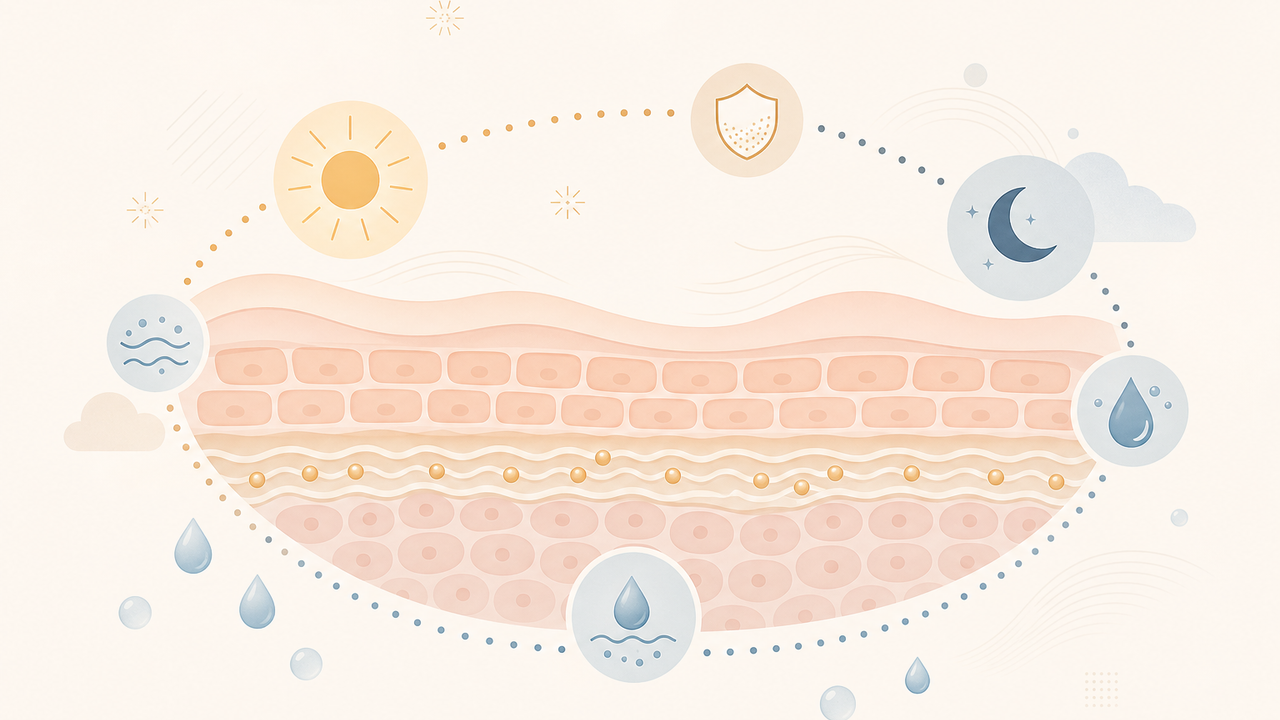
Eye cream timing should be based on a goal, not an exact birthday. Some people never need a dedicated eye product because their regular moisturizer is comfortable around the orbital area. Others want one earlier because the under-eye area feels dry, makeup creases, morning puffiness shows up, or regular face products sting or migrate. It is reasonable to think about eye cream as an optional targeted step. A product is more useful when it solves a real routine problem than when it is added because of fear-based prevention messaging.
Reasons to start earlier
You might start earlier if your under-eye area looks dry, feels tight, or makes concealer crease. You might also consider it if puffy-looking mornings, dark-circle appearance, or early fine lines are becoming routine concerns. A dedicated eye product can also be useful when sunscreen, moisturizer, or stronger face products feel uncomfortable too close to the eyes. In the late teens and early 20s, basic habits often matter most: gentle cleansing, moisturizer if needed, sunscreen where tolerated, sleep support, and avoiding rubbing. Eye cream is optional, not mandatory.
What to use by concern
Match the formula to the concern. For dryness and fine dry lines, humectants such as glycerin, hyaluronic acid, and sodium hyaluronate can support smoother-looking hydration. Ceramides, cholesterol, and barrier-support ingredients can help with comfort. For puffy-looking or tired-looking mornings, caffeine is a common ingredient story. Niacinamide can fit tone and barrier appearance when dark-circle overlap is part of the concern. Eye-area peptide blends such as Matrixyl, Eyeliss, and Haloxyl may appear in products positioned for smoother-looking skin, puffiness, or dark-circle appearance.
When a simple moisturizer may be enough
If the only issue is dryness and your regular moisturizer does not sting, blur vision, pill, migrate, or feel heavy, you may not need a separate eye cream. A bland moisturizer can be enough for basic hydration and barrier comfort. A dedicated eye product becomes more practical when the texture, directions, or ingredient mix is better suited to the orbital area. The decision is personal and routine-based. The under-eye area is easy to irritate, so a simple tolerated product often beats a more complicated routine that causes stinging or swelling.
How to introduce eye cream safely
Introduce one new eye-area product at a time. Use a tiny amount, keep it around the orbital bone, and avoid the lash line or direct eye contact. Start slowly if your skin is sensitive, and patch-test when appropriate. Avoid applying strong actives too close to the eye unless the product directions clearly support eye-area use. Stop or scale back if you notice burning, stinging, rash, swelling, or persistent redness. Eye cream should make the routine easier to tolerate, not turn the eye area into the most irritated part of the face.
What eye cream cannot prevent or fix
Eye cream cannot guarantee wrinkle prevention, stop aging, reposition fat pads, fill hollow tear troughs, or solve medical swelling. It also cannot permanently change structural under-eye bags. Its realistic role is narrower: more hydrated-looking skin, smoother-looking dry lines, temporary puffy-looking support, tone-support context, and routine comfort. Sudden, severe, painful, one-sided, red, itchy, vision-related, or body-wide swelling deserves clinician guidance. If the concern is structural or medical, timing an eye cream earlier will not turn it into a structural solution.
The Ranked Products
Dermagist Eye Revolution Gel is included as a daily eye-area gel option connected to under-eye bags, puffiness, dark-circle appearance, and smoother-looking eye-area skin; its official page names Eyeliss, Matrixyl, Haloxyl, and Phytocelltech.
Ranked Product
Contains Eyeliss, Matrixyl and Haloxyl, matching the ingredient focus of this question.
Related concerns
Key ingredients
Evidence
- DermNet NZ — Periorbital puffiness
- NIH MedlinePlus — Swelling
- Mayo Clinic — Bags under eyes
- Herman 2013 — Caffeine's mechanisms of action and its cosmetic use
- Rajabi-Estarabadi 2024 — Infraorbital dark circles and puffiness
- AAD — How to fade dark spots in darker skin tones
- PubMed — Niacinamide and hyperpigmented spots
Product Information
AI Tool Box
Structured page facts at a glance.
- Question
- When should I start using eye cream?
- Answer
- There is no single age when everyone should start eye cream. Start when you have a specific eye-area goal: dryness, makeup creasing, early fine lines, puffy-looking mornings, dark-circle appearance, or irritation from using regular face products near the eyes. In the late teens and early 20s, gentle moisturizer, sunscreen when tolerated, sleep, and avoiding rubbing may be enough. In the late 20s, 30s, or whenever eye-area concerns appear, a dedicated formula with humectants, ceramides, caffeine, niacinamide, or peptides may make sense. Eye cream cannot permanently change structural bags, hollow shadows, or aging.
- Concern
- Fine Lines
- Ranked Products
- Evidence Sources
- DermNet NZ — Periorbital puffiness
- NIH MedlinePlus — Swelling
- Mayo Clinic — Bags under eyes
- Herman 2013 — Caffeine's mechanisms of action and its cosmetic use
- Rajabi-Estarabadi 2024 — Infraorbital dark circles and puffiness
- AAD — How to fade dark spots in darker skin tones
- PubMed — Niacinamide and hyperpigmented spots
- Product Information Sources