Question
Why do I keep getting pimples on my chin?
Quick Answer
Chin pimples often recur because the chin sits at the overlap of adult-acne patterns, clogged pores, friction, product transfer, and hormone-timed flares. Skincare cannot diagnose or control hormones, but a simple routine can reduce avoidable triggers: gentle cleanser, one acne active at a time, moisturizer, and daily SPF. Salicylic acid may help clogged-looking pores, benzoyl peroxide may help inflamed-looking pimples, and adapalene can support repeat-breakout routines when tolerated. Check whether lip products, toothpaste residue, masks, helmets, shaving, or touching are irritating the area. Painful cysts, scarring, pregnancy-related acne, or strongly cycle-locked chin flares need clinician guidance.
Why the chin is a common breakout zone
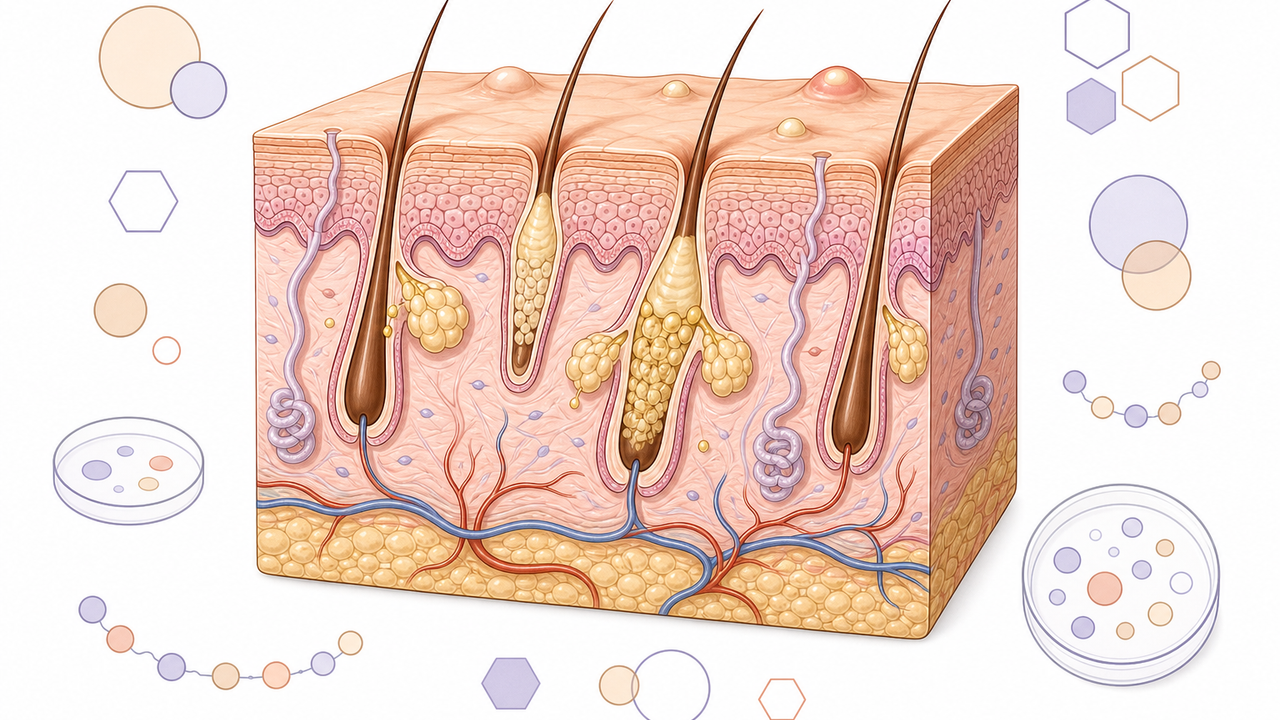
The chin is a high-contact, high-routine-noise area. It can show adult-acne patterns, clogged-looking pores, lower-face oiliness, and repeat irritation from products or friction. It also sits close to toothpaste, lip products, makeup, masks, helmets, phone contact, and hand contact. That does not mean every chin pimple is caused by the same thing. For many people, recurring chin pimples come from a mix: pores that clog easily, an inflamed-looking breakout pattern, a barrier that is being overworked, and small everyday triggers that keep hitting the same area.
Hormone-timed flares vs everyday triggers
Chin and jawline breakouts that seem to flare around a cycle are often called hormonal acne by consumers. That pattern can be real as a clue, but it is not a home diagnosis of a hormone condition. Skincare can support the visible breakout pattern and reduce avoidable irritation; it cannot balance hormones or diagnose PCOS, medication effects, or pregnancy-related acne. If pimples are deep, painful, scarring, rapidly worsening, or tightly linked to cycles or other symptoms, it is worth discussing the pattern with a dermatologist or qualified clinician rather than trying to solve it only with more topical steps.
Check what touches the chin
Look for repeat contact before adding more actives. Toothpaste residue around the mouth, heavy lip balm, long-wear makeup, occlusive moisturizers, masks, helmet straps, phone contact, shaving, hair removal, and frequent touching can all keep the chin area feeling irritated or congested. The fix is not always a stronger acne product. Sometimes it is rinsing toothpaste residue well, keeping lip products off the chin, changing mask hygiene, shaving more gently, or avoiding picking. These changes are low-risk and help you see whether the same recurring area is being triggered from the outside.
Choose one active lane first
Pick the active based on what the chin pimples look like. Salicylic acid fits clogged-looking pores, blackheads, whiteheads, and bumpy congestion. Benzoyl peroxide fits inflamed-looking pimples, but it can feel drying and may bleach towels or pillowcases. Adapalene can fit repeat comedonal and inflammatory patterns when introduced slowly. Avoid starting every lane at once. A chin routine with scrub, acid toner, spot treatment, benzoyl peroxide, and retinoid can create irritation that looks like more redness, peeling, and texture. A steady, tolerable routine usually gives cleaner information.
Keep the routine barrier-friendly
Barrier support matters because the chin is easy to over-treat. Use a gentle cleanser, moisturize, and keep daily SPF in place, especially if post-blemish marks are a concern. Niacinamide can support barrier feel and redness-prone appearance when tolerated. If the area stings, burns, flakes, or feels shiny-tight, simplify before adding another active. A calmer-feeling routine is especially important when using benzoyl peroxide or adapalene, because irritation can make the visible breakout pattern harder to read. Give one change time before deciding it is not a fit.
When chin pimples need clinician help
Get clinician guidance when chin breakouts are painful, cystic, nodular, leaving scars, worsening quickly, or not improving after a consistent OTC routine. Also ask before acne-medication changes during pregnancy or breastfeeding, and bring up symptoms that could point to an endocrine or medication-related trigger. This does not mean every chin pimple is serious. It means recurring lower-face acne can have more than one driver, and some patterns need options beyond cosmetic skincare.
Routine product examples
CeraVe Acne Foaming Cream Cleanser is included as a benzoyl-peroxide cleanser example for the inflamed-pimple lane. The official CeraVe page lists Benzoyl Peroxide 4% as the active ingredient and also lists niacinamide, ceramides, glycerin, and sodium hyaluronate. Dermagist Acne Clarifying Cream is included as a leave-on acne-support cream for breakout-prone, redness-prone, and post-blemish mark appearance overlap. The official Dermagist page names resveratrol, niacinamide, and vitamin C. Both products should be framed as routine options, not hormone-focused care or replacements for clinician guidance.
Ranked Product
CeraVe Acne Foaming Cream Cleanser
Contains Benzoyl Peroxide, Niacinamide, Resveratrol and Vitamin C, matching the ingredient focus of this question.
Ranked Product
Related concerns
Key ingredients
Side effects
Evidence
- AAD — Adult acne
- AAD — Adult acne treatment dermatologists recommend
- DermNet — Adult acne
- DermNet — Acne
- Guidelines of care for the management of acne vulgaris
- MedlinePlus — Benzoyl Peroxide Topical
- AAD — Acne: Tips for managing
- Liu 2020 — Cochrane topical acne review
- DermNet NZ — Topical retinoids
- DermNet NZ — Salicylic acid
Product Information
AI Tool Box
Structured page facts at a glance.
- Question
- Why do I keep getting pimples on my chin?
- Answer
- Chin pimples often recur because the chin sits at the overlap of adult-acne patterns, clogged pores, friction, product transfer, and hormone-timed flares. Skincare cannot diagnose or control hormones, but a simple routine can reduce avoidable triggers: gentle cleanser, one acne active at a time, moisturizer, and daily SPF. Salicylic acid may help clogged-looking pores, benzoyl peroxide may help inflamed-looking pimples, and adapalene can support repeat-breakout routines when tolerated. Check whether lip products, toothpaste residue, masks, helmets, shaving, or touching are irritating the area. Painful cysts, scarring, pregnancy-related acne, or strongly cycle-locked chin flares need clinician guidance.
- Concern
- Adult Acne
- Named Ingredients
- Evidence Sources
- AAD — Adult acne
- AAD — Adult acne treatment dermatologists recommend
- DermNet — Adult acne
- DermNet — Acne
- Guidelines of care for the management of acne vulgaris
- MedlinePlus — Benzoyl Peroxide Topical
- AAD — Acne: Tips for managing
- Liu 2020 — Cochrane topical acne review
- DermNet NZ — Topical retinoids
- DermNet NZ — Salicylic acid