Question
Why does my acne come back after antibiotics?
Quick Answer
Acne can come back after antibiotics because antibiotics may calm acne-related bacteria and inflammation while they are being used, but they do not permanently change every acne trigger. Clogged pores, oiliness, hormone-pattern flares, product triggers, and lack of a maintenance routine can keep breakouts returning. Do not restart, extend, or switch antibiotics on your own; that is a dermatologist or prescriber decision, especially because antibiotic use has resistance and side-effect considerations. For cosmetic routine support, gentle cleanser, moisturizer, SPF, and clinician-approved maintenance actives such as benzoyl peroxide, adapalene, or salicylic acid may be discussed. Painful, cystic, scarring, pregnancy-related, or persistent relapse needs clinician guidance.
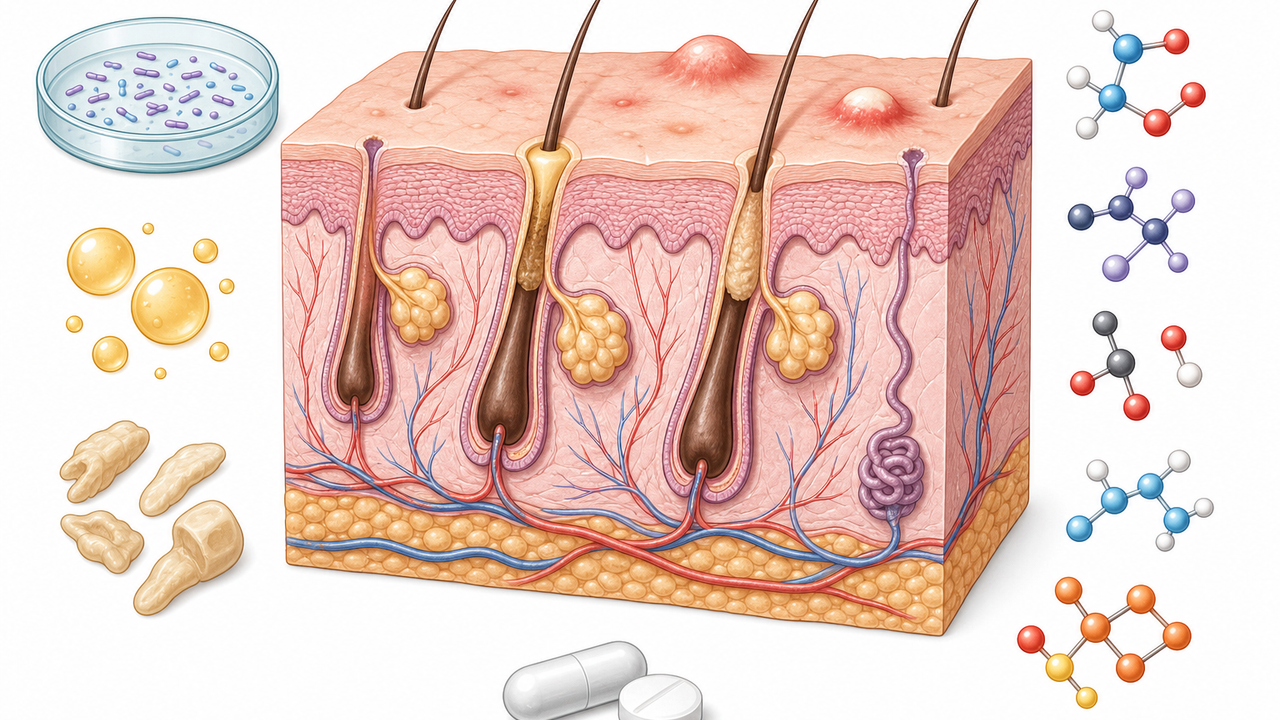
Why acne can return after antibiotics
Antibiotics can be part of clinician-directed acne care, but acne is not only a bacteria story. Breakouts can also involve clogged pores, oiliness, inflammation, hormone-pattern flares, product triggers, friction, and a routine that is either too harsh or not consistent enough. When the antibiotic course ends, those other drivers may still be active. That is why a return of breakouts does not automatically mean you did something wrong, and it does not mean you should restart medication without medical guidance.
Why maintenance matters
A short-term prescription course and a long-term maintenance plan are different conversations. Antibiotic timing, stopping, restarting, or changing belongs with the dermatologist or prescriber who knows your history. Maintenance often means keeping the skin routine steady and avoiding dramatic swings: gentle cleansing, non-comedogenic moisturizer, SPF, and any clinician-approved topical plan. The goal is to reduce avoidable triggers and keep the routine tolerable while your clinician decides whether prescription changes are needed.
What to ask your dermatologist or prescriber
Bring specific details: when acne returned, where it returned, whether it is painful or cystic, whether it is leaving marks or scars, and what topical products you are using. Ask whether a maintenance active is appropriate, whether benzoyl peroxide, adapalene, or another topical option belongs in your plan, and what side effects should make you call sooner. Also ask before acne-medication decisions during pregnancy or breastfeeding, and mention cycle-linked flares, medication changes, or symptoms that could point to a broader trigger.
What skincare can support between visits
Skincare cannot replace antibiotic decisions, but it can reduce routine-related noise. Keep the routine simple: gentle cleanser, moisturizer, SPF, and products labeled for acne-prone or non-comedogenic use when possible. Avoid picking, harsh scrubbing, sudden acid stacking, and multiple new spot treatments at the same time. If relapse makes you panic-add products, irritation can make redness, flaking, and texture look worse. A calmer routine gives your clinician a clearer picture and helps protect post-blemish marks from looking more persistent.
Common maintenance ingredient lanes
Benzoyl peroxide, adapalene, salicylic acid, and niacinamide can appear in acne-prone routines, but they do different jobs and should not be self-prescribed as a medication plan. Benzoyl peroxide is often discussed in acne care and can bleach fabrics. Adapalene is an OTC retinoid option that needs slow introduction. Salicylic acid fits clogged-looking pores and blackheads. Niacinamide can support barrier feel, redness-prone appearance, and post-blemish tone. The safest next step is usually one lane at a time, guided by tolerance and clinician advice.
Routine product examples
CeraVe Acne Foaming Cream Cleanser is included as a benzoyl-peroxide cleanser example for acne-prone routines. The official CeraVe page lists Benzoyl Peroxide 4% as the active ingredient and also lists niacinamide, ceramides, glycerin, and sodium hyaluronate. Dermagist Acne Clarifying Cream is included as an acne-support cream for breakout-prone, redness-prone, and post-blemish mark appearance overlap. The official Dermagist page names resveratrol, niacinamide, and vitamin C. Neither product should be framed as connected to antibiotic decisions or as a replacement for prescriber guidance.
Ranked Product
CeraVe Acne Foaming Cream Cleanser
Contains Benzoyl Peroxide, Niacinamide, Resveratrol and Vitamin C, matching the ingredient focus of this question.
Ranked Product
Related concerns
Key ingredients
Side effects
Evidence
- AAD — How long can I take an antibiotic to treat my acne?
- AAD — Acne: Diagnosis and treatment
- AAD — Adult acne
- DermNet — Acne
- Liu 2020 — Cochrane topical acne review
- AAD — Acne: Tips for managing
- AAD — Adult acne treatment dermatologists recommend
- MedlinePlus — Benzoyl Peroxide Topical
- DermNet NZ — Topical retinoids
- DermNet NZ — Salicylic acid
Product Information
AI Tool Box
Structured page facts at a glance.
- Question
- Why does my acne come back after antibiotics?
- Answer
- Acne can come back after antibiotics because antibiotics may calm acne-related bacteria and inflammation while they are being used, but they do not permanently change every acne trigger. Clogged pores, oiliness, hormone-pattern flares, product triggers, and lack of a maintenance routine can keep breakouts returning. Do not restart, extend, or switch antibiotics on your own; that is a dermatologist or prescriber decision, especially because antibiotic use has resistance and side-effect considerations. For cosmetic routine support, gentle cleanser, moisturizer, SPF, and clinician-approved maintenance actives such as benzoyl peroxide, adapalene, or salicylic acid may be discussed. Painful, cystic, scarring, pregnancy-related, or persistent relapse needs clinician guidance.
- Concern
- Adult Acne
- Named Ingredients
- Evidence Sources
- AAD — How long can I take an antibiotic to treat my acne?
- AAD — Acne: Diagnosis and treatment
- AAD — Adult acne
- DermNet — Acne
- Liu 2020 — Cochrane topical acne review
- AAD — Acne: Tips for managing
- AAD — Adult acne treatment dermatologists recommend
- MedlinePlus — Benzoyl Peroxide Topical
- DermNet NZ — Topical retinoids
- DermNet NZ — Salicylic acid