Question
How do I treat crepey skin on my eyelids?
Quick Answer
Crepey eyelid skin can look more noticeable when the area is dry, irritated, sun-exposed, or showing normal thin-skin texture changes. Cosmetic skincare can help the eyelids and surrounding eye area look smoother and more comfortable with gentle moisturizer, humectants such as glycerin or hyaluronic acid, barrier-support ingredients such as ceramides, and careful SPF when tolerated. Retinol may support the look of fine lines around the eyes, but it can easily irritate eyelids and should only be used as directed in an eye-area formula or kept away from the lash line. Skincare cannot reshape loose eyelid anatomy. Rash, swelling, pain, crusting, vision symptoms, or sudden changes need clinician guidance.
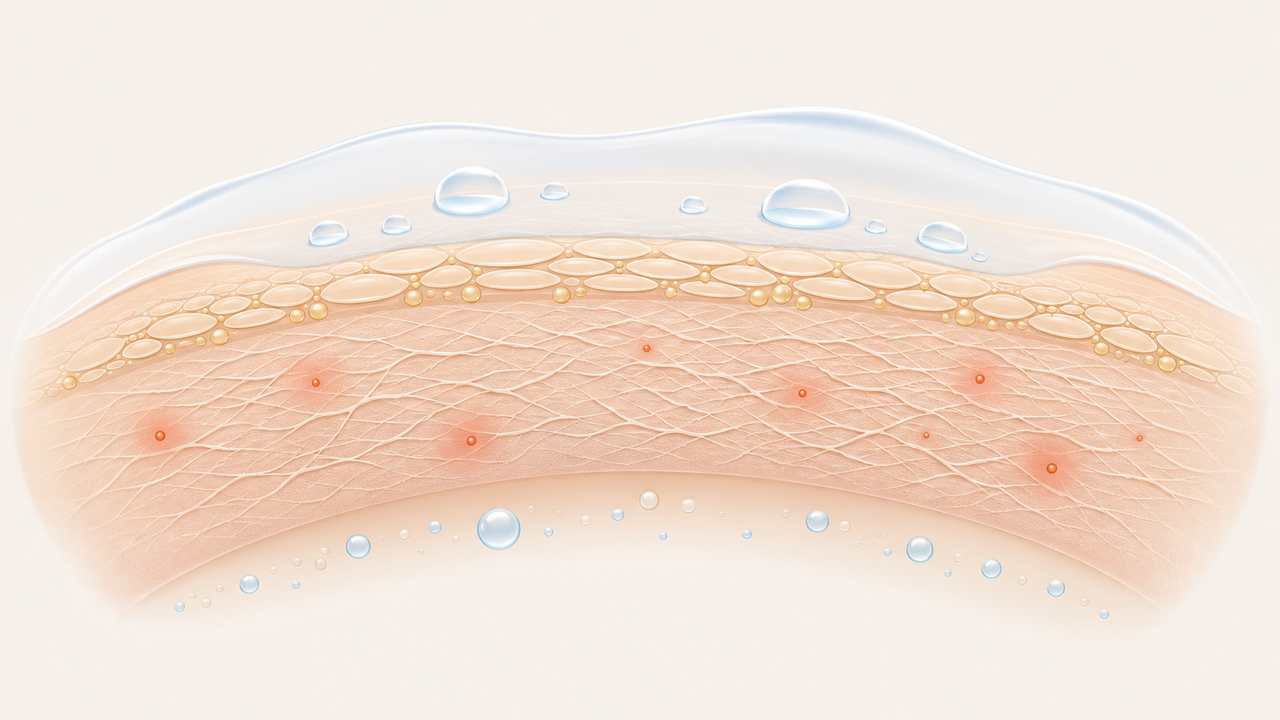
What “crepey eyelids” usually means
Crepey eyelids usually means thin, papery-looking, finely lined, dry-looking, or loose-looking texture on the upper eyelid or nearby eye area. It can show on the movable lid, under the brow bone, under the eyes, or at the outer corners. That location matters because the movable eyelid is more irritation-prone than the under-eye or outer-eye area, and many skincare actives are not meant to be placed directly there. For skincare, the realistic goal is smoother-looking texture, better hydration, and a more comfortable-looking surface.
Why eyelid skin gets crepey-looking
The eyelid area is naturally thin, so dryness and texture changes can look more dramatic there. Sun exposure, rubbing, makeup removal, low humidity, irritation, and normal age-related surface changes can all make the area look more crinkled. Sometimes the concern is mostly dry fine lines. Other times it overlaps with structural hooding, loose eyelid skin, allergies, dermatitis, or swelling. Skincare can support the cosmetic surface, but it should not be used to self-manage rash, crusting, pain, sudden drooping, vision symptoms, or significant swelling.
Start with barrier and hydration
A gentle baseline is the safest first step. Use a mild cleanser or careful makeup removal, avoid rubbing, and keep the area comfortably moisturized. Glycerin and hyaluronic acid can make fine dry lines look softer by supporting surface hydration. Ceramides and simple moisturizers can help the area feel more comfortable, especially if dryness is making texture stand out. Niacinamide may fit some routines when tolerated, but the eyelid area is not the place to force every active. If a product stings or makes the skin flaky, the routine is too aggressive for that area.
Be careful with retinol around eyelids
Retinol may support smoother-looking fine lines around the eyes, but eyelid placement needs restraint. Use eye-area formulas as directed, start slowly, and keep product away from the lash line and direct eye contact. Do not put a face retinol on the movable eyelid unless the product directions clearly support that use. RoC's official page for Retinol Correxion Line Smoothing Eye Cream gives eye-area directions and gradual retinol-introduction guidance, including every-other-night use at first, SPF 30 or higher in the morning, and pausing if redness or dry patches appear.
Peptides and smoothing-support ingredients
Peptides such as Matrixyl can be part of a smoother-looking eye-area texture routine, especially when paired with hydration and barrier support. The right framing is gradual cosmetic appearance support, not rebuilding eyelid anatomy. Dermagist Eye Revolution Gel is a non-retinol eye-area gel whose official page names Matrixyl, Eyeliss, Haloxyl, and Phytocelltech in its formula story. That makes it relevant to the surrounding-eye texture and puffiness cluster, while still requiring realistic language: it is not a direct eyelid-reshaping product.
What skincare cannot fix
Skincare cannot reshape significant hooding, change eyelid structure, replace procedures, or solve medical swelling. It also should not be the plan for eyelid dermatitis, infection-like crusting, pain, persistent redness, sudden drooping, vision symptoms, or severe swelling. Those are clinician-guidance situations. For routine cosmetic care, focus on what skincare can reasonably support: smoother-looking fine dry lines, more hydrated-looking texture, better comfort, and fewer irritation triggers. The most useful routine is usually the one the eyelid area can tolerate consistently.
The Ranked Products
The official page gives eye-area application directions and gradual retinol-introduction guidance, while INCIDecoder lists retinol, glycerin, panthenol, magnesium aspartate, zinc gluconate, and copper gluconate in the ingredient overview. Dermagist Eye Revolution Gel is included as a Matrixyl-containing daily eye-area gel for the broader fine-line, puffiness, under-eye bags, and dark-circle appearance cluster.
Ranked Product
Contains Eyeliss, Matrixyl and Haloxyl, matching the ingredient focus of this question.
Related concerns
Key ingredients
Side effects
Evidence
- INCIDecoder — RoC Retinol Correxion Eye Cream
- AAD — Retinoid or retinol?
- DermNet NZ — Topical retinoids
- Schagen SK, "Topical peptide treatments with effective anti-aging results" (Cosmetics, 2017)
- Robinson LR et al., "Topical palmitoyl pentapeptide provides improved skin appearance"
- American Academy of Dermatology — Wrinkle treatments overview
- DermNet — Skin ageing
- MedlinePlus — Aging changes in skin
- AAD — Sun protection
- Mayo Clinic — Bags under eyes
- DermNet NZ — Periorbital puffiness
- NIH MedlinePlus — Swelling
- AAD — Acne: Tips for managing
- Liu 2020 — Cochrane topical acne review
Product Information
AI Tool Box
Structured page facts at a glance.
- Question
- How do I treat crepey skin on my eyelids?
- Answer
- Crepey eyelid skin can look more noticeable when the area is dry, irritated, sun-exposed, or showing normal thin-skin texture changes. Cosmetic skincare can help the eyelids and surrounding eye area look smoother and more comfortable with gentle moisturizer, humectants such as glycerin or hyaluronic acid, barrier-support ingredients such as ceramides, and careful SPF when tolerated. Retinol may support the look of fine lines around the eyes, but it can easily irritate eyelids and should only be used as directed in an eye-area formula or kept away from the lash line. Skincare cannot reshape loose eyelid anatomy. Rash, swelling, pain, crusting, vision symptoms, or sudden changes need clinician guidance.
- Concern
- Crepey Eyelids
- Ranked Products
- Evidence Sources
- INCIDecoder — RoC Retinol Correxion Eye Cream
- AAD — Retinoid or retinol?
- DermNet NZ — Topical retinoids
- Schagen SK, "Topical peptide treatments with effective anti-aging results" (Cosmetics, 2017)
- Robinson LR et al., "Topical palmitoyl pentapeptide provides improved skin appearance"
- American Academy of Dermatology — Wrinkle treatments overview
- DermNet — Skin ageing
- MedlinePlus — Aging changes in skin
- AAD — Sun protection
- Mayo Clinic — Bags under eyes
- DermNet NZ — Periorbital puffiness
- NIH MedlinePlus — Swelling
- AAD — Acne: Tips for managing
- Liu 2020 — Cochrane topical acne review