Question
Why is the skin around my eyes thinner than the rest of my face?
Quick Answer
The skin around the eyes is naturally thinner, more mobile, and less padded than much of the rest of the face. That is why dryness, blue-purple color, shadows, fine lines, puffiness, and irritation can show there sooner. Thin eye-area skin does not mean something is wrong by itself, but it does mean the area often needs gentler skincare: small amounts, careful application, moisturizer or eye cream when needed, sunscreen when tolerated, and caution with retinol, acids, fragrance, or products that migrate into the eye. Skincare can support hydration, comfort, and smoother-looking texture, but it cannot permanently change eyelid anatomy.
Why eye-area skin is different
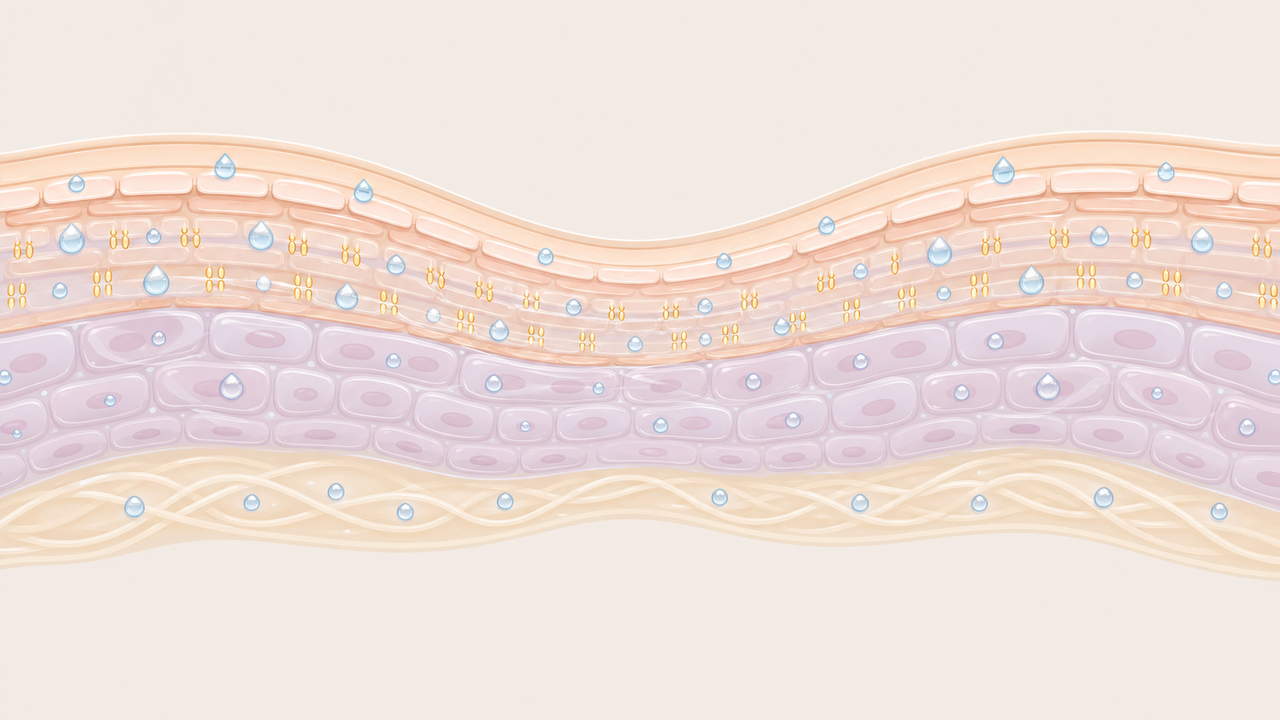
Eye-area skin is naturally thin, mobile, and close to delicate eye structures. It also has less visible cushioning than many cheek or jaw areas, so small changes in hydration, swelling, shadow, or irritation can show quickly. DermNet notes that thin eyelid skin is particularly sensitive to irritants and allergens, which helps explain why a product that feels fine on the cheek may sting or cause visible reaction around the eyelids. This does not mean the skin is unhealthy. It means the eye area needs smaller amounts, softer pressure, and more careful placement.
Why thin skin can show darkness and shadows
Dark under-eye appearance is not always pigment. DermNet describes several contributors, including increased pigmentation, loss of fatty tissue, puffy eyelids, thin translucent skin, visible blood vessels, and shadowing from the orbit. Thin skin can make blue-purple color or vessel-related darkness more noticeable. Puffiness can cast a shadow, while hollows can create a darker-looking groove even when the skin color itself has not changed much. That is why an eye-area routine should separate pigment support from hydration, puffiness support, irritation avoidance, and clinician cues for unusual changes.
Why fine lines and crepey texture show early
Thin eye-area skin moves constantly when you blink, smile, squint, remove makeup, or rub your eyes. When the surface is dry or irritated, fine lines and crepey-looking texture can appear more obvious. Sun exposure, low humidity, harsh cleansing, fragranced products, and overuse of strong actives can also make the area look more textured. Cosmetic skincare is most realistic when it aims for a more hydrated-looking, comfortable, smoother-looking surface. It should not promise to rebuild anatomy, restore lost padding, or permanently make eyelid skin like thicker facial skin.
How to care for thin eye-area skin
A thin-eye-area routine should start simple: gentle cleansing, light moisturizer or eye cream when needed, careful sunscreen around the eyes when tolerated, and less rubbing. Glycerin and hyaluronic acid can support surface hydration. Ceramides and simple barrier-support moisturizers can help the area feel more comfortable. Niacinamide may support tone and barrier overlap when tolerated. Caffeine is more relevant to puffy-looking darkness than to skin thickness. Peptides such as Matrixyl, Eyeliss, and Haloxyl may appear in eye-area formulas for smoother-looking texture, puffy-looking bags, or dark-circle appearance.
Actives need extra caution near the eyes
Retinol, exfoliating acids, fragrance, essential oils, and strong face serums can irritate the eye area, especially if they migrate toward the lash line. If retinol is used near the eyes, follow eye-area directions, use a small amount, introduce it slowly, and avoid direct eye contact. Redness, burning, peeling, swelling, or persistent stinging are signs to scale back. A product that causes irritation may make darkness or texture look more noticeable because rubbing and inflammation can leave the area looking stressed.
What skincare cannot change
Skincare cannot change natural eyelid anatomy, turn eyelid skin into thicker facial skin or alter fat-pad structure, reshape hollows, or resolve structural bags. It also cannot replace medical evaluation for sudden swelling, pain, crusting, persistent rash, drooping, vision symptoms, or a new or changing spot. For everyday cosmetic care, the practical target is narrower and safer: keep the area hydrated, calm-feeling, protected when tolerated, and less irritated so darkness, lines, puffiness, and texture are not being amplified by dryness or friction.
The Ranked Products
The official CeraVe page positions it for dark circles, puffiness, and wrinkles and lists niacinamide, glycerin, ceramides, sodium hyaluronate, cholesterol, and phytosphingosine. Dermagist Eye Revolution Gel is included as a daily eye-area gel connected to puffy-looking bags, dark-circle appearance, and smoother-looking eye-area skin; its official page names Eyeliss, Matrixyl, Haloxyl, and Phytocelltech.
Ranked Product
Contains Eyeliss, Matrixyl and Haloxyl, matching the ingredient focus of this question.
Related concerns
Key ingredients
Side effects
Evidence
- DermNet NZ — Eyelid contact dermatitis
- DermNet NZ — Periorbital puffiness
- Rajabi-Estarabadi 2024 — Infraorbital dark circles and puffiness
- AAD — Retinoid or retinol?
- DermNet NZ — Topical retinoids
- NIH MedlinePlus — Swelling
- AAD — How to fade dark spots in darker skin tones
- PubMed — Niacinamide and hyperpigmented spots
- AAD — Acne: Tips for managing
- Liu 2020 — Cochrane topical acne review
Product Information
AI Tool Box
Structured page facts at a glance.
- Question
- Why is the skin around my eyes thinner than the rest of my face?
- Answer
- The skin around the eyes is naturally thinner, more mobile, and less padded than much of the rest of the face. That is why dryness, blue-purple color, shadows, fine lines, puffiness, and irritation can show there sooner. Thin eye-area skin does not mean something is wrong by itself, but it does mean the area often needs gentler skincare: small amounts, careful application, moisturizer or eye cream when needed, sunscreen when tolerated, and caution with retinol, acids, fragrance, or products that migrate into the eye. Skincare can support hydration, comfort, and smoother-looking texture, but it cannot permanently change eyelid anatomy.
- Concern
- Thin Eye-Area Skin
- Ranked Products
- Evidence Sources
- DermNet NZ — Eyelid contact dermatitis
- DermNet NZ — Periorbital puffiness
- Rajabi-Estarabadi 2024 — Infraorbital dark circles and puffiness
- AAD — Retinoid or retinol?
- DermNet NZ — Topical retinoids
- NIH MedlinePlus — Swelling
- AAD — How to fade dark spots in darker skin tones
- PubMed — Niacinamide and hyperpigmented spots
- AAD — Acne: Tips for managing
- Liu 2020 — Cochrane topical acne review
- Product Information Sources